Google, Starbucks, and Amazon... for these multinationals immorality is now standard practice
There's a limit to what the law can achieve in an era of globalisation. But we can change our own culture, in our own country - and elect people who agree
Poor Starbucks. It has been trying so hard for so long. For 15 years, it has tried so many things in this country, like opening new cafés, in places that already had cafés, so that the cafés already there had to close. It has persuaded people to think that coffee is something you drink in cups that could be buckets, with lots of milk, and maybe syrup, to hide the nasty taste. It has been doing all these things, and it seems to have been doing them well, but it still can’t make a profit.
Strange
If you didn’t know all that much about accounting, you might think that was quite strange. You might, for example, look at all the people who go to Starbucks, and the price of the buckets of hot milk they buy. You might notice that the company had a turnover of £398m in this country last year, and think that that sounded like quite a lot. You might think it was quite odd that a company that took that much money, and paid many of their staff the minimum wage, couldn’t make any profit at all. And that it hadn’t made a profit for 14 out of the 15 years it had been trading here, and in those years paid no corporation tax at all.
If you did, it would show that you didn’t know much about how business is now meant to work. It would show that you didn’t realise, for example, that if you’re a company like Starbucks, you buy your coffee in Switzerland, even though it doesn’t grow coffee beans. It would show that you didn’t realise that you have to pay a “royalty” of 4.7 per cent to a firm in Amsterdam, to use the logo and recipe you already use everywhere else. And it would show that you didn’t realise you could keep running a business for 15 years, and keep promoting the people running it, and still, apparently, tell American investors that it was all going well, and then tell a committee of MPs that it wasn’t going well “at all”.
You might also not know that a company like, say, Google, which had a turnover of £2.6bn in this country last year, which would normally mean that you’d get a tax bill of about £200m, would pay just £6m (or 0.4 per cent) in tax. You might not realise that you could say that your profits were made in Ireland, and also in Bermuda, even though the people who were clicking on your site were nowhere near Ireland, or Bermuda. You might not realise that you could defend this by saying that your duty, if you had a duty, was to shareholders, and not to the people who used your product who earned the minimum wage, and still paid their 20 per cent tax.
And you might not realise that you could represent a company, like, say, Amazon, which had a UK turnover of £3.3bn last year, and which employs 15,000 people here, and then say that all the profits were actually made in a branch in Luxembourg, which employs 500 people, and explain that this was why you, like Starbucks, paid no corporation tax in this country at all.
Immoral
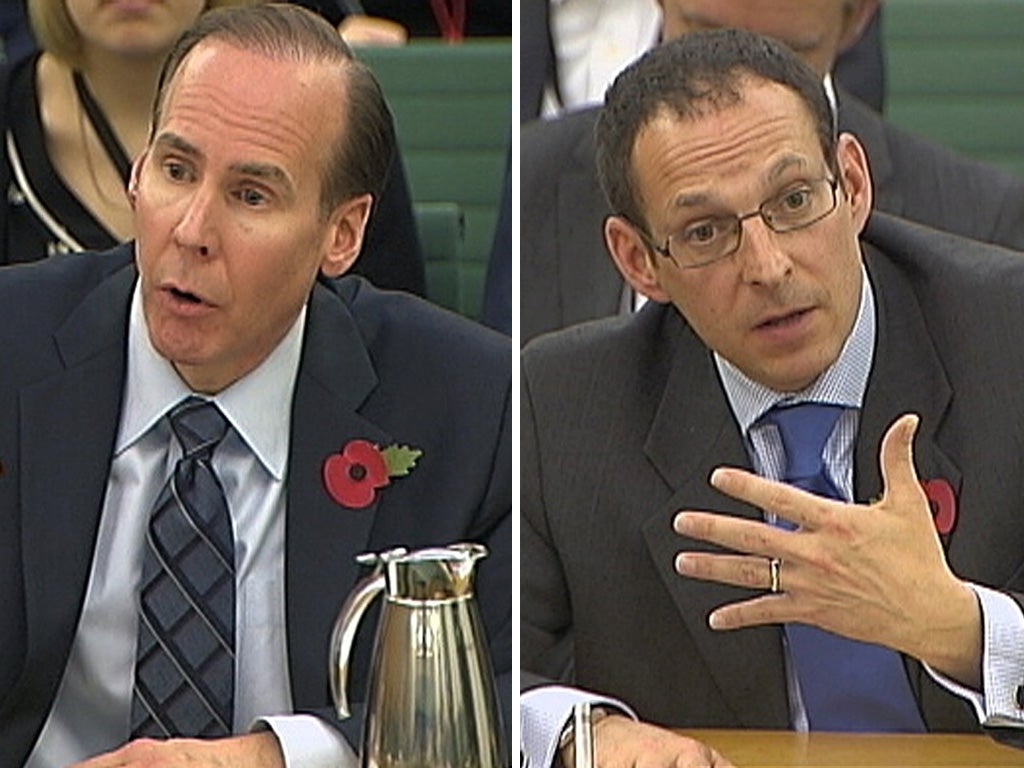
If you had watched the Public Accounts Committee on Monday (above), you might have learnt quite a lot. You might, for example, have learnt that the people who represented these companies seemed very, very surprised to have to explain themselves to people who have been elected to represent the people who buy their products, and particularly to have to explain themselves to the chair of that committee, who’s very clever and very fierce, and also a woman. You might have heard the man from Google tell the committee that everything his company did was legal. And you might have heard the response. “We are not,” said Margaret Hodge, “accusing you of being illegal. We are accusing you of being immoral.”
From the expression on their faces, it looked as though the men from Google, and Amazon, and Starbucks, didn’t know what the word “immoral” meant. If they did, they seemed to think that whether or not something was “moral” wasn’t a question that anyone in business would ever ask. They had the kind of expression on their faces you might have seen on some of the men in this country who buy and sell gas. Some of these men, according to someone who used to work with them, and also some evidence that has been given to the energy regulator, have been fixing the prices of wholesale gas. If they did, then what they have been doing, like what the men who seem to have fixed the Libor rate have been doing, is certainly illegal. But it is also, as Margaret Hodge would tell them, if she had a chance, which you can only hope she does, immoral.
Margaret Hodge, like all the MPs on the committee, and like the energy secretary, Ed Davey, who yesterday said that “British consumers” deserved markets that were “fair”, knows that Britain needs businesses that thrive. So does the next Archbishop of Canterbury, who used to work in the oil industry, and who told the Parliamentary Commission on Banking Standards on Monday that the “culture” of a bank’s investing arm could easily “contaminate” its retail arm by pushing for higher profits. All these people know, as anyone who isn’t a Marxist knows, that Britain needs successful businesses, because it needs more jobs. But all these people also know that business isn’t just about profit. Or, as Amazon and Starbucks might call it: loss.
Culture
It isn’t easy to take on global giants who seem to believe that business is a game. It isn’t easy to know what to do about people who will spend the millions on lawyers they won’t spend on taxes to find the cheapest loophole, in the cheapest place. It isn’t easy to know how to deal with people who get their biggest thrills by sailing as close as they can to the wind. Or to know how to deal with people who think getting on is the same as getting away with it.
The law can do what it can do. It could certainly be changed to make sure companies with high turnover in this country pay more tax here, but there’s a limit to what the law can do in a globalised world. The law can’t change the rules in other countries, and it can’t make global businesses nice. But we can change our own culture, in our own country. We can elect people who will hold these businesses to account. We can show the people who run them that we’re getting quite tired of being treated with contempt. And we can start by buying real coffee in nice cafés, and not nasty, flavoured milk.
Join our commenting forum
Join thought-provoking conversations, follow other Independent readers and see their replies
Comments
Bookmark popover
Removed from bookmarks