The Independent's journalism is supported by our readers. When you purchase through links on our site, we may earn commission.
I feel both British and European. What's so strange about that?
The tone of Cameron's oratory is that of a school bully. It’s funny, but also depressing, like twitching curtains in cramped redbrick terraces and 1950s English cuisine
Growing up in small provincial towns in the 1950s and 60s – Doncaster, Gainsborough and Witney – my family were by miles the most European people around.
It was no fun at all. At school, I was taunted as a Jerry (I was born in Germany) and reviled as a Russki. (The Cold War was hotting up, and no one knew the difference between Russians and Ukrainians.) I tried to keep my head down and be English like everybody else, but my parents were embarrassingly foreign. Worse than that, our house became a magnet for all the foreigners in town: not just stray Poles, Ukrainians and other Slavs like us, but the French assistante at the local school, my father’s German colleague, the Hungarian dentist, even the Indian postmistress gravitated towards our kitchen and mother’s apple strudel. It was shameful.
When I first went to continental Europe on a school exchange, it was as if a door had been flung open in my life, and colour, warmth and the light flooded in. I was 16 years old, and I fell in love. With baguettes slathered in unsalted butter and dipped into morning bowls of hot chocolate. With Jean-Paul and his muddy football boots. I fell in love with love. My host family taught me how to make an omelette, how to conjugate the subjunctive, and to revere Jeanne d’Arc. Jean-Paul taught me how to kiss like a grown-up (or so I thought). But the best thing about Europe was that it was full of foreigners. Suddenly, I need no longer be ashamed of being different. Ironically, it was also in France that I did at last achieve true Englishness – I became la petite Anglaise.
The same war that hauled my family across Europe from Ukraine to my birthplace in Germany also gave birth to the notion of closer European integration as a way of forestalling future conflict. The European Coal and Steel Community, created in 1951 from the Benelux states, France, West Germany and Italy, was the forerunner of the European Economic Community, which in turn morphed into the European Union.
Winston Churchill, British Prime Minister at the time, opted out. We have our own dream and our own task. We are with Europe, but not of it. We are linked but not combined. Yeah, yeah, yeah.
Of course, every nation under the sun believes it has a special character, role and destiny which sets it apart, and which its (usually conservative) politicians bang on about around elections, especially if there’s not much else on offer. Look at the US with its “Manifest Destiny”, the Germans with their own Sonderweg, the French with their exception française whose plucky individuality De Gaulle celebrated with his question “How can you govern a country that has 246 varieties of cheese?”. Even the Italians have their “anomaly”, and far-away New Zealand knows it is “Godzone”. And don’t get me on to Ukraine or Israel.
Talking about national character, one of the things I particularly love and admire about the British (generally excluding politicians) is that alongside these flights of pomposity, we are really very good at laughing at ourselves. In Charles Dickens’ last completed novel, Our Mutual Friend, Mr Podsnap explains condescendingly to a French gentleman: “Sir. We Englishmen are Very Proud of our Constitution, Sir. It Was Bestowed Upon Us By Providence. No Other Country is so Favoured as This Country.” The French gentleman inquired how did other countries do. And Mr Podsnap replied (“gravely shaking his head”): “They do, Sir, I am sorry to be obliged to say it, as they do.”
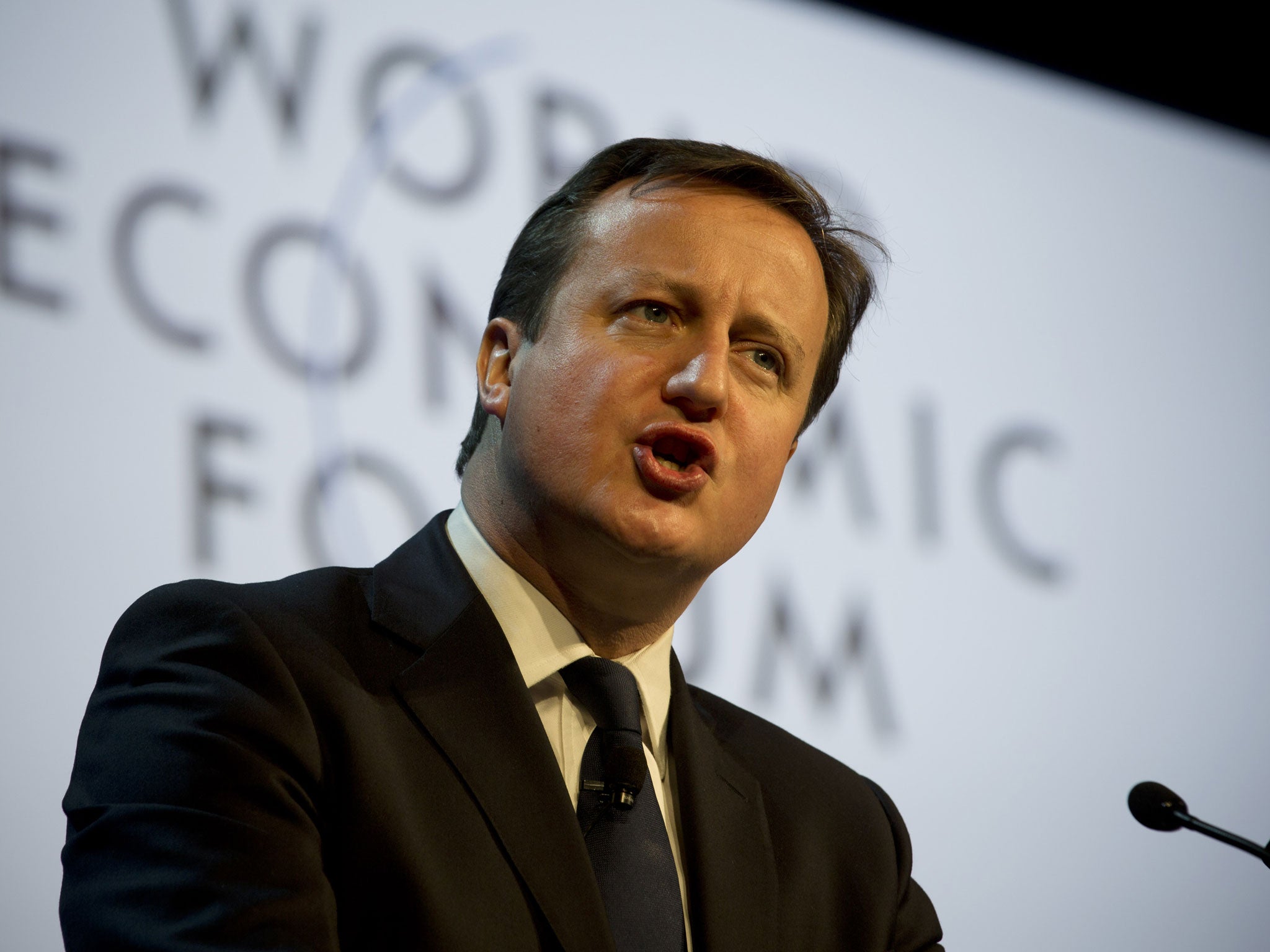
So David Cameron’s much-quoted speech at Davos, declaring that “We have the character of an island nation ... We can no more change this British sensibility than we can drain the English Channel”, is bang within this tradition. Everyone loves to hear a story in which they are the real-life hero battling against dark forces, but that doesn’t mean that the story is true.
And behind Cameron’s oratory, do we detect a deeper siren call, luring us to tear apart the social and employment protections and rights which European workers have accumulated over the past half-century? Decent pay, rights at work, shorter working hours, good public services, dignity in retirement, environmental protection – a Europe based on democracy, free trade, and committed to the shared prosperity of all its citizens. Or just a lot of anti-competitive red tape? If Cameron can persuade enough other European countries that it is, Britain won’t need to leave. He will have helped to smash up the dream of European social democracy, and laid all its citizens bare to the predatory forces of the global markets.
In this crusade, the upstanding British press has played a strident, misleading but admittedly sometimes highly entertaining role. Remember the not-straight-enough bananas? Bombay mix to be renamed Mumbai mix? The €10 note that makes you impotent? (Yes, really!) Even the things we British really treasure, like barmaids’ cleavages, Bogofs, double-decker buses and corgis, are under attack from those pesky Eurocrats.
It’s funny, but it’s also depressing, like twitching curtains in cramped redbrick terraces and 1950s English cuisine. The tone is that of school bullies. The facts are irrelevant – an indigestible obstruction. The preferred adjective is “barmy”. How dare these foreigners impose on us clean beaches, food labelling, consumer protection, lead-free petrol, road safety, access to healthcare abroad, cheaper mobile phone charges and real chocolate? Look, “we are an island nation, independent, forthright, passionate in defence of our sovereignty”. If we want to bathe in sewage, landfill our countryside, guzzle mechanically recovered meat, and pay through the nose for substandard goods and services, surely that’s up to us.
Marina Lewycka's novels include 'A Short History of Tractors in Ukrainian'
Join our commenting forum
Join thought-provoking conversations, follow other Independent readers and see their replies
Comments
Bookmark popover
Removed from bookmarks