Let’s speak out for the freedoms that we cherish
You can’t reason with people who think it is better to kill someone than say they disagree.
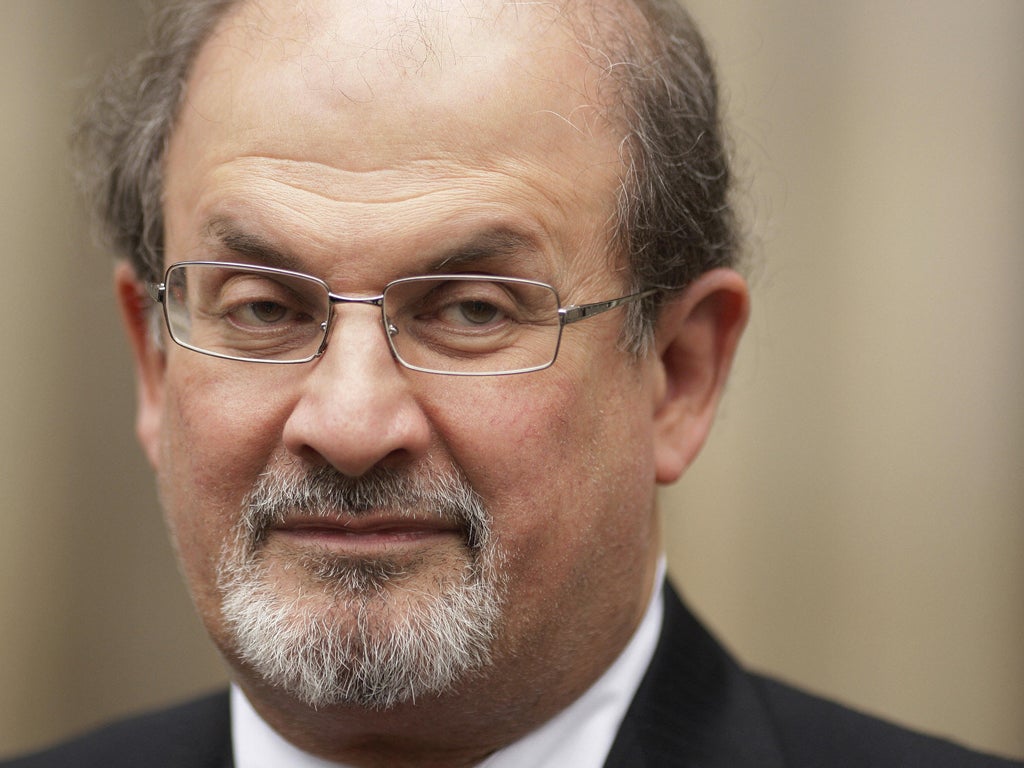
He doesn’t sound all that nice. The man with the beard who has just published a memoir really doesn’t sound all that nice. He wanted, he said in an interview to launch it, “to be as understanding as possible to everybody else” and “as rough as possible” on himself. The trouble is, he isn’t. He may have tried, but he isn’t. He may have been as “understanding” as he could be to the other people in his story, but he isn’t “rough” on himself.
When, for example, he talks about his second wife as a “woman in a mask”, and when he talks about being unfaithful “because of” another woman’s beauty, and when he talks about the “majestic narcissism” of his fourth wife, and when he talks about the time he told his third wife, yet again, that he’d go back to her before yet again changing his mind, he sounds like what his third wife said he was “a selfish person who goes through life ruining other people’s lives”.
And he did. Salman Rushdie did. When he wrote a novel which suggested that not all the messages spread by a sixth-century Arab merchant were direct revelations from God, he didn’t mean to ruin anyone’s life, but he did. He ruined the lives of the family of Hitoshi Igarashi, and the lives of the families of the 37 people who were killed in the fire that was meant to kill Aziz Nesin. A Japanese translator was killed, and an Italian translator was stabbed, and a Norwegian publisher was shot, and 37 Turks were burnt alive, because Salman Rushdie wrote a book.
It was a good book. It wasn’t, it’s true, quite as good as the book that won him the Booker Prize, but it was better than the book that’s out now. This new book, which is called Joseph Anton, which is the name (half from Joseph Conrad, and half from Chekhov) he picked as an alias, tells the story of how that book ruined his life, too. It starts with the phone call that gave him the news: that a man with a beard had told the world’s Muslims that this British writer had to die.
What follows sounds grim. It sounds, at times, quite funny, but it also sounds grim. It’s quite funny, for example, to hear about the time he was smuggled into a bar by Bono, and the time he had to go to hospital and police, as a decoy, laid on a hearse. It’s quite funny to hear about how he had to hide from the cleaner, and how one of his police protectors nearly shot himself when he tried to clean his gun. But it isn’t so funny to read about how he longed to “kick a football” with his son in a park, and how “ordinary, banal life” had become an “impossible dream”. And it isn’t funny to be reminded that a “comfortable prison” is “still a prison”.
Salman Rushdie was let out of his prison in 1998 when the “fatwa”, which is what some Muslims call special legal pronouncements that may tell them to kill other people, was lifted by Iran. This week, he may have had to climb back in. The head of a “religious foundation” in Iran has said that anyone who manages to kill him will get $500,000 more than the $2.8m reward they would have got before. If the fatwa had been carried out, he said, “the later insults in the form of caricatures, articles and the making of movies would not have occurred”. If you want to get rid of criticism, in other words, you have to kill the critics.
You have, for example, to kill people like Nakoula Basseley Nakoula, who has just made a film. The film – if you can call something that looks as if it was made in 20 minutes with a mobile phone and a dressing-up box a film – has caused quite a fuss. There have been protests around the Muslim world and 19 people have died. The film, says the leader of Hizbollah, is “the worst attack ever on Islam”. The protests, he says, must go on. The producer, director, and actors, said another Muslim cleric, announcing yet another fatwa, must die.
Nakoula Basseley Nakoula doesn’t sound nice. He has even been in prison for his lies. He was stupid to make the film, and stupid to put it on YouTube (if it was him who put it on YouTube) and stupid to make a film that’s so bad. But on one thing, he’s right. “There’s an angry mob in the street,” says a character in his stupid little film, as he points at a group of men in long robes, with long beards. Yes, there’s “an angry mob in the street”, and it’s getting bigger every day, and what it calls itself is Islam.
When Islam was founded, says Salman Rushdie in one of the most interesting bits of Joseph Anton, it appealed most to the “street mob” and the “disaffected poor”. If this was ever true, it certainly seems true now. The world doesn’t hear much these days about Muslim scientists or philosophers or poets. What the world hears about, because it happens an awful lot, is that Muslims want people who aren’t Muslims to die.
It would be nice to fight this with reason, but we can’t. You can’t really reason with people who think it’s a better idea to pass a death sentence than just to say they disagree. You can do things in your own country, like make sure that all your children, in state schools, and “free” schools, and “faith” schools, and private schools, are taught that everyone has the right to cause offence. You can make sure that religious leaders don’t say or do things that break the law. And you can make laws that make it clear that there’s a difference between saying things that other people don’t like, and saying things that might cause other people harm. You can, in other words, try to balance the demands of freedom, faith and the law.
But on a global scale, you can’t. You can look at the rising tide of Islamic fundamentalism, which is often the refuge of the poor and the angry, and at the regimes that have, for their own purposes, stirred it up. You might even think about the ways that your governments have helped in this, by supporting the leaders who do this, or invading the countries of the leaders they no longer like. You can look, and you can think, and you can hope, but you can’t do all that much about it.
Perhaps this swing away from reason will last a few generations. Perhaps, in a few generations, it will swing back. Until it does, if it does, those of us who believe in the right to say what you think without being threatened, can only show that there are some beliefs that we cherish, too. We can show that we believe in the right of clever writers to write good books, and the right of stupid fantasists to make bad films. We can even show that we believe in the right of clever people to sound quite vain.
Twitter: queenchristina_
Join our commenting forum
Join thought-provoking conversations, follow other Independent readers and see their replies
Comments
Bookmark popover
Removed from bookmarks