Print journalism is becoming a luxury few can afford
The problem isn't running out of people to enter the trade; it's that those who do enter will only come from a very narrow cross-section of our society: bad news all round
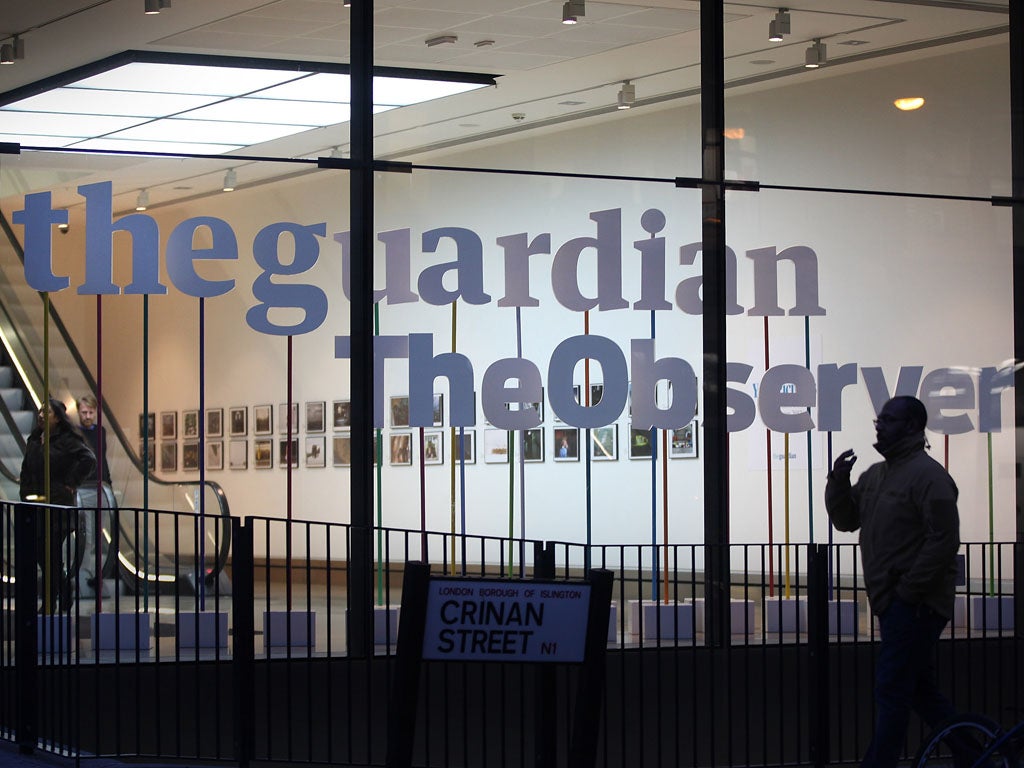
Newspapers are in trouble. That much is clear. The Guardian and the Observer lost £44.2 million last year as growth in online revenue failed to match Guardian News & Media’s (GNM) investment. Last week GNM was even forced to issue a denial after it was claimed that print editions of its papers would soon be scrapped altogether.
It isn’t just the nationals that are suffering. Research from Press Gazette from Press Gazette found that at least 242 local papers had closed between 2005 and the end of 2011, compared to just 70 launches. The self-appointed king of news Rupert Murdoch may also wish to consider whether the influence a stable of newspapers gives a proprietor remains worth having. According to data collected by Bloomberg, income at News Corp’s publishing unit, which includes the Times, the Sun and the Wall Street Journal, dropped by almost a third from 2008 to 2011.
In recent years the cringeworthy claim has been doing the rounds that we are “all journalists now”. And once you strip away the fatuity of the statement there is some truth to it. Thanks to the internet anyone is free to set up a blog and report or interpret the news as they see fit. That’s how I got started; and it is I suspect how many others have made their first excruciating stab at writing for an audience. We’ve also in recent years seen the emergence and popularisation of Twitter, which allows anyone with a smartphone to play at journalism and “break” a news story as it happens.
Many have undoubtedly been attracted to the profession by the romantic aura that surrounds the news rooms of the 20th century, portrayed to comic effect in novels like Evelyn Waugh’s Scoop, where the fiddling of expenses exists in stark contrast to the ascetic drive of today’s sharp-elbowed young upstarts:
“Mr. Salter saw he was not making his point clear. ‘Take a single example,’ he said. ‘Supposing you want to have a dinner. Well, you go to a restaurant and do yourself proud, best of everything. Bill perhaps may be two pounds. Well, you put down five pounds for entertainment on your expenses. You’ve had a slap-up dinner, you’re three pounds to the good, and everyone is satisfied.’”
Not only are we saying goodbye to all of that, but there is general agreement that newspapers will, sooner or later, cease to exist at all in their current form. Differences of opinion mainly concern how the industry will use the internet to return to profitability.
The era of the internet
In a piece for this paper in 2009, professor of journalism at the University of Kent Tim Luckhurst was forthright in his belief that professional journalism “can and must thrive in the era of the internet”. He went on to assure readers (or writers perhaps) that “an economic model to make that possible must emerge”.
What hasn’t been sufficiently discussed is the extent to which the business model newspapers have adopted during the lean years could change the face of newsrooms even when more favourable conditions return, assuming that they do. Increasingly newspapers rely on unpaid labour for their content, including interns and people who write simply for the satisfaction of a byline. In times when revenue is scarce this is perhaps understandable. But as newspapers find a way to turn a profit from the internet there’s a good chance they won’t drop the business practices that have prevented them going under in the first place, and that means workers continuing not to get paid.
Now I’ll understand if this seems incredibly unimportant. I am a journalist after all – surely I am only bringing this issue to your attention out of self-preservation. And that’s partly true of course. But only partly. It’s not my job prospects that you be should worried about (thanks all the same). Of greater concern is the potential impact new business models could have on our daily news content.
Any long-term reliance on free labour will certainly make newspaper balance sheets look better of course; but it will also give a labour market advantage to those from more privileged backgrounds who can afford to work six month unpaid internships or find free time to turn around articles for nothing – which in turn will mean an ever smaller section of society writing the news.
Cream at the top
The local papers which once produced the working class hacks who made the step up to the nationals are also disappearing at an alarming rate, and with them the rung on the ladder which at one time ensured a degree of meritocracy in our newsrooms. British journalists already favour the rich, powerful and glamorous over the poor, weak and unfashionable, says journalist and author Peter Oborne.
And one suspects that the gulf between journalists and ordinary voters will increase as the number of working class journalists continues to fall. Having little invested in the services this government is so ruthlessly cutting, many journalists of the upper crust already slip effortlessly into ready narratives about the cuts being “inevitable” and austerity coming as a consequence of “runaway government spending”. As it becomes harder to break into journalism without solid financial backing, this sort of natural bias can only become more pronounced.
The collapse of print journalism is almost certainly inevitable. For a proprietor to fight against it would be the equivalent of setting fire to reams of bank notes, and they certainly aren’t going to do that. Do not, however, succumb to the delusion that the internet will bring with it a flowering of innovative citizen journalism. Most people don’t have time to be citizen journalists. Most people are too busy paying their bills, putting food on the table and going to work every day to become grassroots reporters.
The people who have time to fool around for no money are the people who already have lots of it. And if they are the journalists of the future our media will probably resemble the establishment talking to itself, and if that’s the case we will all be worse off, not only us hacks.
Join our commenting forum
Join thought-provoking conversations, follow other Independent readers and see their replies
Comments