Public doesn't care a jot – or a tittle – about Leveson
Sitting in a newspaper office, it's easy to believe that the Leveson Report is a highly significant moment. But few outside them seem to care

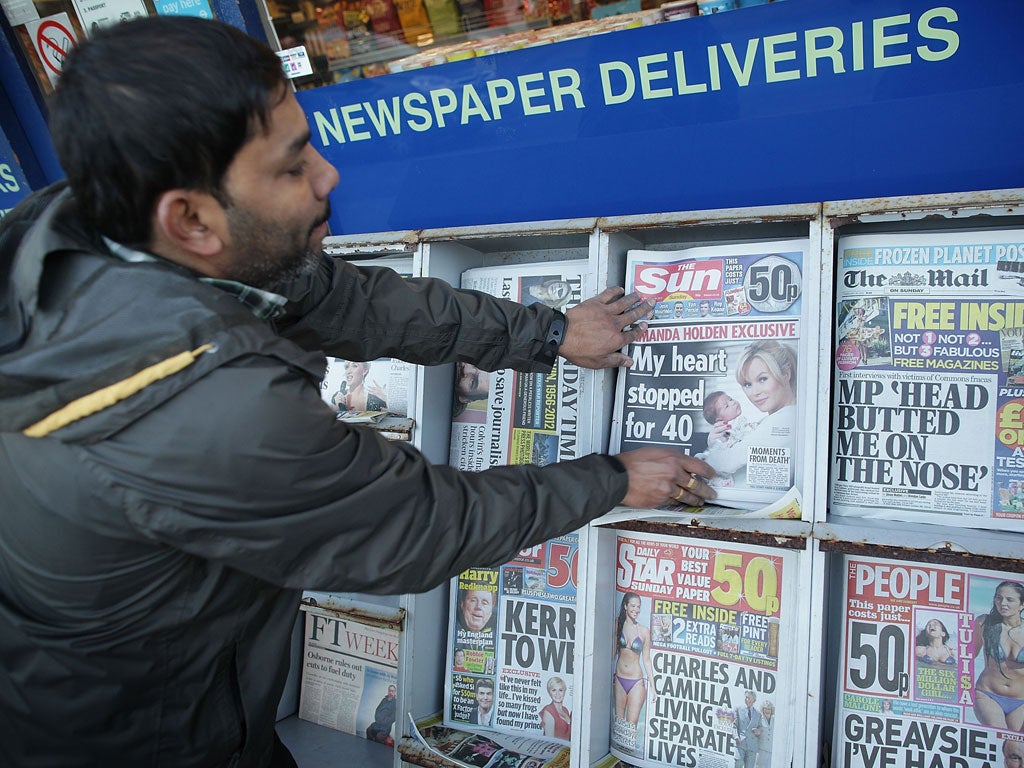
Tomorrow lunchtime, Lord Leveson will release his report into the culture, practices and ethics of the British press. It is the culmination of an inquiry that started its work just more than a year ago and, if we believe what we read, the very future of our democracy depends on its conclusion and the willingness of the Prime Minister to embrace it. Should Leveson suggest a form of statutory control of newspapers, we will be one step away from North Korea. And if he determines that self-regulation should be given one last chance, the British press will be a lawless dominion where feral journalists will run wild with a licence to ruin people's lives. For an exhaustive and multi-faceted inquiry, the debate has been framed in extreme, sometimes hysterical, terms.
When you sit in a newspaper office, it is very easy to believe that the Leveson Report is a highly significant moment in our history. It will almost certainly change the rules of engagement for our national papers and, for an industry beset by many structural challenges, it doesn't come at a great time.
But out there in the real world, where people are struggling with floods and financial hardship, Leveson's deliberations do not even touch the sides.
Journalists ruled by politicians? Politicians hounded by journalists? A plague on both their houses: that's a commonly expressed view.
A poll of 1,000 people revealed that, given 20 topics from the economy to foreign policy, the question of press regulation came second from bottom of the list in terms of importance.
And however dramatically it is characterised in some quarters, by portraying Leveson as a battle for free speech itself, I just don't think people believe that something really valuable is at stake.
That's because much of the population is relatively content with the way things are. After all, they bought the News of the World in huge numbers (not bothering how stories and pictures found their way into the paper); they believe there are extant laws to punish those who indulge criminal behaviour (and the sight of former newspaper executives in the dock is evidence of this); and people know that the internet is now where most of the bullying, intimidation and scurrilous gossip is to be found.
Of course, in the immediate wake of the revelation that Milly Dowler's phone had been hacked, people felt differently, and the Prime Minister, under pressure for his links to News International, was obliged to call in the judge. So a politically expedient move then has left David Cameron with a politically charged situation now.
Whichever way he jumps in the wake of the Leveson Report, he will alienate powerful forces.
For my part, I would like to see British newspapers continue to be independent of government. But I would also like self-regulation to be independent of the newspaper industry. The great British public may not be intimately engaged in the finer details of these issues, but they can spot a stitch-up when they see it and a self-regulatory system lacking in transparency – and replete with vested interests and cosy alliances – just won't wash.
Join our commenting forum
Join thought-provoking conversations, follow other Independent readers and see their replies
Comments
Bookmark popover
Removed from bookmarks