Romney and the royals? They all know better
World View: Those in the public eye should realise that the days when they could control or manipulate the news are gone

Sign up for the View from Westminster email for expert analysis straight to your inbox
Get our free View from Westminster email
It is always gratifying to find a politician or celebrity behaving in the same way as malign caricatures of themselves. In Dickens's Hard Times the stereotypical capitalist is Mr Bounderby, a banker who denounces his workers for expecting "to be set up in a coach and six, and to be fed on turtle soup and venison, with a golden spoon".
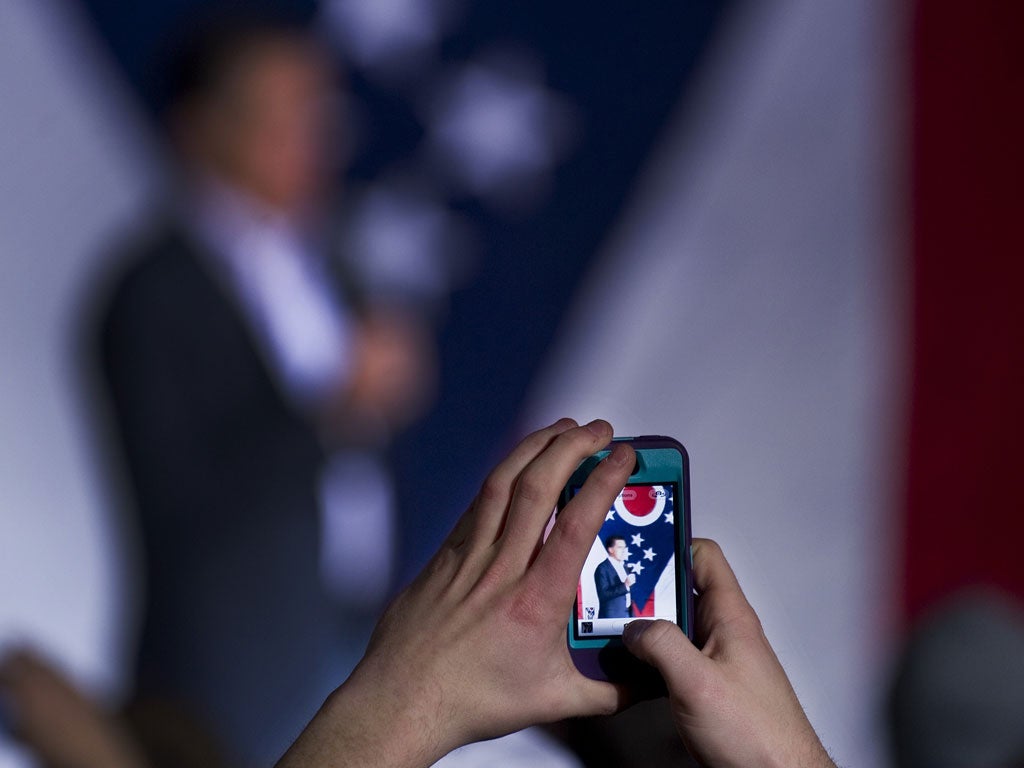
A century-and-a-half after Hard Times was published, Mitt Romney, the Bounderby of his era, is revealed as showing similarly dismissive contempt for the exaggerated expectations of the poorer half of the American population at a $50,000-a-plate dinner in Florida for Republican high-rollers. He pours scorn on the 47 per cent of Americans, self-declared "victims" supposedly dependent on government handouts, who "believe that they're entitled to health care, to food, to housing, you-name-it".
Bounderby claimed falsely that "he was born in a ditch" and had pulled himself up by his boot straps. Romney describes himself as a self-made man, despite being the son of the head of one of the larger US car manufacturers, the American Motors Corporation, who later became governor of Michigan.
At first sight, there is not much in common between Romney and the Duchess of Cambridge, other than that they both acted as if it was possible to court public adulation 80 per cent of the time and then somehow become invisible for the other 20. It is surprising that an experienced politician such as Romney should let his guard down, with such damaging results. Maybe the explanation is that he is just as arrogant and mean-spirited as he sounds in the film and felt relaxed enough in the company of members of his own class to show it. Or maybe he just always tells people what he thinks they want to hear.
In the case of the duchess it is not as if the Royal Family were unaware of the need to stay out of sight when doing anything they don't want to see in the press. So far as I can recall it was after some scandal in the 1950s that one royal, whose antics were heavily publicised, complained self-righteously to another that "I only do in public what the rest of you do behind closed doors". To this the fellow royal responded: "But don't you understand that that's what doors are for?" Attempts to suppress this sort of thing are not going to get very far, given the British public's appetite for royal scandal over the past few hundred years. Futile efforts to keep the pictures from public exposure give the story legs long after it would have died if they had been published in Britain in the first place.
Not that this hunger for royal news has ever been confined to Britain. My mother was travelling in Lapland in the late 1930s when she was approached by a party of Lap reindeer herders. A translator explained that the Laps wanted a detailed account of the abdication crisis.
What has changed in the past 20 years is not the nature of news or scandal, but that the means to record it are now universally available. Once this is done, the news can be transmitted instantaneously and unstoppably through the internet, mobile phones and satellite television. Cats get out of bags far more speedily and are impossible to recapture. It is not just the Romneys who are vulnerable. A few years ago I was writing about a grim story in northern Iraq where a girl belonging to Yazidi sect, who had eloped with a young Muslim man, was beaten to death with lumps of concrete outside Mosul by members of her own community. Once I would have struggled to establish what went on, but now I found that every savage detail of the girl's murder had been filmed by half a dozen mobile phones.
Governments have not quite yet taken on board the consequence of their actions being recorded. The methods of repression employed by Bashar al-Assad last year were probably less grisly than those used by his father 30 years before. The difference was that every time a demonstrator was shot, the scene was on YouTube and satellite television within minutes. Brutality now enrages more people than it intimidates, and countries can no longer seal themselves off by excluding foreign journalists.
The film mocking the Prophet Mohammed which provoked protests across the Muslim world and the death of the US ambassador, Christopher Stevens, carries a different but widely misunderstood message. There was nothing particularly new about the technology used to produce the film, and few protesters will have seen it. What is new is that governments in Tunisia, Libya and Egypt are weaker, more democratic, and less willing to allow their security forces to fire into crowds of their own people.
There is a misunderstanding in the West about the nature of these latest protests and of the origins of the Arab Spring uprisings. One of the main sources of discontent in the Arab world was that its autocratic regimes mostly sided with the US against the wishes of their own people during every crisis for at least 40 years. There were popular protests against the Gulf wars against Iraq in 1991 and 2003; in favour of the Palestinian intifadas in 1987 and 2000; against the Israeli bombardments of Lebanon in 2006 and Gaza in 2008. Support from the US-Saudi-Israeli combination that has dominated the region for decades was a crucial element in maintaining many of the police states that have fallen or are under threat. The withdrawal of US support for President Hosni Mubarak in Egypt and Zine el-Abidine Ben Ali in Tunisia by President Obama last year resembles Gorbachev withdrawing Soviet support for the East German regime in 1989. But the latest protests show that Arabs have not forgotten that the US was complicit in tyranny for so long.
The capacity of governments to suppress or manipulate news is less than it was, eroded by new ways of recording and passing on news. And control was never total. Even Hitler, with every aspect of German life in his iron grip, said that "no politician should ever let himself be photographed in a bathing suit".
Join our commenting forum
Join thought-provoking conversations, follow other Independent readers and see their replies