The BBC's mismanagement of the Savile crisis makes it even harder to defend
It seems like in the BBC the higher you claw your way up, the less you have to interact with the people making the stuff that drives the whole operation

As the Jimmy Savile affair engulfs the BBC, with one editor hung out to dry and numerous inquiries hastily set up to investigate sexual offences going back decades, one telling sentence sums up everything that's wrong with the way the organisation operates. The man in charge, new director-general George Entwistle, told an astonished committee of MPs: "It is not always appropriate to talk to people on the shop floor." Can you imagine any other large business where the boss refused to "walk the talk" to find out what people on the frontline thought? From Sir Terry Leahy to Lord Sugar, charismatic business leaders all have the common touch. They are not afraid to get down and dirty with the workforce, take soundings, listen and react.
Contrast that with the BBC, where the higher you claw your way up the pyramid of power, the less interaction you have with the people making the stuff that drives the whole operation and brings in the licence fee. Having worked there, I can completely understand why George thought a chat in a corridor with one executive and a couple of sentences with another at a "busy lunch" would constitute all he needed to know about a forthcoming news investigation about a once-admired entertainer. I expect he thought his time was better occupied with loftier matters, like global strategy, licence retention and appeasing the nosey parkers on the BBC Trust. A big mistake.
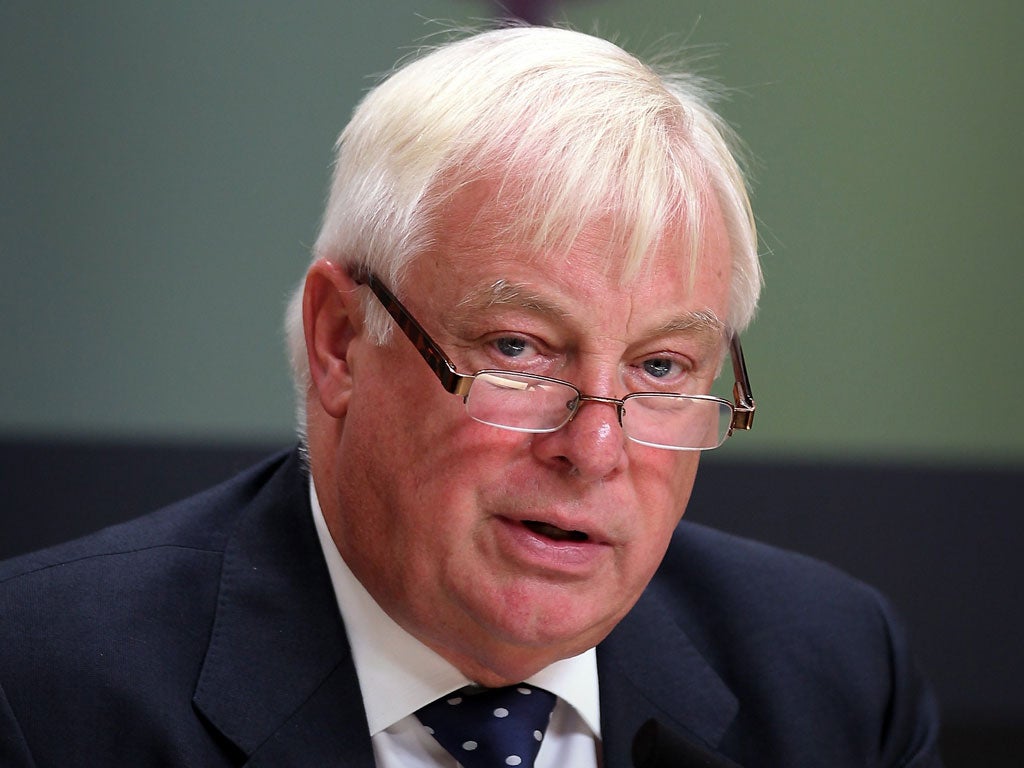
In the upper echelons of the BBC, executives tend to mix with their peer group – it's like Hampstead talking to Barnes, Holland Park chatting to Notting Hill. The polenta and prosecco crowd. Perhaps they have forgotten that programmes are what the BBC is about, what licence-payers think they are funding, not layers of self-important managers with meaningless titles who report upwards and sideways in a convoluted manner that's grown like Topsy over the past 20 years. If the BBC manufactured cars, a huge amount of their production costs would be soaked up by this unnecessary guff. For the chairman, Lord Patten, to attempt to smooth things over by claiming Entwistle was in the job only 11 days when he was "engulfed by a tsunami of filth" just made matters worse.
For a business that deals in communication, the BBC management and board of trustees represent textbook examples of how not to get the right message across. In my day, back in the late Eighties and Nineties, things were slightly simpler. As a departmental head, I reported directly to a channel controller, although I had to inform my group head, the head of light entertainment, what I was doing, as a courtesy. That's how it worked. I made bids for programmes directly to the channel bosses and, if I was lucky, the money was assigned to my department. Now, programme-makers have commissioning editors, executive producers, plus thought police who make sure editorial guidelines aren't breached, as well as schedulers with a large say in which programmes will be funded or axed, based on audience research, most of which, incidentally, is a waste of time.
There are heads of Vision, News, Radio, Learning, adding up to a wasteful system that stifles anything difficult or provocative with bureaucracy. In newspapers, ITV, Channel 4 and Channel 5, ITN and Sky, programme-makers have a simpler line of reporting. Having edited this paper, I can vouch for the huge (and exhilarating) difference between print and the BBC. The BBC is full of people at the top, like George Entwistle and Alan Yentob, who have never worked elsewhere, never encountered the way the real world operates, where real money, not a version of the poll tax, drives decision-making. Ask them to slim down this bloated management and they wouldn't know where to start, which is why the previous director-general, Mark Thompson, did so little radically to cull the expansion.
In a crisis, most media organisations understand that you need to put someone in charge of damage limitation fast, sack wrongdoers, apologise promptly and move on. Speed is of the essence to protect revenue, retain readers and viewers. The current BBC management structure is a dinosaur, incapable of moving at more than five miles an hour, doomed to extinction if the current crisis is not swiftly contained.
Dumping on Peter Rippon, the editor of Newsnight, is classic BBC management technique – blame shifted downwards. His about-turn on the Savile investigation, having previously backed it enthusiastically, was not a change of heart because the material wasn't strong enough. Rippon was cautious because of this labyrinthine reporting system in which he was just a lowly operative with limited power. Note that his senior managers, including Helen Boaden, BBC director of news and passed over for George Entwistle's new job, have been silent.
Over the past 20 years, the BBC has become over-anxious about how it is viewed by government, and obsessed with the way it is reported in the press. The PR department constantly reacts, firefighting in continuous damage-limitation exercises instead of leading the news. The tragedy of the BBC's slow response to the Savile scandal following the ITV broadcast is that it allows a groundswell of critics to build a case for the demolition or fragmentation of the corporation, which would be a disaster. Ranting licence-payers are threatening to cancel their direct debits. The BBC is very good value for money in terms of programming, but that is an increasingly hard sell.
Even so, Entwistle can't be held responsible for what happened on BBC premises long ago. Would the crisis be better handled if he resigned? I doubt it. Yes, he should have been better trained in how to respond to a crisis, because his ineptitude has undoubtedly exacerbated matters. We live in a media age, yet the boss of our most powerful media organisation comes across as aloof and detached, hardly a showman. He appears as bumbling as the head of the Church of England, that other British institution afflicted with appalling PR.
MPs, many of whom continue to abuse their expenses and whinge about their pensions, pick on the BBC, when, like the corporation, entirely funded by the public, Parliament remains in the dark ages. With boorish behaviour, arcane ritual and antediluvian practices, they have the cheek to say the BBC could be better run. Politicians are no moral guardians when they have never been lower in the public's esteem. As for the NHS, another dinosaur with top-heavy management, it has apologised for failings at Broadmoor, Stoke Mandeville or Leeds General Infirmary where Savile preyed for decades on the vulnerable.
Well handled, this crisis could give birth to a modern BBC – fit for purpose, streamlined, responsive and transparent. Tragic, though, that it has taken decades of sexual abuse in its own backyard and undetected for years by any of its news-gathering teams to force through long-overdue changes in the organisation itself.
Join our commenting forum
Join thought-provoking conversations, follow other Independent readers and see their replies
Comments
Bookmark popover
Removed from bookmarks