The Lord Rennard scandal marks the moment the Lib Dems discovered they are on the big stage
Clegg would not for a second be indifferent to precise allegations, but the response to this media frenzy does expose his party's inexperience

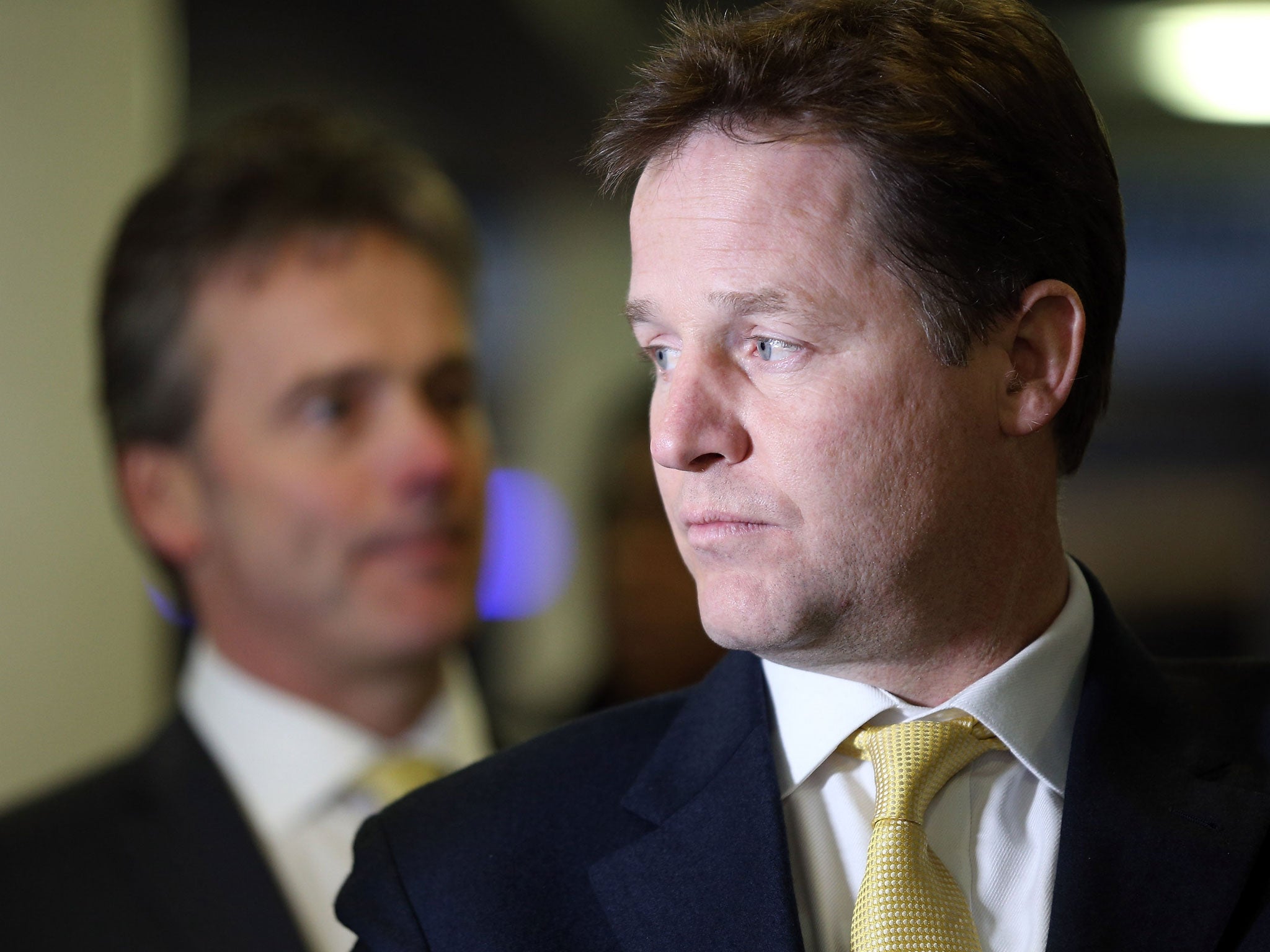
There is more of a media frenzy over the allegations of sexual harrassment concerning the Liberal Democrats’ Lord Rennard than there was when Nick Clegg gave the go-ahead for the ill-conceived NHS reforms. Yet the Rennard saga is much less significant – and the messy reaction to it from the Lib Dem leadership is easily explained and to some extent excused.
The timing and context are pivotal. I do not mean the deeply suspicious way this issue reaches a pitch of excitement days before the Eastleigh by-election in which the Conservatives are vying for victory with the Lib Dems. Instead, I refer to the circumstances when, in 2008, Clegg first heard rumours about Rennard, soon after he became leader.
Clegg insists he knew of nothing precise then and that none of the alleged victims spoke to him directly. I believe him, partly because he would be crazy to lie knowing that cover- ups are always what land senior politicians in difficulty. In addition, it is possible to oppose some of his policies and recognise that Clegg is a decent man who would have acted if female colleagues and friends had alerted him to any serious detailed allegations.
Clegg’s view of “liberalism” makes him congenial at times to the children of Margaret Thatcher at the top of the Conservative Party, but someone with his socially progressive instincts would not for a second be indifferent to precise allegations. It seems that five years ago he knew of generalised rumours about incidents that had occurred years before that and thought little more about it.
The allegations against Rennard are not remotely in the same league as the shocking events of the Jimmy Savile scandal. Indeed, the term “sex pest” that has been applied to him is almost comical in its imprecision. But, in the post-Savile climate, I suspect it is more likely that a new leader of the Liberal Democrats, as Clegg was when he heard rumours about Rennard, would act more urgently. I also suspect that if the rumours had surfaced about an influential Tory or Labour figure, even before the Savile revelations, the alarm bells of those respective leaderships would have rung loudly from the beginning.
Every move made by senior Tory and Labour figures has been followed and assessed for decades. Like many institutions that have been exposed recently as deeply flawed – the BBC, the Catholic Church, newspapers and banks – the Liberal Democrats were, until the 2010 election, unused to such scrutiny. Indeed, in the early years when Clegg was leader he ached for any scrutiny at all. Having won a leadership contest, he assumed that a degree of national interest would follow. In the event, he might as well have taken a holiday up until the televised leaders’ debates in the 2010 campaign. Alarm bells ring with much less intensity, if they ring at all, when a leader and his party struggle to get noticed.
Political leaders need to be used to scrutiny in order to develop an instinct for potential crises. It is not scandalous for Clegg to have given limited thought to the little known Rennard in 2008. Similarly, Chris Huhne, a largely anonymous MEP at the time, would not have been alert to the possible political fallout when he asked his wife to take his penalty points for a speeding offence. In a very different situation, I doubt if senior Lib Dems would have attempted to cover up Charles Kennedy’s drinking problems if they had been as heavily scrutinised as they are now.
The lack of experience in the eternal spotlight of national politics also explains the party’s inept response to the more detailed allegations against Rennard that surfaced on Channel 4 News last week. The initial accounts of what Clegg did and did not know have been revised several times. This is the amateur’s approach to political crises. Those who have been through several such events know that the key thing is to get all the information out there and ensure that all key media performers stick to a clear line. Cock-ups play their part, too. Clegg was away for a few days’ break at the end of last week and it is harder to control a running story from a distance. Again, I would be surprised if, after last week’s Channel 4 revelations, there was a coordinated attempt by senior Liberal Democrats to cover up and deceive. Clegg is not used to such crises, accompanied as they are by disproportionate media hysteria, and nor is his team. Inevitably, under the circumstances, they make mistakes.
A similar lack of experience partly explains the far more serious – and indeed accurate – allegation that the Liberal Democrats gave the go-ahead for a dangerous overhaul of the NHS plus several other misjudged reforms. Unused to government, they also supported George Osborne’s economic policy – unveiled in too much of a hurry – and they accepted his framing of the argument that put such a focus on Britain’s triple-A rating.
These misjudgements are far less easily excused because they involve bleak consequences for many people. What Rennard is accused of is a serious issue for him and a serious issue for those who make the allegations. It has suddenly become the biggest of Clegg’s problems when it should be nothing of the sort.
Join our commenting forum
Join thought-provoking conversations, follow other Independent readers and see their replies
Comments
Bookmark popover
Removed from bookmarks