As any British PR person will tell you, once you annoy the Daily Mail, you've got yourself what's known as a "toxic brand". Middle England has spoken. They're against you. They won't be buying your soft drinks, watching your programmes, using your sanitary products etc.
By this logic, in a uniquely contemporary irony, the branding industry has become a toxic brand. Last week, scandal exploded in the form of the NHS's appointment of a £77-97k per year "head of brand."
The Mail decried the story, but outlets across the political spectrum also went with it, many of them making sure to prominently display criticisms of the appointment as "frivolous."
Why all the spluttering? On one level, of course, the creation of a new high-salary position is always going to be an issue for an organisation that recently resorted to job-cutting to save cash. However, the addition of one more well-greased pencil pusher is unlikely to make a real difference to the accounts of one of the world’s largest employers. On this level, the appointment is, at worst, slightly distasteful, ill judged.
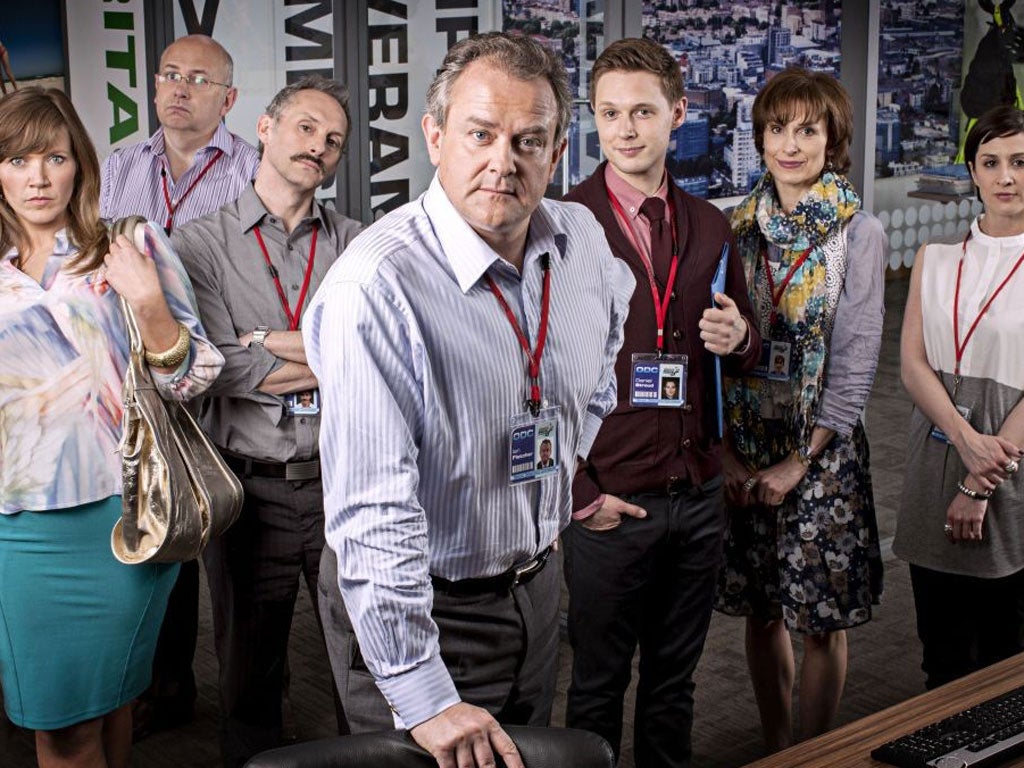
What really appears to have riled people is the nature of the role itself. The Mail pointed out that the job title matches that of Jessica Hynes's masterfully protrayed PR bimbo character in Olympics spoof Twenty Twelve. Even Sir David Nicholson, Chief Executive of the NHS, admitted in defending the role that it had a "rather unfortunate" title.
Call me an iPad loving, twitter inured, digital evangelist if you must, but I fail to understand the fury that the mere mention of the word "brand" provokes across all shades of the modern British public. When did we all unilaterally decide that branding per se was a bad thing?
PR on TV
Taking mass cultural depictions as a bellwether, the rot seems to have properly set in in the mid-late 00s. This marks the point when PR people on TV stopped being harmless eccentric partygoers a-la Ab Fab, and became Machiavellian rogues a-la Malcolm Tucker.
Tucker's popularity spawned the creation of his opposite number, Stuart Pearson, whose brand-heavy bullshit must have gone some way toward inspiring his tamer primetime equivalent, the aforesaid Twenty Twelve airhead Siobhan Sharpe.
Perhaps, then, the hatred goes hand in hand with growing public distaste for politics. Alistair Campbell's various rumoured misdemeanours undoubtedly did the PR industry's image no good. More pertinently, however, it was Maurice Saatchi-endorsed guru Steve Hilton's much-publicised 'rebrand' of Cameron's Tories that really poisoned the b-word.
Via Hilton, whole swathes of the public who'd previously thought of branding vaguely in terms of Coca-Cola and Levis came to see it as something sinister, the preserve of greenwashers, airbrushers and manipulators.
This is a misunderstanding. What Hilton did for the Tories wasn't a rebrand, it was a quick lick of paint, a temporary strategy. Albeit in different terms, the media recognised this long ago. Green policies are thin on the ground. There seems to have been no meaningful, lasting change to either the perception or the actual operation of the organisation in question.
On the left and the traditional right, branding is also often smeared as a distastefully capitalist activity. If something is a brand, runs the reasoning, its users are necessarily “consumers,” with all the attendant problems of that term.
This was at the heart of the last “brand NHS” uproar - the recommendation that the service leverage its brand and run businesses overseas. This was indeed a nasty idea. It would have involved exploiting a brand built up through years of low-reward service and patient trust for quick financial gain. Yet any “head of brand” worth their salt would have vehemently opposed such an activity for that very reason. A brand built up through trust then used to exploitative ends will be damaged very quickly.
Nothing sinister
Branding, contrary to popular belief, is about identifying a genuine value or values at the core of an organisation, then working out how to work this through all aspects of what it does including, yes, communications, but also staff training, procurement, operations- the list goes on. There's nothing sinister about that, nor is it inherently a bloodthirsty capitalist activity. Branding consultant Robert Bean has summed it up nicely:
"Three things define businesses: culture, product and reputation. Where all three meet is the single organising principle. It must be one thing. And it must be based in truth."
This may sound a bit fluffy for some, and it’s arguable that Bean is promoting his own branding business (the comment is drawn from a writeup of his Like Minds talk earlier this year. However, the principle is sound. Branding, as opposed to spin doctoring or PR whitewash, is a study which begins with the inner culture of an organisation and only ends with outward projection of this culture.
In the case of the NHS, the head of brand will apparently have a mandate to ensure that private service providers uphold NHS values. Many on the British left (including myself) would rather the privatisation of NHS services wasn't the rapacious process that it is. However, since it shows little sign of slowing soon, you'll forgive me for thinking on this appointment without much outrage. If it's anyone half-decent, they'll recognise that the NHS brand won't tolerate over-zealous cost cutting, treating patients as mobile wallets and everything else that good people fear about privatised healthcare. Marketing type or not, you’ve got to recognise the value in that.
Join our commenting forum
Join thought-provoking conversations, follow other Independent readers and see their replies
Comments