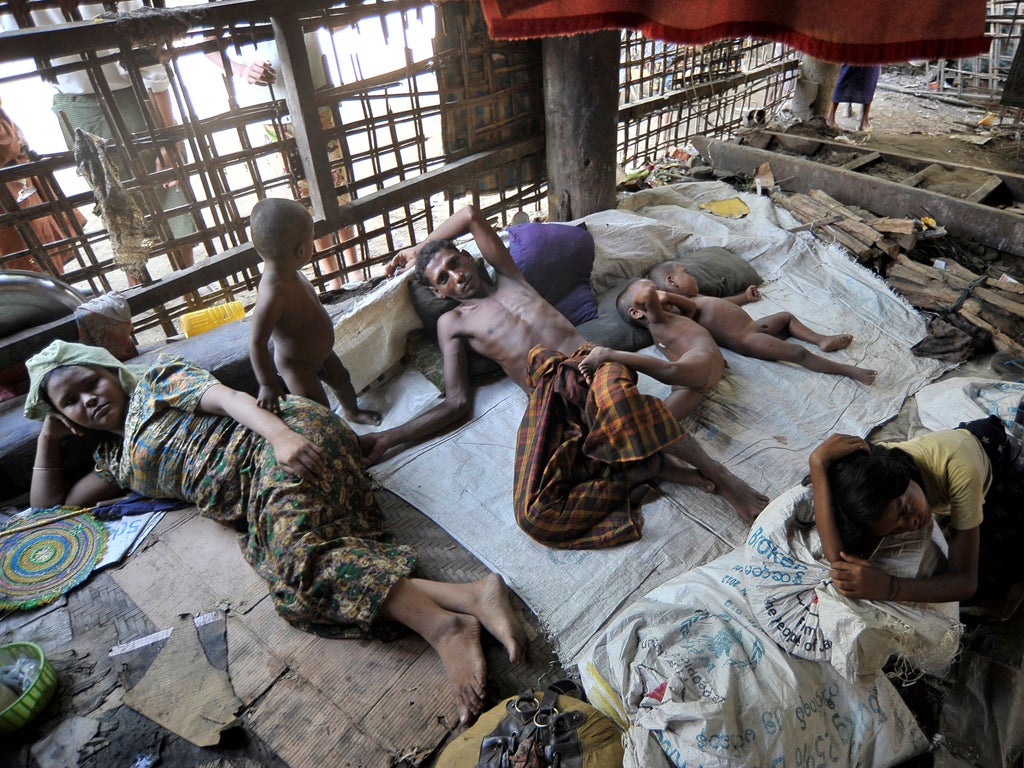
The latest attacks against ethnic Rohingya, with thousands of homes destroyed and probably more than a thousand killed, have once again drawn attention to Rakhine State in Burma. International attention had largely moved on following the first large scale outburst of violence in June, but attacks against Rohingya hadn’t ended, they had just taken on a new form.
Within days of the violence starting in Rakhine State, my organisation, Burmese Rohingya Organisation UK (BROUK), started to receive reports of families trapped in their homes running out of food. In the weeks that followed, in among the many reports of attacks, rapes and killings we were receiving, the reports of hunger and starvation grew into what appeared to be a deliberately organised plan to starve the Rohingya out of Burma.
Elements of this starvation policy are being implemented by local communities, and by state and central government. Buddhist monks and other groups have called upon the ethnic Rakhine population to boycott the Rohingya minority. They have called for a rice embargo and are targeting their Muslim neighbours. Many Rohingya who try to leaves their homes or villagers to buy food or harvest crops are attacked and beaten or killed.
Starving
International aid is now reaching almost 100,000 Rohingya who have fled to temporary camps, but hundreds of thousands of Rohingya in towns and villages are not getting any aid, and many are slowly starving in their own homes.
After the violence erupted many Rohingya households were surviving on existing food stocks, which for most people is now used up. Their suffering is made worse by the departure of aid agencies that were forced out when the violence started. Aid workers were arrested and jailed, while others were forced to flee the area. For villagers in areas further away from Sittwe, where no international visitors are allowed, there is no help coming, and children are starving to death.
While my people have suffered for decades, denied citizenship, the right to marry, and have been expelled over the border to Bangladesh, these latest developments signal a new level of abuse.
Ethnic cleansing is happening in Burma. If anyone needed further evidence for the role of the central state in the latest campaign, they only need to consider the request made by President Thein Sein to the UN Refugee Agency, for the UN to assist in expelling Rohingya from Burma. His request has been enthusiastically greeted by many sections of Burmese society which have used their new found press freedoms to voice hateful opinions about the Rohingya and their place in Burma.
Inaction
Out of sight, people are dying every day because they do not have any food. Thousands of people are facing starvation in the countryside remote areas, and the crisis is unreported and ignored.
The governments of America and Europe have tried to justify their inaction in the face of this ethnic cleansing by arguing it is difficult to get accurate information. Yet they take no action to secure a UN investigation which would establish the truth, and at the same time they welcome a government established investigation which has no Rohingya members, but does contain members who have publicly stated they want all Rohingya expelled from the country. What hope can there be that this investigation will come close to revealing the truth about what is taking place?
Nor does the America or the European Union support what is the only hope for a truly independent investigation into what is going on. That is for the United Nations General Assembly to establish a Commission of Inquiry. They can do this in the resolution on Burma which is being drafted now. The mere establishment of such an inquiry, where for the first time their criminal actions will be verified, might persuade them to end the policy of starvation and mass arrests. Just by being set up, the Commission would save lives.
But while this Commission does its work, the most urgent issue is to end the attacks, and to ensure aid agencies can freely access all the areas where Rohingya live, providing life-saving aid. People are dying now. They need help. Independent international observers are also need on the ground now.
There have been many changes in Burma in the past two years, but not all of them have been good. For the Rohingya, and other ethnic people such as the Kachin, the situation has got worse. It’s time for the international community to pay attention to the bad things still happening in Burma, instead of only welcoming the good.
Tun Khin is President of the Burmese Rohingya Organisation UK
Join our commenting forum
Join thought-provoking conversations, follow other Independent readers and see their replies
Comments