The West can’t direct the Arab Spring, but we can support it
You can't expect mature politics to be practised in countries like Egypt where political parties have been banned for 50 years
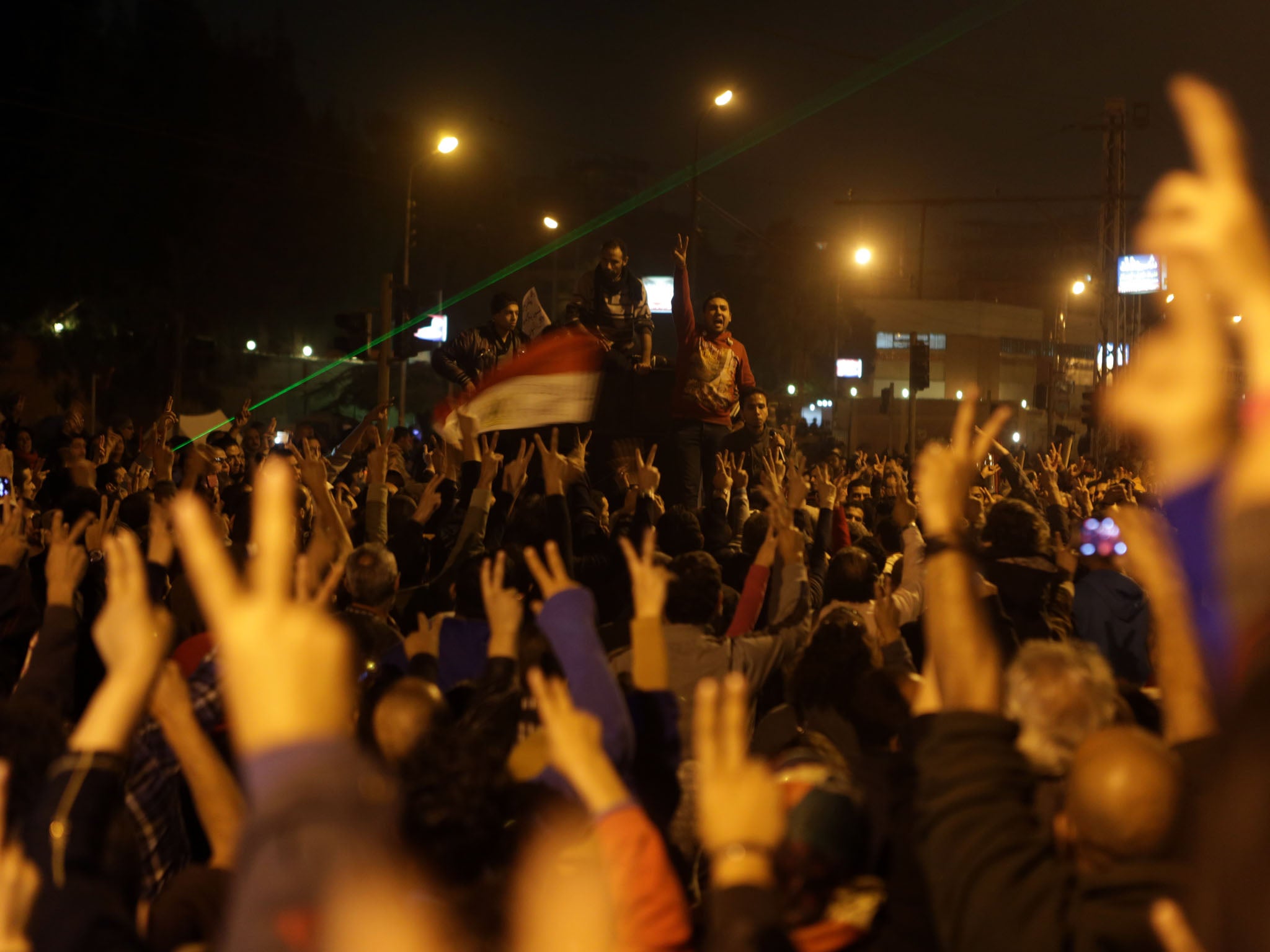
The second anniversary of the Arab uprising was celebrated last Monday by a crowd pelting the President of Tunisia with stones and crying “The people want the fall of the government”. It was the demand that led to the fall of President Ben Ali two years ago after a young vendor, Mohamed Bouazizi, set himself alight in the town of Sidi Bouzid in despair at his treatment by officialdom. His family has since had to move to Tunis to avoid the locals angry at the falling employment and insecurity that followed the revolution he caused.
No, it hasn’t been all plain sailing in the two years of the Arab Spring and there are plenty of people around who are ready to write off the whole movement as yet another example of the ungovernability of the Arabs unless they are brought to heel by a dictator.
And you can find plenty of reasons if you are so inclined to despair of the Middle East’s inability to achieve peaceful reform. A civil war in Syria, a torn country in Libya, an Egypt in which an elected president planned to take on more powers than his unelected predecessor are hardly cause for optimism.
Yet to see what is happening in terms of a call for democracy, and the failure to manage it, is to misunderstand its nature and its momentum. Mohamed Bouazizi didn’t kill himself because he wanted the vote. He set himself alight because, trying to make a humble living selling produce, he found himself blocked and humiliated by a system that was only interested in enriching itself.
Overthrow
His death aroused such a groundswell of fury because his frustrations resonated with most of the population. For 60 years now most of the Middle East has been run by authoritarian regimes, most of them backed by the West, which have suppressed their people and monopolised wealth among their family and friends.
Overthrowing that was never going to be easy and it was idle of the outside world to have thought it would be. What you are talking about is not simply a change in government but a change in the whole way that society and the economy operates.
You can’t expect mature politics to be instantly practised in countries such as Egypt where political parties have been banned for half a century. You cannot expect regime change, as in Tunisia, to produce immediate benefits when employment falls and prices rise.
The Arab Spring hasn’t developed in the way that the collapse of the Soviet Union did, although Ukraine and the Central Asian states have hardly sped along a smooth road of democracy. You need only to look at the recent history of Yugoslavia and the Balkans to see that the collapse of central control releases all sorts of violent racial and ethnic tensions which have lain dormant under the surface.
The Arab Spring is no different. It would fly in the face of history to believe that the end of authoritarian regimes in Syria or North Africa won’t lead to civil strife or that they won’t cause unrest amongst their neighbours, even discounting the Sunni-Shia divide which so obsesses Western commentators.
The central point, however, is that, just as in 1989, we are seeing the end of an era. Of that, no one should be in any doubt. The call for change, an end to corruption, and the exercise of greater freedom for ordinary citizens is now being heard in every Middle Eastern country and beyond.
The genie's out
You can put it down to the mobile phone and the internet or to demographics or to other social changes but it is now nearly impossible to see the genie being put back in the bottle. Even in the Gulf, where it was long believed that oil riches would enable the sheikhs to buy off trouble among their small populations, there are protests in the streets.
The old regimes won’t give in easily. Kuwait has joined Bahrain in fiddling elections and suppressing opposition. The United Arab Emirates has started to censor the internet. Oman has jailed leading activists and even so-called liberal Qatar has thrown a poet-critic of its Emir into prison for life, as if blanking out messages and incarcerating opponents will keep a lid on dissent.
In contrast, the King of Morocco early on met protest with a dramatic change in the constitution which allowed the election of an Islamist Prime Minister.
It would be idle to believe that all this will necessarily end in regime change. But it would be equally naive to think that the Middle East tomorrow won’t be fundamentally different from today.
The West’s interests are not to try and determine the course of change, however unnerving the events, but to support it. Instead of worrying about the politics, we should concern ourselves with the economics. The EU greeted the Fall of the Wall with an immense effort to aid reconstruction and to bring the newly independent countries into the fold. We should be thinking of the same for the Middle East. Its future is just as important for us.
Join our commenting forum
Join thought-provoking conversations, follow other Independent readers and see their replies
Comments
Bookmark popover
Removed from bookmarks