Twitter became an opinion machine – but this was still a television election
Media View: Journalists are excited by social media, but most voters still rely on TV for their political news

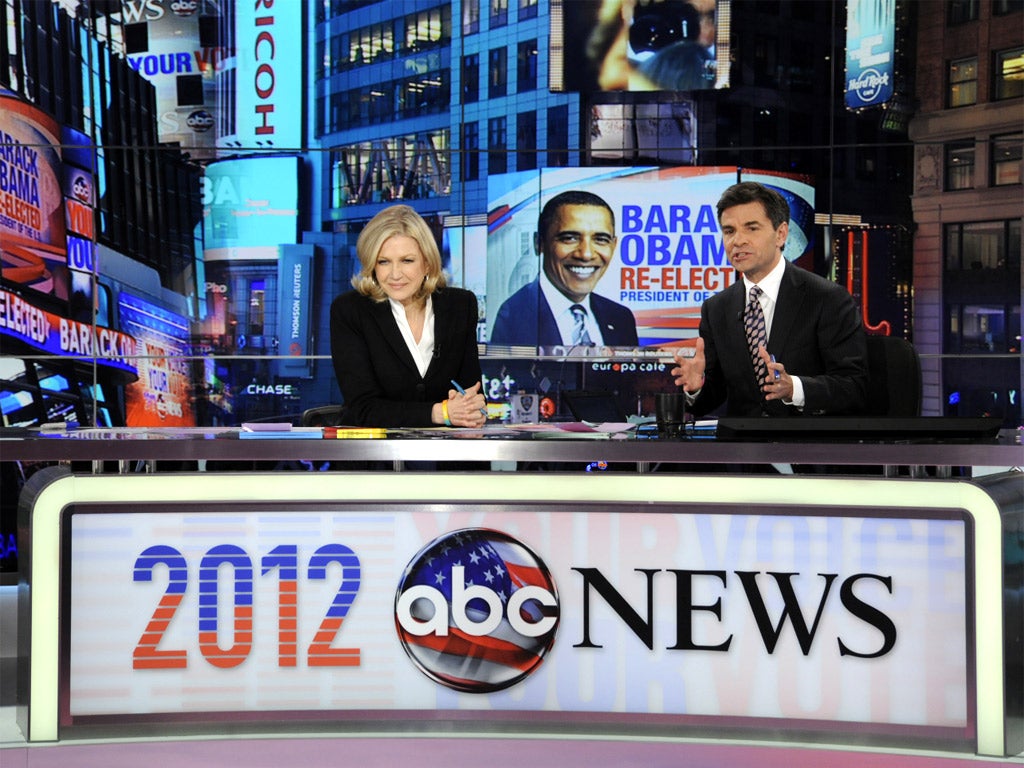
This was the first Twitter election, some commentators declared – on Twitter. Oh no it wasn't. This was the 14th television election in the United States. Ever since 1960, when 61 per cent of households with TVs watched the first televised debate between Richard Nixon and John F Kennedy, presidential campaigns have been fought on what Americans call the tube.
This time, the first debate between Barack Obama and Mitt Romney attracted the sixth-largest audience in TV debate history – 67 million. The main difference made by the new technology of the internet is that a few million more people watched the debate live-streamed on their computers, phones or tablets. The ratings companies don't collect that information, but CNN, for example, said it recorded 1.2 million live streams of its debate coverage around the world. So the total audience for the first debate could have been as much as 70 million, which would have made it the second most-watched election debate after the 81 million who watched the final Jimmy Carter-Ronald Reagan debate in 1980.
Journalists, most of whom are on Twitter, are excited by social media, but the vast majority of the voters still rely on television for their political news, views and advertising. Thus elections are fought on television, and the reporting and commentary that matters is on television. But that journalism is increasingly driven by Twitter. News of polls spread faster than in previous cycles through the medium of Twitter. Claims made by candidates were reported, disputed and decided within hours, thanks partly to the combination of social media and nearly every fact in the universe being Googlable in a few hundredths of a second.
The television coverage of election night in particular referred repeatedly to what people were saying or claiming on Twitter. Reports of queues at polling stations, voting machines that didn't work and legal attempts at what Democrats called "voter suppression" were often made first on Twitter and then spread throughout the mainstream media. Early yesterday David Dimbleby commented: "We mustn't mock Twitter. It's the thing of the future."
But he was speaking on television, and Twitter is never going to replace the mass consumption of moving pictures accompanied by synchronised sound.
Other parts of the internet play their role in elections. Party activists in the US are mostly organised and enthused by email and Facebook. The unprecedented ability of the Obama campaigns in 2008 and 2012 to raise money from small – and, more importantly, not-so-small individual donations – works its magic on the internet.
But journalists use Twitter. For us, it has largely replaced what used to be called the "wire" news services, which used to provide the running chatter of news to our computers. Now that is provided by hundreds of thousands of people on Twitter. And it is not just news. It is opinions, expert opinions and fact-checking. Want to know when was the last time a Republican candidate won without a Bush or a Nixon on the ticket? Ask Twitter. Someone will know (it was 1928).
What this means – as far as I can judge – is that commentary on US elections has become more homogenised. It is just as polarised as ever, but around each pole, the arguments tend to become standardised around the same facts, the same thoughts and ideas. Thus the third most important person in the campaign, after the two candidates, became Nate Silver, a polling number-cruncher for The New York Times, and the man who said, in the final weeks of the campaign, that Obama had a 70 per cent, then an 86 per cent and on polling day a 92 per cent chance of winning. Thanks to Twitter, his analysis, its methodology and its updates sped around the media. Republicans did what they could to find holes in it, but they couldn't. So the election was fought on television, but the commentary was fought on Twitter.
@JohnRentoul is chief political commentator for 'The Independent on Sunday'
Punditry gold: Nate Silver
Barack Obama may have taken the White House on Tuesday night, but he was not the only winner after the votes had been counted. A few weeks ago, statistician Nate Silver was almost unheard of outside of academic circles. But at one point during the campaign, his FiveThirtyEight blog (named after the number of votes in the electoral college) accounted for 20 per cent of the New York Times website's traffic. His predictions on the outcome of the US election were cited by news organisations around the world and his star rose further.
In the process, he drew the ire of political pundits and Romney supporters alike. While most of them were predicting that the race would go down to the wire, Mr Silver gave the president a 80 per cent chance of re-election. That rose to 90.9 per cent a day before polls opened. One conservative commentator even wrote: "And anybody that thinks that this race is anything but a toss-up right now is such an ideologue, they should be kept away from typewriters, computers, laptops and microphones for the next 10 days, because they're jokes." In the end, Mr Silver correctly predicted the outcome in 49 states, including the nine battlegrounds, as well as giving the popular vote to Obama in contradiction of other major polls. If any more proof were needed of his rising star, sales of his book "The Signal and the Noise: Why So Many Predictions Fail—but Some Don't" has risen 800 per cent on Amazon over the last 24 hours.
Join our commenting forum
Join thought-provoking conversations, follow other Independent readers and see their replies
Comments
Bookmark popover
Removed from bookmarks