Why does the notion of human rights get such a bad press in Britain?
The jurisdiction of the European Court of Human Rights runs in 47 countries, but it is criticised most overtly and regularly in Britain. The outgoing president asks why

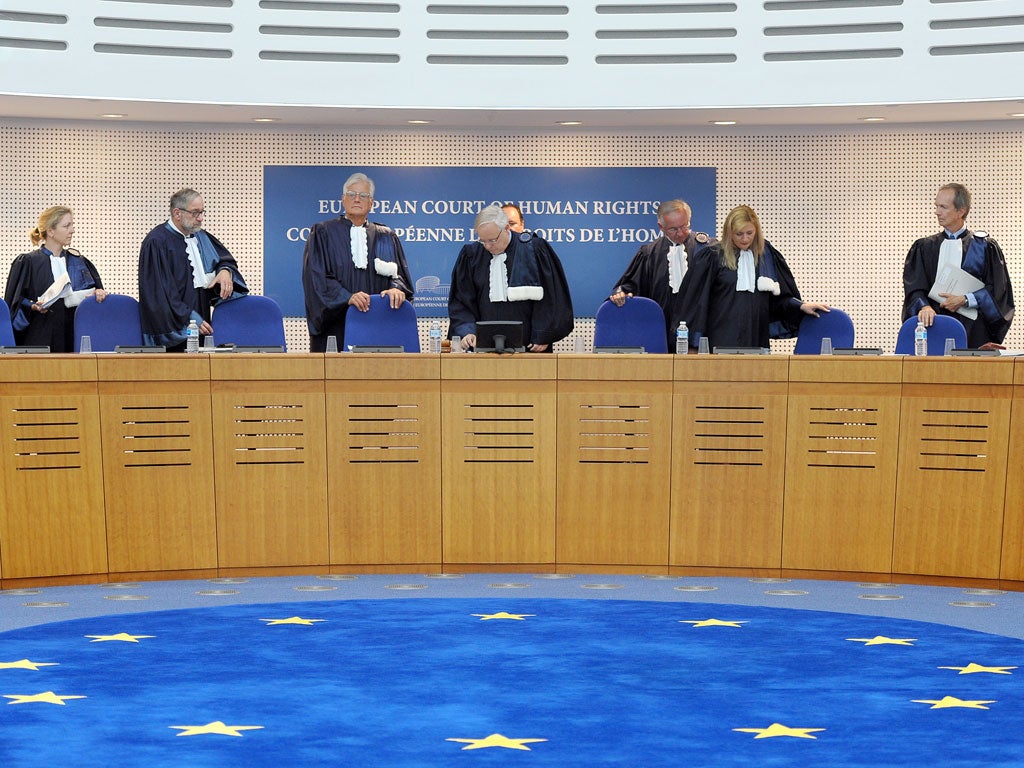
It is something of an understatement to say that the European Court of Human Rights, which I have had the honour and the privilege to preside over for the past 12 months, has had a bad press in the United Kingdom. The very notion of human rights has become the target of abuse in certain quarters as if this noble aspiration, enshrined notably in the 1948 Universal Declaration as a response to the limitless barbarity of the Second World War, had somehow become the cause of many of society’s ills. It seems to me that the drafters of the European Convention on Human Rights, among whom British common lawyers played a decisive role, would be somewhat bemused by this turn of events.
Whatever the perception about human rights generally, I do feel a responsibility, as my term in Strasbourg ends, to try once again to set the record straight about its role, in particular in relation to the UK. To my profound regret Britain is, of the 47 countries in which the court’s jurisdiction runs, the one in which the court is most regularly and overtly criticised.
During my year as president, I have visited a number of states whose record in terms of violations is much less favourable than the UK’s yet whose political and judicial authorities show a greater level of respect and understanding for the Court and its work.
In April of this year, the 47 states, including the UK, joined together in Brighton to reaffirm “their deep and abiding commitment to the Convention, and to the fulfilment of their obligation under the Convention to secure to everyone within their jurisdiction the rights and freedoms defined in the Convention”. They also reaffirmed their attachment to the right of individual application to the Strasbourg court. This court is sometimes called the conscience of Europe and a conscience is not always an easy thing to live with. Indeed, in a sense, its role is to be a thorn in the side of governments, a constant reminder that they have undertaken international obligations and that they will be called to account if they fail to abide by them. That all 47 states continue to subscribe to this system reflects their common understanding that a shared European space, where the rule of law and democracy prevail, is in all of their interests. Certainly, for the UK, however reticent it may be about closer ties with Europe, there is a clear interest in working towards consolidating rule-of-law–based democracy throughout Europe.
David Cameron, in his speech to the Parliamentary Assembly of the Council of Europe in January, clearly accepted this premise. Indeed, it has been recognised by successive British governments. But the case is rarely made publicly. On the contrary, public comment on the court and its work has tended to be overwhelmingly negative. With regard to the popular press, this is perhaps not unexpected. The rule of law requires that even the most – deservedly – unpopular persons are entitled to the same protection as anyone else. This is well-nigh impossible to sell to public opinion. To explain that a person who is committed to destroying the society in which you live is entitled to the protection which is the hallmark of that society – and, indeed, ultimately what preserves it – is a challenge most politicians are not prepared to take up.
The paradox is that in reality and in practice, the UK’s relationship with Strasbourg has been rich and positive. The court has found violations of the convention in a tiny minority of cases. The different actors of UK society, be it the judiciary, parliament or civil society, operate very largely in conformity with the European Convention and with a commitment to its implementation. Again, this is not surprising given the Convention’s origin.
As the judge elected in respect of the UK, I have heard it said that I have “gone native”, which is, of course, not just offensive to me but to the whole idea of international law, and in particular the international protection of fundamental rights. I would simply recall in this context that my role as UK judge is not to defend the Government’s interests but to ensure, independently and impartially, that the court’s decision is based on a full understanding of relevant UK law. However, I would also say that, as the British member of the court, it is a source of satisfaction and pride to me that the great majority of British judicial decisions which come before the court are of a very high standard indeed. UK courts deliver judgments which enrich the convention system.
The UK’s contribution to that system has been immense. It is therefore frustrating and disappointing to see that, largely because of a single judgment concerning the right to vote of some categories of convicted prisoners, the court has become a sort of hate figure, not just in the popular press, but also in the soundbites of politicians, some of them senior, and, even more disturbingly, judges – again some of them senior. On that issue the court has always made it clear that there is a range of options for complying with the judgment. We believe that there are workable and politically acceptable solutions.
No court is infallible, certainly not the Strasbourg court, but what is at stake is of overriding importance. The shared values of democracy and the rule of law which the court and the Convention represent are the firmest guarantee that we have of stability and peace, and ultimately perhaps also of a safe and prosperous future.
Join our commenting forum
Join thought-provoking conversations, follow other Independent readers and see their replies
Comments
Bookmark popover
Removed from bookmarks