Why the 'couples where women do more housework stay together' study isn't shocking
A recent Norwegian study found lower divorce rates where most of the housework was carried out by the woman.
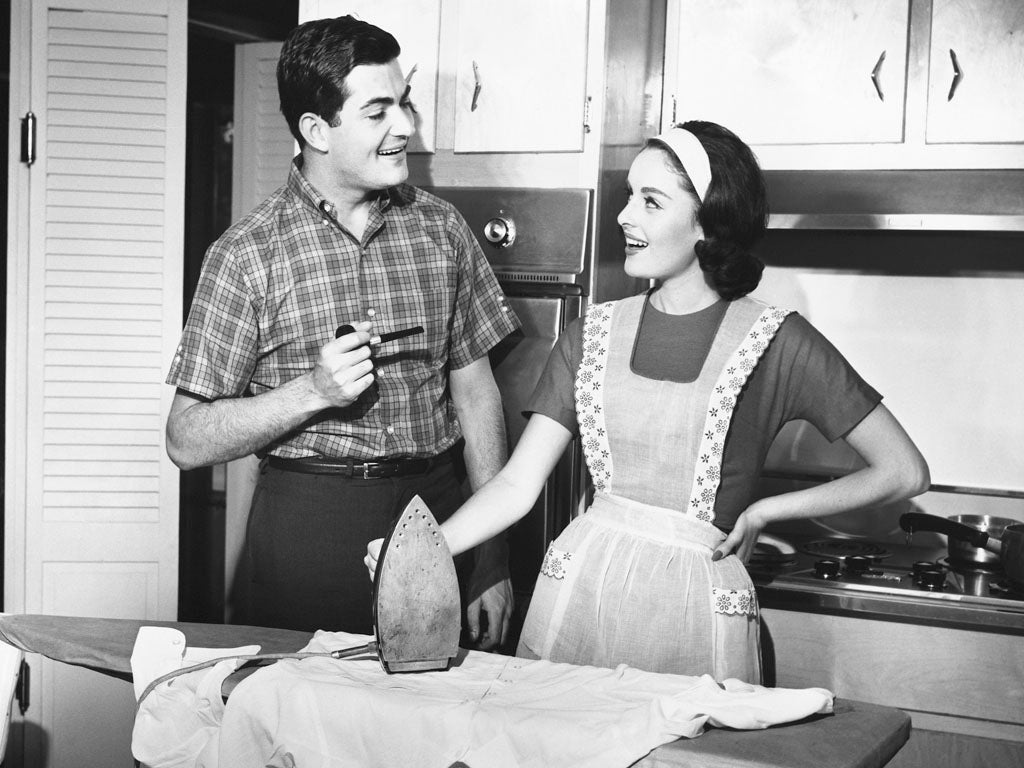
The recent Norwegian study ‘Equality in the Home’ found higher divorce rates among couples who shared housework than among those where most of the tasks were carried out by the woman. What surprises me is that so many commentators were surprised by this.
The issue this research raises has little to do with the allocation of household chores. Nor does it necessarily support an argument against the efficacy of gender equality, as some commentators have observed. Rather it represents a statement about the fragile foundation of the relationship of professional middle class couples in large chunks of Western Europe.
It is important to note that professional middle class couples are people who are relatively independent financially and so economically independent of their partners. Such couples are also likely to have busy professional lives and regard their disposable time outside of work as a precious asset, which often leads to a degree of tension between their professional and home life. Sometimes this is experienced as a conflict of interest and one possible consequence may be reluctance to invest most of their emotional capital in their marriage.
In effect the status and meaning of marriage changes when it becomes just one important commitment competing with another. It is this transformation of the meaning of marriage, from a unique to just another important relationship, that accounts for the findings of this report. This transformation means that a marriage is increasingly regarded from a utilitarian and instrumental perspective. Such a perspective heightens the sense of self interest and of individual needs, where husband and wife are pitted against each other. Some observers believe that such a response is symptom of healthy sense of self-worth. However a self oriented version of commitment has considerable potential for weakening bonds between people.
The internalisation of an instrumental ethos into the institution of marriage means that negotiations between men and women acquire the form a transaction that has little resemblance to the give and take of informal relationships.
The problems with conducting a marriage through the process of transactions is that tends to formalise what needs to be informal in a relationship. Intimacy works when it possesses a degree of spontaneity, trust and openness to new experience. When close relationships are subjected to a transactional ethos it alters its character, and the interaction between the two partners comes to resemble that of a contract.
A contract by definition assumes a conflict of interest, which is why it is so widely used in business and public life. Unfortunately its introduction into the home means that kind of tensions and conflicts that are the stuff of office politics are introduced into the marriage. Intimacy, and the kind of emotions associated with love and trust, cannot withstand the corrosive consequence of the introduction of a contractual and transactional ethos. Pragmatism and calculation are important for running a well organised office but they are likely to render formal what works best as an intimate and informal relationship. In effect they empty intimate relations of meaning.
The real issue is not that of equality versus inequality but whether a marriage is regarded as a convenient contractual encounter or an intimate and inter-dependent relationship of love. What leads to divorce is not the sharing of housework but a pre-existing disposition to regard a relationship instrumentally and pragmatically. When contemporary culture continually incites people to put their ‘own needs’ above everything else it is not surprising that it becomes more difficult to forge bonds of intimacy. And if marriage is regarded as a convenience than opting for a divorce is no big deal.
Of course all working couple are forced to live by their diaries and work out arrangements about who does what and when. And it is inevitable that debates concerning chores and domestic responsibility will not always be resolved harmoniously. There are no easy answers to this. But as long as a couple behave as good friends and regard their partner’s interest as if it was their own than the squabbles remain just that – squabbles.
Join our commenting forum
Join thought-provoking conversations, follow other Independent readers and see their replies
Comments