Adrian Hamilton: If everybody's ready for Greece to leave the euro, then it will
Is Greece's exit from the euro going to prove the price for keeping the rest in? Until now, European leaders have argued the opposite: that keeping Greece in the eurozone was the only way of stopping a succession of defaults by other, bigger countries. And that is still the received wisdom of Brussels and of Jean-Claude Juncker, the president of the zone's group of finance ministers.
But the mood has changed considerably over the summer. More and more in both the world of finance and the world of government, officials have laid their plans to cope with a Greek exit. Political leaders say it is not what they want. But their advisers are now telling them that they can manage the event.
That may be wishful thinking, of course. A return to the Greek drachma would have consequences for the banking system and financial markets which are very difficult to predict precisely in an internationalised world. Portugal, for a start, might well find the heat turned up on its borrowing ability, even if intervention by the European Central Bank and the use of the eurozone firewall might stop the contagion spreading.
But then the markets might well feel that Greece's collapse would actually help the eurozone as a whole by allowing Europe's leaders to concentrate on the problems of its larger members. Most funds and banks have developed such detailed contingency plans by now that an actual Greek exit might prove a relief.
The difficulty is in seeing any other solution to the Greek problem. On one side, you have a country basically unable to repay its debts, but being asked to make ever-greater sacrifices to meet impossible targets. On the other, you have lenders – not just Germany, but Finland and the Netherlands as well – who are unwilling, and probably politically unable, to let Greece off the hook. The worse the recession becomes in Greece, the more difficult it is for the country to repay its current loans; yet the more often it asks for looser terms, the less faith its creditors have in ever seeing their money back.
It's easy enough to talk of lengthening the period of repayment, but the simple fact is that the voters of Germany will not buy it. Angela Merkel, the German Chancellor, has now gone as far as she can in her insistence on the absolute necessity of preserving the euro. By the standards of the Bundesbank and critics within her own party, never mind the opposition, she has gone well beyond that point.
But if you read her statements, there is a very clear impression that, on the bigger question of the eurozone's future, this lady is not for turning. She is wholly committed to the cause. She is also a politician facing re-election next year. Letting Greece go has obvious attractions as a means by which she could keep her enemies at a distance while continuing with the broader problem of defending the euro.
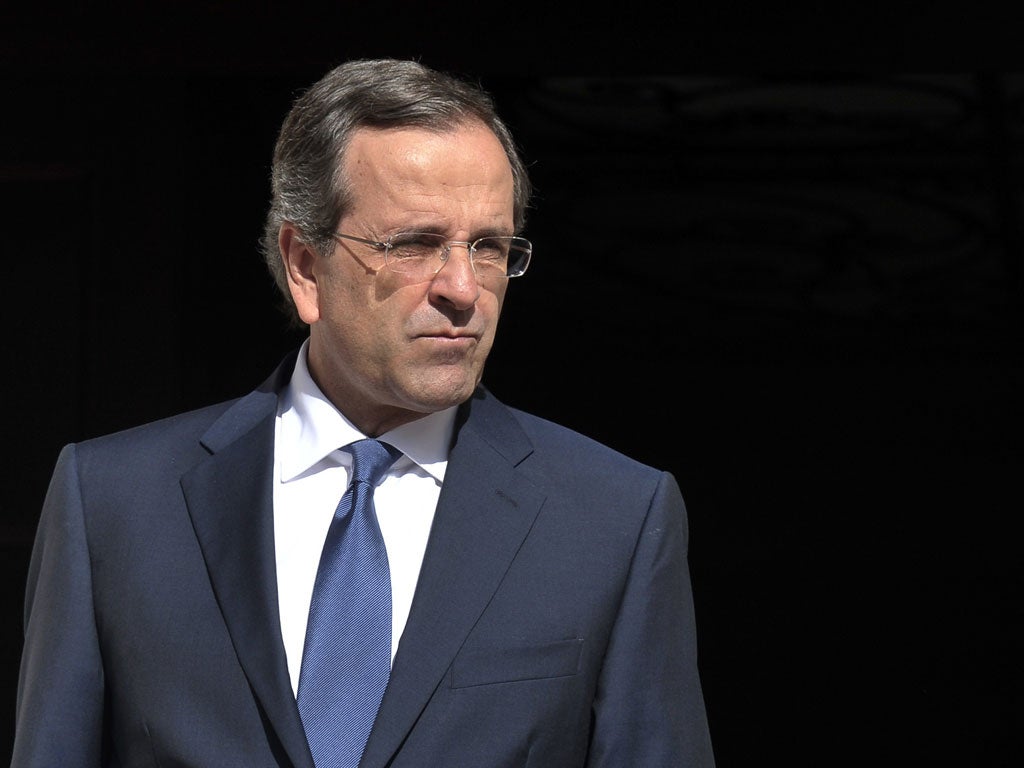
It won't happen today. The policy for the moment is one of putting off the evil day until the troika submits its report on Greek progress in a month's time. Meanwhile, Chancellor Merkel and President François Hollande, of France – meeting together yesterday and meeting separately with the Greek Prime Minister, Antonis Samaras, today and tomorrow – will try to get the Greeks to make the kind of noises which will keep the German wolves at bay. But unless something extraordinary happens to change Greece's economic situation or the mood of German voters, it's hard to see how a day of reckoning can be postponed indefinitely.
For the sake of ordinary Greeks and the political good of Europe, it would be better if a solution could be found. But the plans for a Greek exit are now in existence and history tells us that once institutions have adjusted to thoughts of the worst, they tend to allow it to happen – even war.
Round two to the Iranians
Bully for the UN Secretary-General, Ban Ki-moon. Despite the demands from Israel and the more discreet pressure from the US, he has insisted that he will be going to the summit of non-aligned developing nations in Tehran next week on the perfectly sensible grounds that it is a group which he can't, given his position, ignore.
His visit, argues an irritated Washington, will give only comfort to Iran as it faces tightening sanctions on its nuclear development. Absolutely right. Given the pressure piling up on the Iranians, Israel's open threats of bombing them and Washington's intense diplomatic manoeuvres to isolate them, of course Tehran is going to try to seek allies where it can. And how better than to put itself on the side of the developing world? Quietly but determinedly, Iranian diplomats have been trying to build bridges in the past months, even with Saudi Arabia.
The Summit of the Non-Aligned Movement, from 29 to 31 August, may prove largely a talking shop. But the US's policy, aided by the UK and the EU, of demonising Iran, is having the reverse effect of making the country seem the victim of Western bullying.
Join our commenting forum
Join thought-provoking conversations, follow other Independent readers and see their replies
Comments
Bookmark popover
Removed from bookmarks