Christina Patterson: A second chance for a bad parent can mean a life sentence for a child
It's not just the shit.
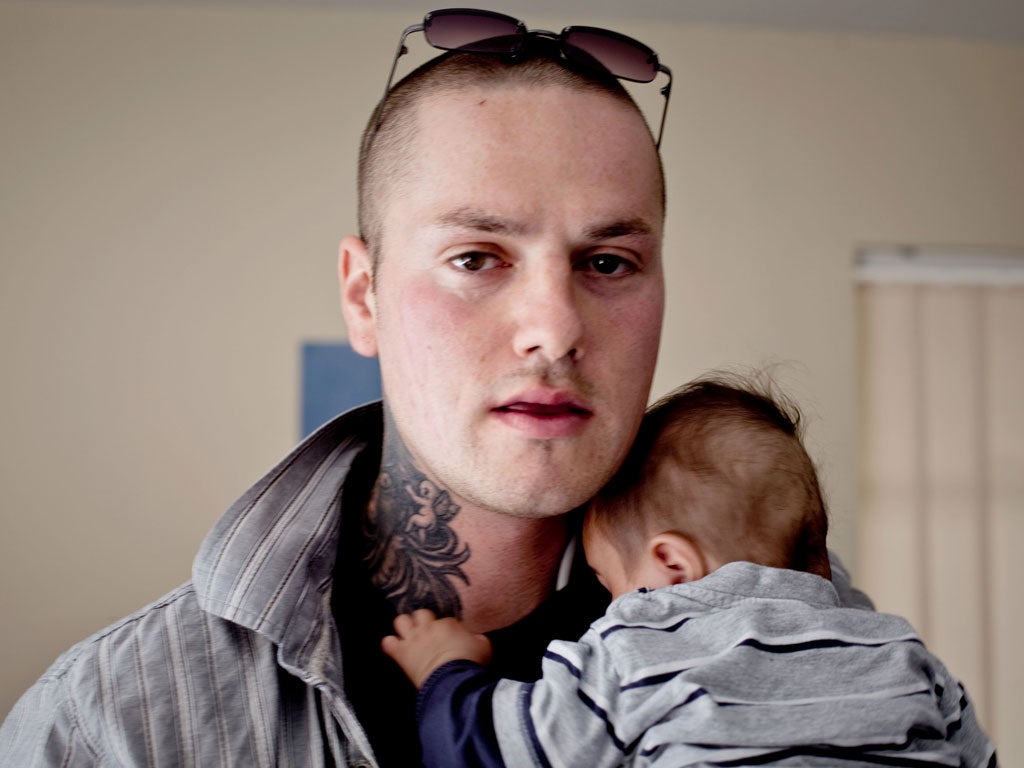
It's not just the dog shit on the carpet, or the urine on the carpet, or the wet nappy, or the shoes on the wrong feet. It's not just the fact that there isn't a toothbrush, or even a bed. It's not even the bruises. You almost expect the bruises. It's none of these things that really shocks you. What really shocks you is the fact that the parents of the child who has to play on a carpet smeared with dog shit are happy to be on TV.
They're happy to let a camera see the mess, and the dirt. They're happy to let it see the tantrums and tears. They're happy that the tantrums and tears that the camera sees, in a BBC series called Protecting Our Children, which is the kind of television you can't switch off once you've started watching, aren't the tantrums and tears of their child. They're the tantrums and tears of adults who won't feed, or wash, or talk to their children, or teach them that shit is something that's meant to go in a toilet, and not on a floor. And who think that the social workers who visit them aren't being fair.
It's quite hard to see why Mike and Tiffany, whose son Toby still, at three, couldn't talk, and still, at three, used a nappy, didn't think that the social workers were fair. To those of us who were sitting on clean sofas, in rooms that didn't smell of urine, the social workers seemed very, very fair. They seemed very, very patient, and very, very kind, and very, very nice. When, for example, the social workers saw the mess, and the dirt, and the dog shit on the carpet, the social workers didn't say that the home they were in was filthier than a slum. They said things like "are you good at housework?". And when, after weeks and weeks of being promised by the parents that they would get their child a bed, which they didn't, they said they would draw up an "action plan". And when the father, who never even seemed to look at his child, said he was "a handful", they said things like "do you think he gets frustrated?".
If you were the person sitting on the clean sofa, and not the person sitting making notes about the parents, which lots and lots of people seemed to be paid by the taxpayer to do, you began to think that if the child in the nappy was feeling frustrated, he certainly wasn't the only one. You began to wonder why the social workers were so polite to people who weren't at all polite back. And why they praised them for tiny little things that wouldn't normally get anyone any praise.
You began to wonder, for example, when you heard Shaun, who had had seven children who had all been taken into care, tell the social worker that she was "slimy", why she just smiled. And why, when his girlfriend, who was an alcoholic, got pregnant again, the social worker seemed to think that this time things would be different. And why she thought that a woman who had to be given a leaflet saying that a baby needed to be fed and washed might be a good person to bring up a child.
You could see that the men and women who didn't seem to be able to wash, or feed, or potty train their children, didn't want them to be taken away. And that it was very nice that social workers were trying so hard to give them a chance to look after their children, and that the social workers were very kind people who were trying to do their best.
But you could also see that all those notes, from all those people, and all those reports, and all those plans, weren't going to mean that people who had never been able to look after their children suddenly could. And that by the time they had done all those reports, and all those plans, it might be too late. It wouldn't be too late for the child to be put into foster care, and then maybe into a young offenders' institute, and then maybe a prison, but it would be too late for the child to be taken on by a family who didn't want to be paid for looking after it, and who might help it to talk at the normal time, and come out of nappies at the normal time, and maybe take some exams, and maybe get a job.
And when you heard, this week, that more children are being taken into care than ever before, more than 900, in fact, last month, you realised that there must be an awful lot of parents in this country who were like the ones on TV.
You couldn't help feeling sorry for the people who were losing their children, but you felt much, much more sorry for the children they lost. You couldn't help thinking that if the world was perfect, you would try very, very hard to let those parents keep their children, but that the world wasn't perfect, and there were lots of people who were desperate to bring up babies they couldn't have. And that while it was nice to live in a society that was so kind to very, very bad parents, it wasn't very nice to the children who would probably go on to be parents like them. And that being kind to very, very bad parents was a good way of making sure that this whole, sad, sorry cycle carried on.
The one thing money can't buy
It isn't all that often that you find yourself cheering the Daily Mail, but sometimes, against the odds, you do. When, for example, a billionaire banker, who's also a friend of George Osborne, tries to get "very substantial damages" from the paper because he feels he has been portrayed "in a negative light". The banker, Nat Rothschild, thought an article in the paper made it sound as if he was using his friendship with Peter Mandelson to impress an oligarch. Which, according to the Mail, and the judge in the libel case he lost, he was.
Billionaire bankers can, of course, invite whoever they like to their dinners, and their villas, and their yachts. Their money buys them an awful lot. But it's nice to know that it can't always force the rest of us to see this in a "positive light".
Laconic lessons from a Polish poet
Wislawa Szymborska, the Polish poet who died of lung cancer last week, started writing poetry when she was four. In her 80-odd years as a poet, she published fewer than 350 poems. She did this, she said, because she had "a trash can". In a lecture she gave in 1996, she said she wouldn't speak for long, because "imperfection is easier to tolerate if served up in small doses". It was, by the way, the lecture she gave when she won the Nobel Prize. Sometimes, less really is more.
c.patterson@independent.co.uk // Twitter: queenchristina_
Join our commenting forum
Join thought-provoking conversations, follow other Independent readers and see their replies
Comments