Christina Patterson: David Rathband found out just how much our society scorns the disabled
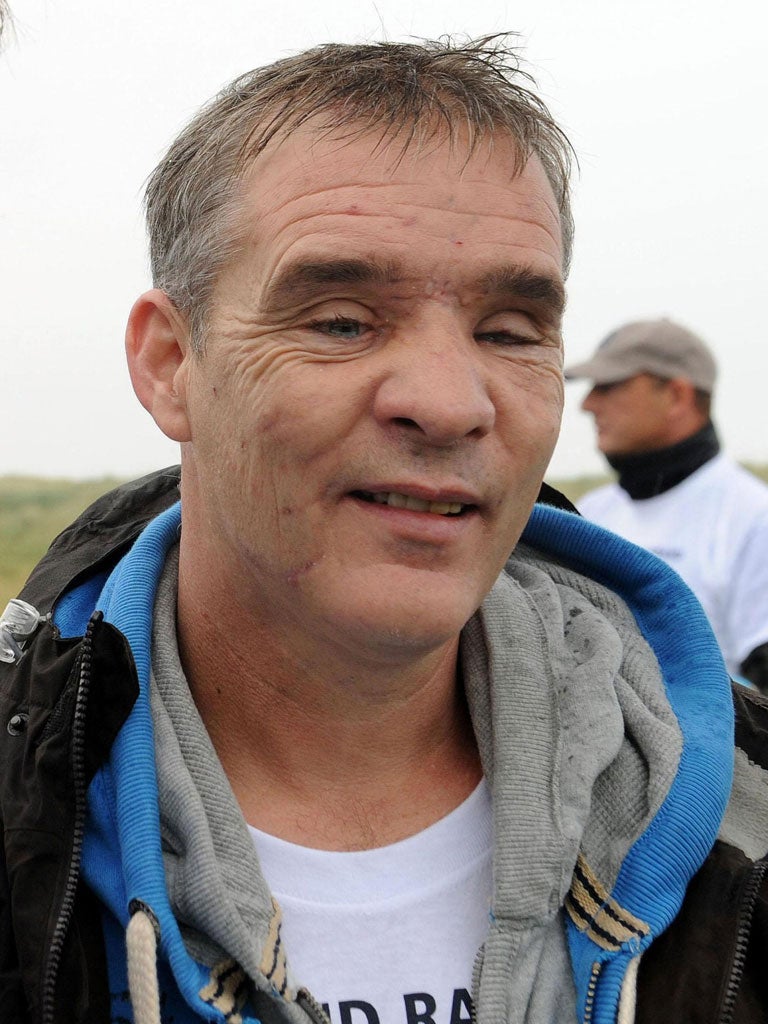
It can take a second. It can, of course, take much longer than that, but it can take just a second for a life to fall apart. For David Rathband, it took a few seconds for an unemployed bouncer to puncture his eyeballs, with 200 pellets from two separate gunshots, and it took a few months for his marriage to unravel, and it took a few more months for him to decide that he'd rather be dead.
When he left his home, to go to work, one summer's day two years ago, he must have thought that it would be a normal day. He must have known that when you're in the police force, your normal days aren't always as normal as other people's. That you can, for example, meet angry people, and dangerous people, and sometimes people waving knives or guns. But he probably didn't think, when he was called to a village where a man called Raoul Moat was making threats, that he would never see his wife or children again.
When he did realise that he would never see anyone he loved, or his home, or the green fields, or the trees, or the sky, when he realised, in fact, that he would never see a TV, or a newspaper, or the pavement he was walking on, what he tried to do was get on with his life. He tried to do quite a lot of the things you think you can't do if you can't see. But when you've been doing things one way for 40 years, because you've never had to worry about whether you can see, it's quite hard to carry on doing them when you can't. It can make you feel frustrated. It can make the people who love you, and who can feel your frustration, feel frustrated, too.
"I'm struggling," said David Rathband in an interview last September, "to deal with being blind." He could, he said, "feel the resentment" in people's voices for "having to guide" him around. He had, he said, spoken to "quite a few people" who had said it takes 10 years to "realise you can deal with being blind". He was, he said, trying his best, but couldn't "even see the next 12 months".
It was less than six months before he told the world that he was about to crack. He had, he said on Twitter, and you'd have to be desperate to say it on Twitter, lost his sight, his job, his marriage, and his wife. He was planning, he said, "to say goodbye" to his children. A few days later, he said he was "back on track". On Wednesday night, when police found his body in the flat he now lived in on his own, it was tragically clear that he wasn't.
What happened to David Rathband happens every day. People get shot, or stabbed, or hit by flying fragments, or by cars, or lorries, or buses, in accidents, and fights, and wars. Every day, all round the world, people who could walk, and move, and see, and hear, without any pain, and without any thought, suddenly find that they can't. They suddenly find that getting out of bed, or making a meal, or climbing a staircase, or crossing a road, which were things they always thought were easy, are hard. They suddenly think that what they had before was a life that was easy, and that that easy life has now gone.
Sometimes, this happens slowly, with illness and age. Sometimes, it doesn't need to happen, because something has happened in the womb which means that your sight, or hearing, or ability to move your legs or arms, has gone before you're born. If it's gone before you're born, you don't have to remember the life where you could do all the things you now can't, but you still have to learn how to do quite a lot of things in a different way to the people who can. You might be very good at it, and very good at your job, and very good at your relationships, and you might not think that any of this is hard. But most people, if they had to do things in a different way to most other people, and in a world that seems to have been designed for those other people, would probably find it hard.
You'd have thought that the people who can see, and hear, and move their legs and arms, and do an awful lot of things without having to think about how they're going to do them, would think that they were lucky. You'd have thought that they'd look at the people who did have to think about those things, and wonder what they could do to make their life easier. You wouldn't have thought that those people would be shouting nasty things at those people, and saying that they're "scroungers".
But, apparently, they are. Six charities, including the Royal National Institute of Blind People, and Scope, have just said that they are. They've said that attacks on disabled people are going up. They've said that two-thirds of disabled people say they have recently experienced "aggression, hostility or name calling". They've said that nearly half of them said that attitudes towards them had, in the past year, got worse.
David Rathband was a brave policeman, but he was braver when he couldn't do his job than when he could. When people are brave, as so many people around us are, every day of their lives, and as so many of us will one day have to be, what they deserve isn't resentment, or aggression or even pity, because nobody wants to be pitied. What brave people deserve, which our society doesn't seem to want to give them, is respect.
Too honest for his own good
"The government, the council and the agency," says John Lanchester in his new novel, Capital, "regularly denied that there was a quota for issuing parking tickets." But that, he says, "as everybody knows", was a "lie". Lanchester is right that "everybody knows", and one of the reasons we do is traffic wardens like Hakim Berkani. This week, a tribunal ruled that he was sacked for exposing the on-street parking enforcement company NSL's secret quota of 10 tickets a day. He's been given compensation, but that's not what he wants. He wants, he says, to be a "public servant".
It doesn't seem a lot to ask. Dear NSL, we'll hate you less if you take him back.
Ditch the workout, start world peace
For some of us, exercise is a grim necessity. We know other people have things called "endorphin rushes", but don't seem to have the gland that makes them happen. But when on a recent, rare gym visit, I saw a sign saying "ditch the workout, join the party", I decided I would. The "party" wasn't the kind where you nibble canapés and sip sauvignon, but the kind where you wiggle, and shimmy, and bounce. We all did: big, slim, black, white, Muslim, Jewish, and vaguely Christian, and as we moved, and sweated, we all – every single one of us – smiled. It's called "Zumba". It's a "Latin dance-inspired" fitness programme. It isn't world peace, but it's a start.
Join our commenting forum
Join thought-provoking conversations, follow other Independent readers and see their replies
Comments