James Delingpole: Never apologise, never explain. And you have 109 characters left...
The claim that 'I was quoted out of context' is the feeblest excuse of the lot
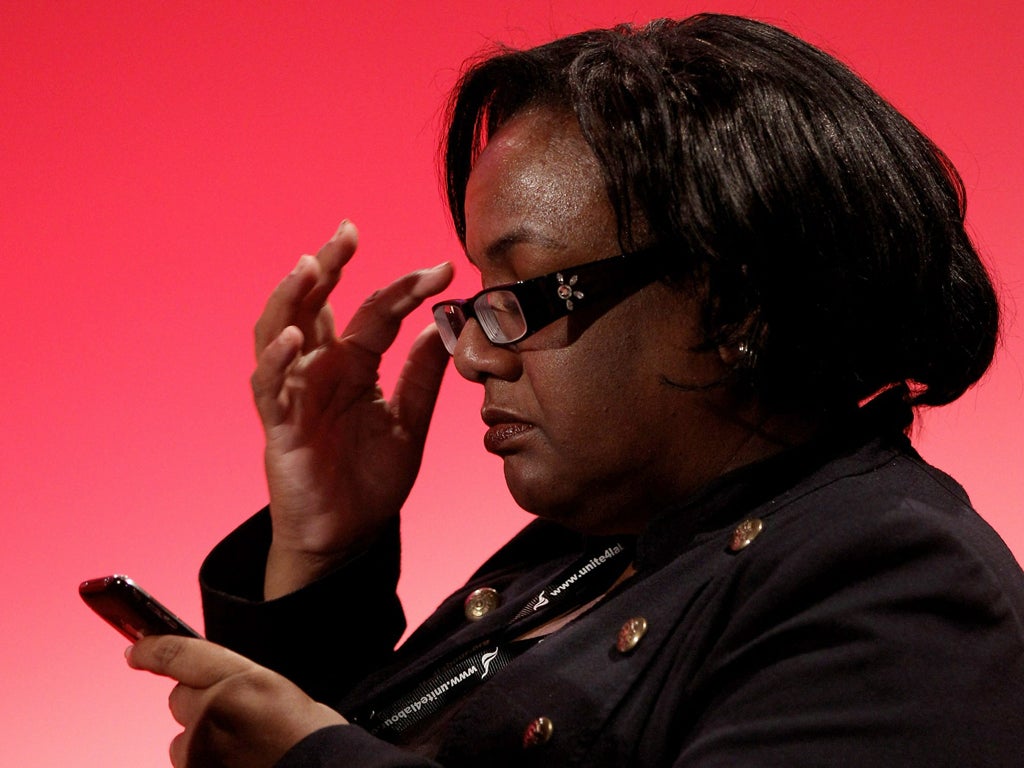
We can all sympathise, I am sure, with the predicament of Diane Abbott MP last week. "White people love playing 'divide & rule'. We should not play their game," she tweeted. Put under pressure to clarify this, she hastily explained: "Tweet taken out of context. Refers to nature of 19th- century European colonialism. Bit much to get into 140 characters."
Yep, we've all been there. There you are wanting to tweet a nuanced disquisition on ethnic communities under the white 19th-century imperial hegemony and, damn it, Twitter's wretched character limit has gone and cut you off before you've barely begun.
That's the charitable explanation. The uncharitable one is that with more than 2,200 tweets to her name, @HackneyAbbott really ought to have twigged by now that Twitter isn't the best medium for long essays. Nor even short ones. "Your tweet was over 140 characters. You'll have to be more clever," you're told whenever you try to exceed the limit. Everyone on Twitter knows this. It is, in fact, the whole point of Twitter. Is Diane Abbott really asking us to believe she is so clotted-cream thick that this most basic of points has eluded her?
No, of course she isn't. What Abbott is deploying here is the glib, formulaic get-out of dodgy celebrities and shyster politicians across the globe these days: the "I was quoted out of context" gambit; also known, when used by international footballers, as the "I was mistranslated" defence.
It's not meant to be taken seriously. It's just a formula designed to buy you time while the heat dies down. And though it ought not to work, it almost always does, not because anyone is convinced, but precisely because it's so lame. By the time we've got over our shock and amazement at the celebrity/politician's chutzpah, the story has moved on.
Another great virtue of this method is that you get to have your cake and eat it. Suppose, for example, you are the head of an Islamist state given to declaring at frequent intervals how much you would like to nuke Israel. Clearly, you don't want to lose any of the Brownie points this wins you on the "Arab street", but at the same time you don't want to become any more of an international pariah than is absolutely necessary. How to solve it? Simple: you do what President Mahmoud Ahmadinejad of Iran does and say you have been "mistranslated". It's Israel's "regime" you meant, not the whole country.
Or suppose you're the Right Rev Dr Stephen Venner, you've just been appointed Bishop to the Forces and, in a moment of overenthusiastic ecumenical outreach, you've declared that "the Taliban can perhaps be admired for their conviction to their faith and their sense of loyalty to each other". Or you're Laura Robson, the tennis star, and you've unguardedly told Vogue that your fellow female players on the circuit are a bunch of "sluts". Or you're Stephen Fry and you've told Attitude you think women have a completely different attitude to sex from men and actually find the whole business rather disgusting. Or you're Mary Portas and you've declared the female members of the Cabinet are an "ugly bunch" in desperate need of restyling.
Whatever your indiscretion, the solution is the same: just say you've been "quoted out of context" and voila!, as if by magic, your problem disappears. Which is quite odd, when you think about it. By rights, every time a celeb/politician uses this hackneyed formula, we should surely be laughing in their faces rather than pretending to take them at their word. After all, what exactly are they claiming when they say their words have been taken "out of context"? That somewhere out there, there exists a context where, in fact, it's really helpful and career-enhancing and admirable to call your party leader "a despicable creature without any redeeming features"? That there are situations, actually, where it's totally OK for a politician to make crass generalisations about a massive group of people purely on the basis of their skin colour? Absurd.
So why do we let them get away with it? Partly, as I suggested earlier, it may be that we're numbed into awed surrender by the brazenness of their cheek. Partly, too, it may be down to "There but for the grace of God go I" empathetic generosity of spirit. But mainly, I think, it's because in our information-saturated age where no one in the public eye gets much of a private life any more, we most of us tacitly recognise the need to cut these people a bit of slack.
Imagine, for a moment, a world where the "out of context" excuse didn't work its magic: one where Venner, Robson, Fry, Portas, and Abbott all had their careers destroyed for having been caught saying what they really think. It would be dull beyond measure. No one in the public eye would say anything even halfway interesting ever again. Their interviews would be unreadable; their tweets all as boring as, say, this from Twitter newcomer Rupert Murdoch: "Back to work tomorrow. Enough idling!"; or Piers Morgan's about Arsenal, or pretty much everything by Louise Mensch. The concept of "career safety" would plumb hideous new depths of self-censorship, hyper-cautiousness and white-collar corporate uber-blandness.
What's going on, in other words, is the same double-standards behaviour that drives so many of us to enjoy tabloid gossip, even as we profess to despise press intrusiveness and public prurience. We're hypocrites. Of course, we want to live in a world where the elected parliamentary representative for Hackney spends her time serving her constituents' interests rather than tweeting chippy, socially divisive and frankly racist drivel. But we also want to live in a world where our MPs are colourful and real, rather than just staid party apparatchiks. Pretending that Abbott's offensive tweet is an innocent mistake anyone could have made is the price we pay for having it both ways.
It was not always like this. Consider the case of the Duke of Edinburgh. Never once in his 90 years, so far as I recall, has he felt the need to claim that any of his myriad "gaffes" were out of context. Not when he asked a British student who'd been trekking in Papua New Guinea how he'd managed not to get eaten; nor when he asked a Scottish driving instructor how he kept the natives off the booze long enough to pass the test; nor yet when he pointed out, after the Dunblane massacre, that if you're going to ban handguns you might just as well ban cricket bats because they, too, could be a deadly weapon.
This may be a generational thing. Prince Philip comes from the era of "never apologise, never explain". And also, of course, the period before political correctness.
So, too, does Margaret Thatcher, probably the most famous victim of being "taken out of context" in political history. "There's no such thing as society," she once notoriously said. And she really did say it, too, in the course of a magazine interview, thus setting the seal on her premiership as an era of unbridled selfishness and rampant individualism.
But what's also true is that this quote really was taken out of context. Read the original article and see for yourself. Not even the most ardent Thatcher-hater could do so without conceding that the spin since put on that quote is grotesquely unfair; that what she meant in that interview – that the state is actually the enemy of social cohesion and that people and communities are what really matter – is the exact opposite of what she is supposed to have meant.
In this respect, like the Duke of Edinburgh, she is the last of a dying breed. For ever since that "pretty straight kind of guy" Tony Blair arrived on the scene, we have come to take it almost for granted that when our politicians swear blind they're telling the truth, they are lying through their teeth. And that, of course, when they claim they've been quoted out of context, they meant every single ugly word.
Join our commenting forum
Join thought-provoking conversations, follow other Independent readers and see their replies
Comments
Bookmark popover
Removed from bookmarks