Patrick Cockburn: Isolated, delusional, ridiculed by his men – the last months of Osama bin Laden
World View: But most of the interviews given by US officials and politicians to mark the anniversary of the al-Qa'ida leader's killing were fantasy

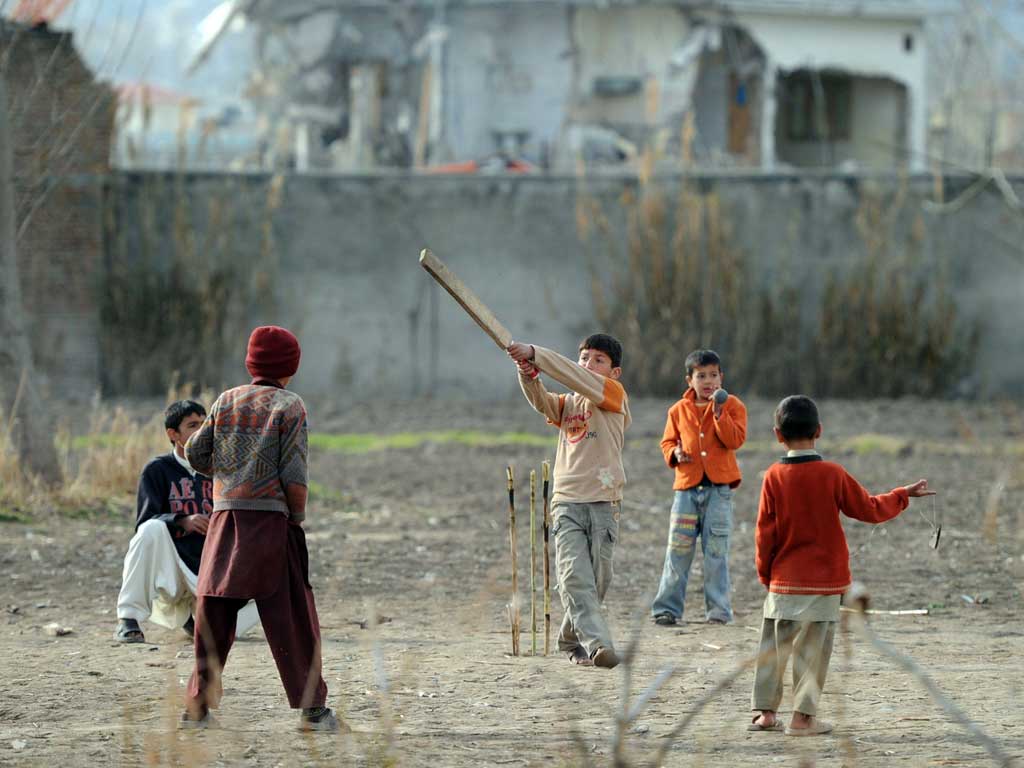
The story behind the tracking down and killing of Osama bin Laden remains a puzzle despite the torrent of documentaries and articles appearing on the anniversary of his death. An absurdly high number of American political leaders, generals, security officials and former CIA and FBI agents have given interviews claiming a central role in the hunt for the leader of al-Qa'ida. Many attribute their inability to find and eliminate him in Afghanistan and Pakistan over 15 years to the blindness and incompetence of other parts of the US administration. Most appear to have convinced themselves of their own clear-sightedness and willingness to tell truth to power throughout the long pursuit.
Much of this is fantasy. There are always those who delude themselves that they were the crucial brain behind any political, military or commercial success. The crop of those exaggerating their part in the hunt for Bin Laden is particularly high, because of obvious motives of career enhancement. President Obama's own role is systematically emphasised by the White House, as it is one of Mr Obama's few apparently clear-cut successes that he can milk for all it is worth during the presidential election campaign.
Immediately after the killing, administration officials portrayed Bin Laden as a spider at the centre of a conspiratorial web, the well-hidden but operationally active commander in chief of al-Qa'da. They later retreated from these claims that were obviously at odds with his demonstrably limited contacts with the outside world outside his compound in Abbottabad. This picture is confirmed by the release of 16 of his letters covering 200 pages last week showing him vainly urging new plots and policies on the organisation he once controlled.
Al-Qa'ida had targeted the US, but post 9/11, Bin Laden complained that its most successful affiliates or franchises were fighting local struggles in Iraq and Yemen and devoting their resources to killing fellow Muslims. It was alienating people by falsely taking money and "detonating mosques, spilling the blood of scores of people in the way to kill one or two who were labelled as enemies". In what would have been one of the most challenging re-branding operations in history, he considered trying to save the reputation of al-Qa'ida by changing its name. He suggested getting in touch with some half a dozen international journalists, including my colleague Robert Fisk and Seymour Hersh (assuming that the Simon Hirsh who appears in the translations released by the Combat Terrorism Center of the West Point Military Academy in the US is a mis-spelling of his name).
A striking feature of these letters is that there is no evidence that their recipients made any effort to carry out their leader's instructions. Bin Laden had become delusional about his organisation's capacity, suggesting shooting down the plane of President Obama.
There is another less obvious reason why the discovery of Bin Laden's last hideout remains puzzling. This is because of America's complicated relationship with the ISI, Pakistan's powerful military intelligence, and the Pakistan military that rules Pakistan. The ISI has long been expert in giving enough information and help to the US military and CIA to be useful to them, but not so much as to enable the Americans to act effectively on their own in Pakistan. It is at the same time the Afghan Taliban's main sponsor – and America's ally against it.
This gives an ambiguous quality to US intelligence operations in Pakistan. For instance, the US uses its drones to kill al-Qa'ida and Taliban militants in Waziristan and elsewhere. The drones are launched from within Pakistan, but they would be useless without intelligence on the ground identifying targets. An ISI spokesman once claimed privately to me that the ISI provided this intelligence, but here everybody has a reason to lie since drone attacks are unpopular in Pakistan, as is any intelligence co-operation with the Americans. As a result, both the ISI and the Pakistan military have a motive to deny any role in finding Bin Laden. Discretion on their part fits in neatly with the need of the White House, the US military and US intelligence agencies to claim all credit for identifying Bin Laden's compound in Abbottabad. Pakistani co-operation was briefly admitted and praised by President Obama on 2 May 2011, the night of the raid, saying: "It is important here to note that our counterterrorism co-operation with Pakistan helped lead us to Bin Laden and the compound he was hiding in." The nature of this co-operation was never spelled out by the US or Pakistan, and foreign media coverage has since focused almost exclusively on American actions.
The best-informed account of Bin Laden's last 10 years, and the way in which he was found, comes from the investigative journalist Gareth Porter writing for the US website Truthout. The main source for the scoop is retired Pakistani Brigadier General Shaukat Qadir, a 30-year veteran of the Pakistan army, who spoke to three different couriers in contact with Bin Laden between 2001 and 2003. They explain how and why he had been marginalised within al-Qa'ida in the two years after he escaped from the Tora Bora mountains at the time of the fall of Afghan Taliban in 2001.
By the account of these couriers, who had worked for Baitullah Mehsud, head of the al-Qa'da-linked Tehrik-e-Taliban in south Waziristan, Bin Laden played no active role in the leadership of his organisation after 2003. The couriers no longer felt bound by oaths of secrecy after Mehsud was killed by a drone in 2009. They say that the al-Qa'ida leader's physical and mental health had deteriorated after Tora Bora and he had to be moved from house to house in South Waziristan. He was becoming increasingly unrealistic and delusional, obsessed with a desire to attack Pakistan's nuclear reactor at Kahuta (though no bombs were stored there). "He had become a physical liability and was going mad," one courier told General Qadir, adding "he had become an object of ridicule" among militants in South Waziristan. Another courier said: "Nobody listened to his rantings any more."
A meeting of al-Qaida leaders followed in August 2003, held in a village in Nangarhar province in Afghanistan at which it was decided to keep Bin Laden as titular leader but quietly remove him from all operational control. Abbottabad was the final choice for his place of retirement because it was far enough from tribal areas and less under the observation of Pakistani and American intelligence agencies.
According to General Qadir, a routine inquiry by ISI into the owner of the Abbottabad compound, Arshad Khan, led to the CIA focusing on the compound. Khan was pretending to be a money changer in Peshawar, but the ISI found that there was no evidence for this. They ultimately asked the US for a satellite photograph of the compound where Bin Laden, isolated and embittered, was spending the last six years of his life.
Join our commenting forum
Join thought-provoking conversations, follow other Independent readers and see their replies
Comments