The ‘Dark Ages’ were a lot brighter than we give them credit for
We still view European history as taking off with the Renaissance and Enlightenment, but this position gets more out-of-date the more we learn
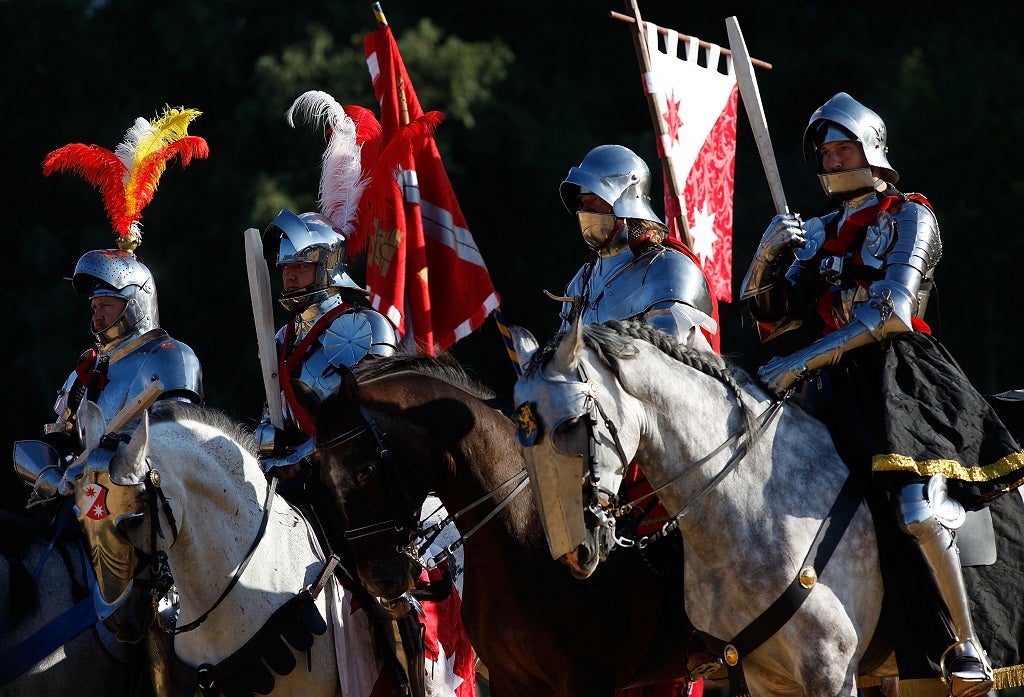
We tend to have a very blinkered view of the past, and the nature of those blinkers is often signalled by the terms we use: Dark Ages, Renaissance, Enlightenment.
A moment’s reflection is all that is needed to see the fallacy of the simplifying mindset underlying the introduction of such expressions, but they are surprisingly persistent.
We still tend to view European history and culture as ‘taking off’ with the Renaissance and Enlightenment, after a thousand-year period of stagnation following the fall of the Roman Empire. Our view is moulded by a long-standing reverence for the Classical period, and the populist image of this being swept away by hordes of barbarians whose names still resonate: Huns, Vandals, Visigoths.
There is no excuse for this. We’ve known better since Victorian times, and the Victorians would be appalled by our continuing ignorance.
The 19th century was a great age of rediscovery, when huge numbers of documents and manuscripts were published and medieval history and culture became widely respected and celebrated. The Dark Ages – dark only because of our ignorance of them – were dark no more.
The Houses of Parliament and Tennyson’s Morte D’Arthur remain eloquent testimony to that. The process has continued unabated, and both scholarly and popular attention has given us an increasing understanding of the whole medieval period.
In the 21 century events like the Royal Library’s exhibition of royal manuscripts, and recent TV series about manuscripts and the Vikings, mean that everybody is offered the chance to appreciate this often overlooked richness.
And yet the dismissive mindset can still be found amongst people who should know better. At a conference I attended recently, for example, a lecturer claimed that there had been no intellectual challenge to the authority of the Church before the Reformation, an assertion immediately corrected by several members of the audience.
So what’s in the Middle Ages? Why should we be paying more attention? Firstly, and obviously, because there’s great stuff in there. Literature like Beowulf and Sir Gawain and the Green Knight, architecture like the great cathedrals and castles, art like the medieval manuscripts and stained glass are all rivals to that produced in any age, Classical or modern.
But there is much more than this, as we are beginning, at last, to realise. There never was a sudden and unprecedented ‘renewal’ in the Renaissance. Science and philosophy did not begin in the Enlightenment. The processes involved had been present throughout history. The channels may have changed following the fall of Rome, but intellectual life, and the processes of historical, political, philosophical, cultural and scientific exploration continued in a thousand forms. Far from being a period of stagnation, it was a period of constant change and development.
Indeed, it is impossible to gain a just perception of what happens in the modern period without giving full weight to the forces at work in the Middle Ages. The shape and constitution of the United Kingdom was forged in the politics and history of the early medieval period.
Modern law and parliamentary democracy depend on Magna Carta and the development of the parliamentary system in the 13 and 14 centuries. Modern philosophy builds on the work on many great medieval thinkers, such as Augustine, Boethius, and Aquinas. Universities are a medieval creation, and scientific and technological innovations were numerous. Such is the continuity of change that historians now identify at least three medieval ‘ renaissances’: the Carolingian, the Ottonian and one in the 12 century. The world is constantly being renewed.
Many medieval topics are of immediate and crucial relevance to us all. Scottish devolution is a real prospect, and it requires a full historical perspective to understand it properly. The nature of Europe, and our place in it, has been a potent battleground for decades, and it would be well to examine the medieval past, when Britain was a European rather than an island nation. We might have a more balanced and rational discussion of the issues if we lose our relatively recent insistence on Britain’s insular status. Our very sense of identity is derived from a multicultural medieval mix.
We are probably never going to re-label all the eras of the past, although thankfully the epithet ‘Dark Ages’ has gradually been dropped, and the term ‘Modern Age’ is looking increasingly stretched as the years pass. But we need to go beyond labels altogether and look for what is really there. If we dismiss the significance of the Middle Ages, we miss a lot. It is time for us to open our eyes, and minds.
Richard Swan is a medievalist by training and a writer and teacher by profession. He is producing the session Illuminating the Middle Ages at this year’s Battle of Ideas, held at the Barbican in London on October 20-21.
Independent Voices is partnering with the Battle of Ideas festival to present a series of guest articles from festival speakers on the key questions of our time.
Join our commenting forum
Join thought-provoking conversations, follow other Independent readers and see their replies
Comments