What happened to the caring professions?
The Tory drive to make teachers and carers chase after statistics has hindered rather than helped
At a recent conference on health care an articulate professional researcher lamented that despite all the effort and money going into “researching best practices and technical innovation” healthcare workers remain beset by “frontline sclerosis” – an inability to care brought on by overexposure.
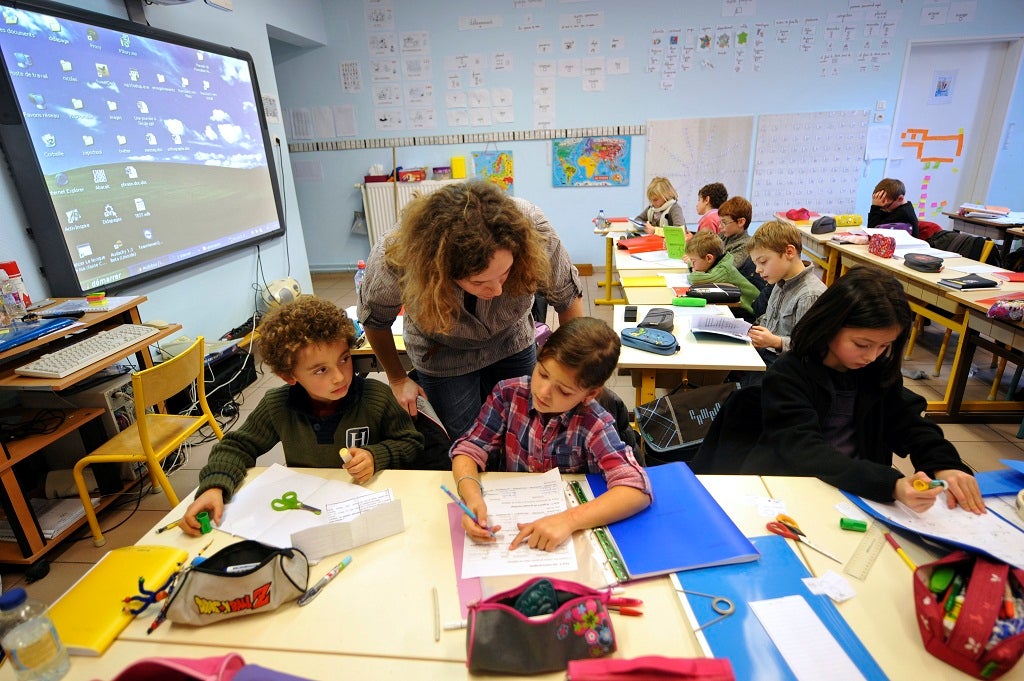
At a secondary school I recently taught at, emblazoned on the staff room wall was a poster with small photos of about 50 pupils and the heading “These are the pupils who will give us our 50% A* to C grades”.
The two snapshots got me thinking – they seemed to epitomize something so very wrong with what were once the liberal professions; work closely associated with humane learning and knowledge. Since when did it become acceptable to speak of frontline medical staff in terms of “sclerosis”?
And since when did we decide that pupils exist to justify the existence of league tables and a school’s position in them?
In a way the headline-grabbing horror stories of misdeeds in care homes, hospitals and schools are not the most helpful in trying to understand the nature of the problem.
It is more the everyday callousness implied in the above examples. What is going on? Can it really be the case that nursing and teaching professions are being staffed by more individuals of a dastardly nature? I doubt that.
I suspect the restructuring of professional institutions and concomitant relationships in the 1980s may have something to do with it.
When the Conservative government instituted new bodies of regulation, all manner of internal working of the profession were affected. Crucially existing principles and relationships were disrupted – in the name of greater technical efficiency and minimizing the risk of things going wrong.
In imposing their new regimes both political parties had to overstate the need for change and devalue past knowledge and experience – it was a necessary corollary to establish new centres of authority.
Chasing data
And with each fresh horror story, government and policy makers drew the conclusion that more of the same was needed. So today, teachers need to be told how to arrange desks and carers are banned from hugging their clients for fear of seeming patronizing.
Any personal commitment to a more traditional humanist idea of professionalism is unlikely to survive such an onslaught.
Responses of individual professionals tend to fall into three categories: conversion, burn out or amotivation. It is the last of these that I think is most prevalent. It is not the same as being de-motivated or openly hostile. Rather it is when an individual no longer feels any connection between their inner self and their actions.
For when every minute task is represented to us as compulsory obligations to be imposed and assessed by new forms and bodies of monitoring, important organic links between inner direction and behaviour are weakened.
One effect of the new, technocratic managerialism is to restrict the scope of professional work in two ways. Firstly, if every task is broken down into a discrete isolated act, then eventually we tend to feel responsible for only that act – and ignore or forget its existence as part of an extended ongoing professional practice with intrinsic values.
So if a checklist is complete and targets reached, then the substantive work, which is often longer-term, more difficult and less empirically visible, disappears.
Speaking at the Battle of Ideas on this topic at the weekend, my fellow panellist Raymond Tallis said, “Each datum entered may be a kindness lost”. It is this shrinking of our moral imaginations that is harder to see but arguably, the most important thing to try and understand. American philosopher Martha Nussbaum refers to a diminished “circle of imagined interests” – which is our capacity to extend care and compassion to strangers. We do not have to personally love each patient or pupil as long as what we do is underpinned by our commitment to our profession. And this is just what is being eroded.
Join our commenting forum
Join thought-provoking conversations, follow other Independent readers and see their replies
Comments