Can journalists ever be trusted to keep a secret?
Dart-playing Telegraph correspondent has been banned from the British social club in Islamabad - in case he reports the off-hand gossip of diplomats

Unsettling news reaches me from Islamabad - news of the I'd-not-want-to-join-any-club-that-would-have-me nature.
It has emerged that a member of the British media has been told he is not allowed to attend events at the British social club, attached to the British High Commission and located inside the diplomatic compound, simply because he is a journalist.
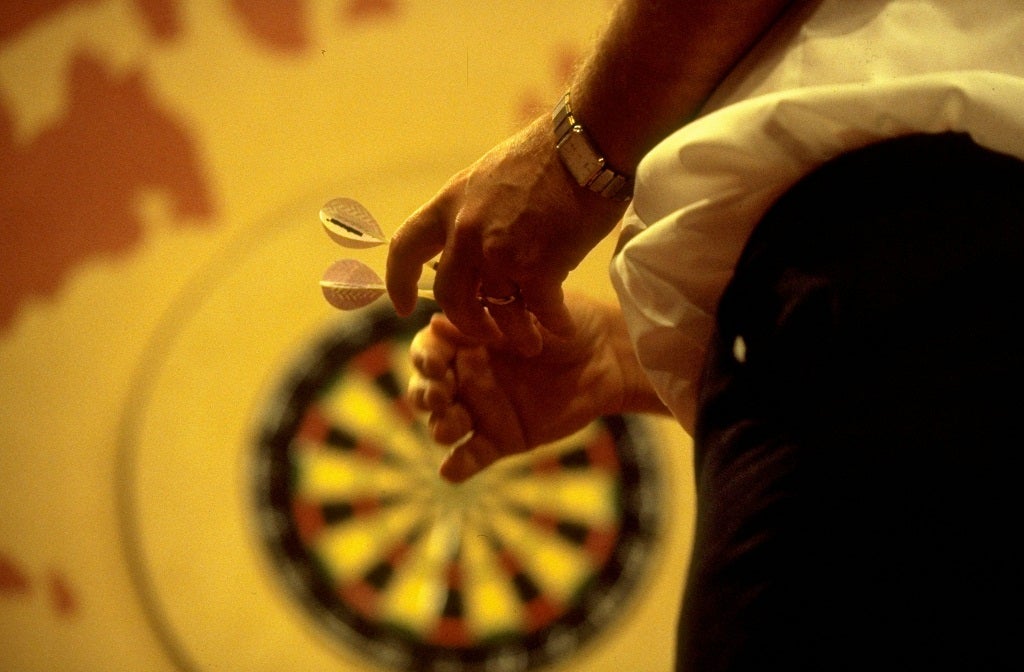
Rob Crilly, the affable and hard-working correspondent of The Telegraph, is a keen (and perhaps, rather skilled) practicioner of darts and this spring was a member of a team, Who Darted?, and played in a league that was held at the Canadian High Commission club. Mr Crilly was looking forward to the autumn season which is to be held at the British club, when his team captain received a message from the committee stating that the Telegraph's man would not be welcome.
"Unfortunately, the ban on journalists is a club rule - not a darts committee rule. The club committee are quite firm on this so I am afraid that Mr Robert Crilly will not be allowed to take part," the message said.
A spokesman for the High Commission in the Pakistan capital confirmed the ban was specific to journalists and that had Mr Crilly worked for a road construction firm, for instance, he would have been permitted. Diplomats relaxing at the end of a long hot day with a cool lemonade or some such, it appeared, did not their casual conversations reaching the ears of pesky journalists.
Several things struck me about this. Firstly, some diplomats, rather like a lot of journalists, are rather convinced that everything they have to say is fascinating when often it is not. Secondly, whenever I've witnessed diplomats interacting with journalists in Pakistan, they have usually been very interested in receiving the latest news and gossip and updates, especially if that journalist has just returned from somewhere that travel restrictions prohibit the diplomat from visiting. Thirdly, there is the matter of common-sense. Surely, people are sensible enough to sort out an agreement whereby whatever said on the premises is off-the-record.
As it is, the ban on journalists at the British club is nothing new and members of the media have for many years found themselves more welcome at either the Canadian Club or the French Club than at the British establishment. It's odd because the overwhelming majority of the British diplomats one runs into are very pleasant and smart and sociable. It's also strange because this is not a rule that applies to all British diplomatic clubs. Here in Delhi, for instance, the media are welcome along with other members of the British expat community to join the Green Parrot social club, which has a small but indispensable selection of British beer and erudite coversation.
Whether or not Mr Crilly is stopped from playing darts is not a matter of life or death. But there may be a more serious issue here: the diplomatic compounds are, obviously, paid for by British taxpayers and while I'm sure most people would not begrudge a safe facility to enable diplomats working in a country such as Pakistan the chance of relaxing once in a while, the rules on entry ought not to prohibit someone just because of their job.
There appears to be some lack of clarity about how much precisely the club costs. A spokesman told me ongoing costs are paid for by the members, but there is no separate breakdown of additional fees such as security. A spokesman for the Foreign Office in London said in a statement: "Decisions on membership of Embassy and High Commission social clubs are taken locally by club committees and their members according to their own rules and regulations. These vary from post to post, as you would expect with any social club."
It may be that Mr Crilly has not done anything to help make himself popular among the British diplomatic corps. Last year he wrote about £30-a-head "Monsoon ball" at the club that shocked many observers, given that it took place at a time when the country was recovering from devastating floods.
There is another possible explanation for this whole stand-off, hinted at by Mr Crilly himself, and that is that the members of the British team are simply too intimidated by his skills in front of the darts' board.
Join our commenting forum
Join thought-provoking conversations, follow other Independent readers and see their replies
Comments