Tax cuts cannot keep the grim reaper at bay
Political Commentary
Sign up for the View from Westminster email for expert analysis straight to your inbox
Get our free View from Westminster email
IN THE fuss about the censoring of Mr John Major's Panorama interview in Scotland, no one seems to have noticed that he has done what no prime minister has before. He has told us the date of the next general election - or what he hopes it will be: April 1997. He has promised us two Budgets which will cut taxes. Unless there is a special Budget, these must occur in November this year and next.
General elections do not take place in December or January. There were February elections in 1950 and 1974, neither with specially happy results for the party calling them. In 1966 Lord Wilson went to the country on the last day in March. Lady Thatcher went twice in June, which she considered to be her lucky month. Likewise Mr Major, who defeated polls and pundits three years ago, thinks April is his.
Certainly other prime ministers have tried to assuage election fever when it has got out of hand. Sometimes they have done this because their right to determine the date is in danger or being pre-empted by the press, a combination of ministers or both. Sometimes they have done it because they and their colleagues feel that genuine harm is being inflicted on the country by all the talk. Usually the motives are mixed. Lord Home's were so when, in 1964, he announced that the election would not take place in the summer but that the Parliament would run its course. Nothing of this kind is involved here. Mr Major is looking not months but years ahead.
His right to call the election is by no means absolute. Other colleagues can have their say. Indeed, before announcing the date of most recent elections, prime ministers have gathered around themselves small groups of favoured ministers and senior party functionaries. The idea that the timing of a general election is a matter solely for the prime minister and cannot properly be discussed in Cabinet derives from Sir Ivor Jennings's Cabinet Government. He is in error. The prime minister rarely acts on his or her initiative alone. Even Lady Thatcher never did.
It is a different matter to assert that only the prime minister has the right to request a dissolution from Her Majesty. Only the prime minister can ask the Queen. This does not mean that his colleagues have no right to put their views to him beforehand. It is not even settled what the Queen would do if, after a defeat in the House, the prime minister came to her to request a dissolution, but the majority of the Cabinet objected to the course he was proposing.
This is not a theoretical matter. It might have arisen during the Maastricht debates. The Whips made numerous threats of an election in the event of various defeats in the House. Cabinet ministers privately expressed unease. They would have preferred to accept the defeats than go to the country. As one of them put it at the time, referring to the threatened visit of Mr Major to the Palace: "We wouldn't let him get halfway down The Mall."
Mr Major is not thinking of this kind of thing but of tax cuts. The voters of Scotland were prevented from seeing this admittedly somewhat prosaic vision of the future displayed before their wondering eyes. Our great broadsheet newspapers united to denounce this interference by the Scottish judiciary in British political broadcasting. It was invoked by Mr Tony Blair's press secretary, Mr Alastair Campbell, supported by the Liberal Democrats. The papers' argument seemed to be that, while it was imprudent of the BBC to carry this particular interview three days before the Scottish elections - and while, moreover, the corporation would have desisted had they been English elections - nevertheless the involvement of judges in what might be broadcast was a reprehensible threat to free speech.
This argument is mistaken. The BBC and the independent broadcasters have obligations laid upon them by statute and, in the case of the former, by the licence agreement. One of these obligations is to preserve political impartiality. Newspapers are under no such legal duty. This column is under no such duty, though it tries hard. We may wish that broadcasting were like newspapers. With the advance of technology, and the consequential loss of power by national governments, it is becoming more so. It may be that posterity will look back on television in the present age as we look back on the government-licensed newspapers of the 18th century. But, for the moment, broadcasters have to obey the law. If we do not like the law, we can change it before technology changes it for us.
Mr Major is certainly not going to change it. Nor is Mr Blair, when and if he forms a government. Both have other things on their minds. If Mr Major's view of the next two years is prosaic, it is also too self-confident by half. As we all know, prime ministers have to go through these motions. So do their Cabinet colleagues, as we saw last Thursday, when they broke off for the Easter holidays at least a week too early, judged by any criteria of honest endeavour. There is not the slightest reason for the Commons to adjourn over a week short of Good Friday.
Whether the House can survive for another two years, until the favoured date of April 1997, is more doubtful. It is not generally realised how precarious the Government's parliamentary position is. The assumption seems to be that, when the nine whipless ones are restored to the body of the kirk, all will be more or less well. This view is decidedly optimistic. Mr Major's greatest enemy is not the European division within his own party. Still less is it Mr Blair. It is not even Mr Michael Heseltine. It is that fell sergeant, Death.
There are now 329 Conservative members, including the whipless. In a House of 651, 326 are needed to constitute an absolute majority. Over the years, standards have changed of what it is possible for a government to achieve with a small majority, or none at all. This change has been a consequence of the Labour governments' experiences in 1964-66 and 1976- 79. Politicians now believe that, in comparison with the past, it is possible to do more with fewer votes. In 1950 Labour won 315 seats, two more than an absolute majority in the House. The result was a constitutional crisis on a small scale, accompanied by impudent proposals from Buckingham Palace that a national government should be constituted.
Today we are more robust. None the less, if the Conservatives lose only four seats after Perth and Kinross, Mr Major's absolute majority will have vanished. On average, there have since the 1987 election been between three and four by-elections a year. Since 1992 Mr Major has lost seven Conservative seats. The loss of another four before April 1997 would be par for the course. From his point of view, the 12 Ulster Unionists can now be written off.
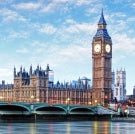
No one knows how next year's inter-governmental conference will play at the Palace of Westminster. Mr Major could yet find himself having to trot off earlier than he would have wished to that other palace across St James's Park.
Join our commenting forum
Join thought-provoking conversations, follow other Independent readers and see their replies