Bottom falls out of the art market as Manet and Rothko fail to sell
Auctioneers feel the chill as sluggish sales and lower prices signal end of a boom
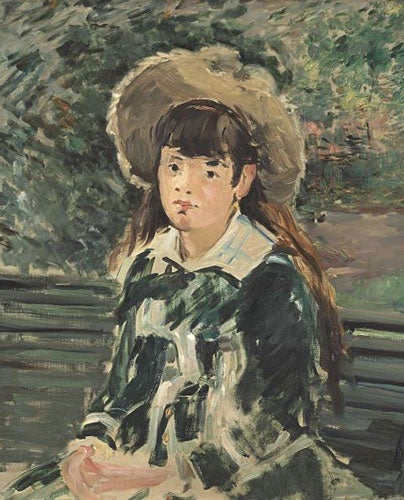
For so long, the booming art market had appeared impervious to the dipping fortunes of the global economy. But experts now fear the bubble may finally have burst after museum quality paintings by Mark Rothko and Edouard Manet failed to sell at auction. Major sales by Sotheby's and Christie's in New York achieved totals that were millions of dollars below even their lowest estimated prices this week.
On Wednesday night, a post-war and contemporary art sale at Christie's sold half of all the 58 lots at below their expected price, with 30 per cent failing to sell at all. The overall total for the sale was $47m (£38m), well below its estimate of between $100m to $150m.
No43 (Mauve), a painting by Rothko, whose work has set and broken auction records in recent years, failed to sell for between $20m and $30, while multimillion-dollar paintings by Manet did not attract any buyers.
The auction house was last night waiting to see if results of its Impressionist and Modern Art sales would come close to the $240m to $340m estimated total. Marc Porter, Christie's president, reportedly blamed the "difficult economic climate" for the poor results.
A spokesman offered some reassurance, saying: "People are more considered about what they are going to bid for. There is a difference to the art market but at the same time, considering the scale of what's been happening in the financial sector, we are still seeing significant amounts of money changing hands and plenty of liquidity and committed bidding."
Some in the industry suggested the disappointing sales signalled a downturn in the market after a decade of rising prices, and others questioned how much it might plunge.
A Sotheby's sale on Monday night failed to reach its low estimate of $339m, securing only $223m, with a total of 25 works out of 70 remaining unsold including paintings by Monet, Matisse and Cezanne.
A Sotheby's statement said the result was not unexpected in the light of the receding economy but that people were still buying. "This was the first true test of our market in this new environment, and what we saw is that the market is clearly alive," it said. "[The] sale was assembled over the summer and by the time the catalogue came out we were living in a completely different world."
The auction house said bidding among American buyers had remained strong. Three works had bucked the depressing trend, selling for more than $30m, each establishing a record for the artist at auction: Kazimir Malevich's Suprematist Composition sold for $60m, the highest for a Russian work of art at auction, Edvard Munch's Vampire achieved $38m and the Edgar Degas Danseuse Au Repos sold for $37m, also a record for any work on paper ever sold at auction.
The Art Newspaper reported that auction houses were reducing guarantees and lowering reserve prices in the aftermath of weak sales in London and Hong Kong last month. The Wall Street analyst, George Sutton, has predicted entry into "what could be a challenging year for the auction market".
Ian Peck, the chief executive of the art finance firm, Art Capital Group, said the auction results at Sotheby's had been a wake-up call to the art world which "firmly demonstrated that the concept of a recession in the art market is not abstract but real. Prices in all categories – the trophies, the great, and the merely good – were less contested, if at all, and end prices were likely reduced by 20 to 40 per cent".
But Charles Dupplin, from Hiscox art insurers, said it was important to assess the market's financial health after the week-long auctions in New York as well as the Art Basel Miami Beach art fair in December, a major commercial event in the art industry's calender. "It's clearly very tempting to leap to an instant conclusion and there clearly has been a shift in appetite in the market but whether this is realised in prices coming down or not is the real question," he said.
Art and recession: A brief history
The fortunes of the art market tend, as one might expect, to follow those of the economy. After the heady days of the 1980s, the price of art plunged in the early Nineties. However, it was a very different market from today, with collectors from America, Europe and Japan buying largely with borrowed money. When the Japanese economy faltered, so did the art market. It remained in the doldrums for much of the Nineties, after which it began slowly to rise. A tiny dip in 2000 was followed by a further rise, with some parts of the market, such as contemporary and Russian art, growing quicker than others.
Buyers in the Eighties and Nineties formed a narrow collecting pool. Today, there is a much more global group due to modern communication and online bidding. The growth of economies in India and China might soften any impending crash.
Join our commenting forum
Join thought-provoking conversations, follow other Independent readers and see their replies
Comments