Victory for baroness in art feud
Madrid's glittering Thyssen-Bornemisza Museum has been rocked by a family row between its powerful owner and her stepdaughter. Elizabeth Nash reports
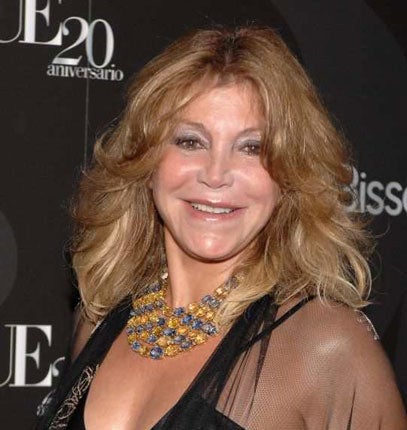
Baroness Carmen Thyssen-Bornemisza, owner of one of Europe's finest private art collections rivalled only by that of the Queen, has emerged victorious from a bitter feud with her stepdaughter.
The baroness has rebuffed insistent demands from Francesca von Habsburg, who is also a collector, to mount an ambitious exhibition of avant-garde contemporary works in the Thyssen-Bornemisza Museum in Madrid, on whose board the she has a deciding voice.
The former Spanish beauty queen became the fifth wife of Baron Hans Heinrich ("Heini") von Thyssen-Bornemisza in 1985 and, after his death in 2002, one of the world's richest and most powerful art patrons.
But from the moment she married, she was at loggerheads with the children from Heini's four previous marriages, in particular Francesca von Habsburg, daughter of the baron's third wife, the Scottish fashion model Fiona Campbell-Walker.
Francesca has been pushing hard to exhibit works from her own foundation, T-B A21, in the Thyssen-Bornemisza museum. Her collection includes 300 video and digital works. But the baroness has turned her down, saying the proposed exhibits were too avant-garde. "The museum cannot lose its prestige by mounting radical exhibitions. We have to be very careful," she told yesterday's ABC newspaper.
Francesca's collection includes works by young contemporary artists Olafur Eliasson, Carsten Holler, Sarah Morris and Thomas Struth. She wanted to clear the entire first floor of the museum to display them in an exhibition to be called Natural Fictions, an artistic reflection on nature. She also commissioned a provocative radical installation by the Raqs media collective to form part of another show, Shooting Black, a reflection on identity, traditions, folklore and rituals by artists from India, Tibet, Serbia, Croatia, China and Lebanon. The works have been shown with success in Vienna, but the Thyssen museum's trustees declared them "too difficult and controversial".
The flashpoint that torpedoed the talks was Francesca's request to turn the museum's airy, open, rose-washed entrance hall into a Tate Modern-style Turbine Hall to house a massive installation by the Brazilian abstract artist Ernesto Neto that would have filled the space. The installation would involve clearing two massive portraits of King Juan Carlos and Queen Sofia, and two lifesize, chocolate-box portraits – dear to the baroness's heart – of her and Baron Thyssen-Bornemisza in full evening dress, accompanied by her favourite fluffy dog. Francesca proposed to invite a prominent contemporary artist once a year to "interpret the space, and a work in the collection." The Neto work was to have interpreted El Greco's The Annunciation.
The baroness says the remit of the Thyssen stops at 20th-century modern art. "This is not a contemporary art museum, rather a modern art museum," she said. The first floor, which Francesca wanted to clear for her exhibition, is devoted to 20th-century paintings by artists including Jackson Pollock, Mark Rothko and Roy Lichtenstein, which form a strongpoint of the Thyssen-Bornemisza collection.
"These are important paintings that many people come to the museum especially to see," the baroness said yesterday. "That room would have been emptied. We didn't want the public to find to their surprise an exhibition that had nothing to do with these extremely important and expensive paintings." Contemporary works by living artists are exhibited in Madrid's Reina Sofia museumjust down the road, and the baroness does not want to tread on its toes. "Every museum must have its identity."
Hostility between the two women hostility goes back decades. Francesca is married to Karl von Habsburg, grandson and heir of the deposed Austro-Hungarian emperor, Karl. She is curator of a sizeable chunk of her father's art collection that remains in the Villa Favorita, the family seat in Lugano, Switzerland. But the baron, while alive, complained that his daughter constantly pestered him for money.
Francesca may be linked to a royal house, but the more modestly born, albeit convent-educated, baroness pulled rank to say that the museum's trustees would show Francesca's collection only in existing temporary exhibition rooms. Francesca said these were too small, and pulled out.
Before this latest triumph, Carmen Thyssen was last in the public eye in 2006 when she chained herself to one of the ancient trees in the leafy Paseo del Prado near the museum, a gesture of protest against an urban renewal scheme that proposed chopping down hundreds of mature trees to widen pedestrian access. She won enormous public support. At the height of Spain's building frenzy, trees were being axed all over Madrid. Revised plans that preserved the trees emerged periodically, until recently when the town hall declared the entire scheme suspended because of the economic crisis.
Despite her ditzy manner, the baroness showed from the start she was a shrewd operator with a keen eye for good art. The baron, happy at last after four disastrous marriages, said he wished he'd met her sooner. She persuaded her husband to install his magnificent collection in Spain, in the teeth of his family's opposition.
Join our commenting forum
Join thought-provoking conversations, follow other Independent readers and see their replies
Comments