Books

7° London Hi 11°C / Lo 5°C

400 years young: The magic and mystery of Shakespeare's Sonnets

They were deemed passé when he published them. Yet this collection of 154 poems, romantic, revealing and rude, changed literature forever. Boyd Tonkin introduces his selection, while fans nominate their favourites.
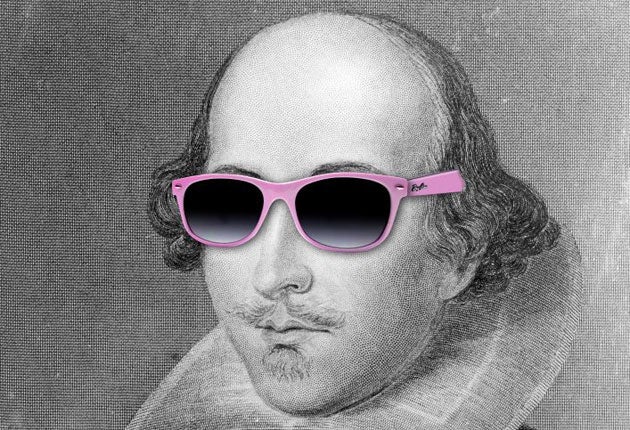
William Shakespeare's 154 Sonnets have, over four centuries, changed literature

GETTY IMAGES

William Shakespeare's 154 Sonnets have, over four centuries, changed literature

A collection of sonnets? Forget it, Will: they died more than a decade ago. Oh, so you wrote most of them around that time, when you were a hip young upstart? And now you're peddling this retro vanity project around the scene? And you expect us to roll over because you're some hotshot actor-manager-entrepreneur sitting pretty as a senior partner with the King's Men and raking it in from two theatres, the Globe and the Blackfriars? Believe me, Will, no one cares any longer. They'll sink like a lead balloon. Go home and write some more of that experimental stuff for your posh new mates - Pericles, was it? Give me the Dream any day. Bottom! Puck! Now that's what I call comedy..."

In 1609, the publisher Thomas Thorpe issued Shakespeare's 154 sonnets in a handy quarto-sized edition, with a mysterious dedication to "Mr W.H.", their "only begetter", and the poem "A Lover's Complaint" printed as a coda. A come-hither line on the title page, "Never before imprinted", suggests that the Jacobean literary world had been agog to read these soul-baring revelations from a celebrity of the London theatre scene. Critics who treat the Sonnets as some sort of erotic autobiography in poetic disguise have been happy to swallow the notion of their publication as a scandalous kiss'n'tell, with Thorpe sometimes even cast as a pirate who purloined the manuscript.

The reality was, in all probability, less thrilling. We know from a reference in 1598 to "sugared sonnets among his private friends" that Shakespeare had been practising the form over many years. Two sonnets, 138 and 144 in the 1609 edition, had surfaced in a 1599 anthology, The Passionate Pilgrim. The vogue for sonnet sequences that told the story of a tormented love affair, with lofty mystical and symbolic overtones, had already peaked by the mid-1590s. Authors such as Philip Sidney, Edmund Spenser and Samuel Daniel (whose collection was entitled Delia) had led the 14-line charge.

By 1609, this fashion had long passed. Far from appearing as a titillating inside-track report on the private passions of a bigwig from the London stage, the Sonnets would have looked old-hat. No one even bothered to reprint them until 1640. Imagine some middle-aged monster of stadium rock going to his manager today with the idea of a perky Britpop concept album, mid-1990s style. Underwhelming, to say the least.

Yet Thomas Thorpe and his printer, George Eld had struck gold. Shakespeare's Sonnets have, over four centuries, become the pattern and paragon of intimate lyric verse. Into (with a couple of exceptions) the same simple rhyme scheme and standard division into three four-line quatrains and a final couplet, he packed an entire universe of love, lust and longing. All the emotions that lovers, rivals and the witnesses to others' passion overtly feel sing out with a compressed intensity. More remarkably, so does the ambiguous shadow-side of love the melancholy of fulfilled desire, the murderous rage of jealousy, the fear of hurt that comes with overpowering want.

For every blissed-out "Shall I compare thee to a summer's day?" comes a disgusted outbreak of "Th'expense of spirit in a waste of shame/ Is lust in action". ("Spirit" is semen, among other meanings.) Each tear-tugging tribute to the beloved's fortifying memory ("For thy sweet love rememebered such wealth brings,/ That then I scorn to change my state with kings") has to be weighed against some cynical riff that takes deceit and treachery for granted: "When my love swears that she is made of truth,/ I do believe her though I know she lies." Here "love" embraces hate, loathing, aggression, narcissism, predation, self-pity, suspicion, fury and grief. As in the Sonnets, so in life.

However universal the passions they dissect, the sequence has several unusual even unique - attributes. This bard of flesh and soul also knows English law inside out ("summer's lease hath all too short a date"). His tangled mini-dramas of desire and disappointment play out not in some abstract heaven strewn with gods and myths but a city of law courts, docks, playhouses, taverns, warehouses, whorehouses in effect, Shakespeare's London. The first 126 poems are addressed to a young man, the "fair youth" of Shakesperean legend. No one knows whether this figure had any real-life counterpart. Henry Wriothesley, Earl of Southampton, and William Herbert, Earl of Pembroke, have been since Regency times the most-favoured candidates. Still less do we know if the passionate friendship recorded so commonplace in Renaissance life and literature - had a physical dimension. We can't say yes; equally, we can't say no.

The poet advises the lovely youth to marry and procreate; flies into a rage when he seems to have an affair with the writer's mistress; frets when the youth gets close to a rival poet; 'fesses up to a fling with another lover; laments the yawning gap between his great age and the beloved's youth; celebrates the triumph of love ("an ever-fixed mark/ That looks on tempests and is never shaken") and the verse that immortalises it over the ravages of "devouring time". Then, from Sonnet 127 onwards, a brunette and possibly dark-skinned mistress, the equally mythic "dark lady", takes centre-stage.

As with the fair youth, the evidence-free roster of real partners never stops swelling. Emilia Lanier born Aemelia Bassano to a migrant family of Venetian musicians features most often in modern speculations. Again, we know nothing about her and Shakespeare, although she did enjoy an extraordinary life. In the poems, this practised minx has been around the block, and then some or rather, it excites the poet to feel teased and tricked by some sultry mocking tramp. The more she plays the bitch, the hotter our smitten poet grows even though he's "anchored in the bay where all men ride". Then, in the final pair of poems, the sequence retreats into a pretty but conventional conceit about Cupid and Diana's nymphs. As elusive in the finale as they have proved throughout, the Sonnets end with the sort of stuff that minor scribblers once churned out before old Shakespeare belatedly came along and galvanised this dormant form with a truth, wit and fire that made it new, and made it last.

What's your favourite sonnet? Let us know in the comments section below.

Post a Comment

View all comments that have been posted about this article.

Offensive or abusive comments will be removed and your IP logged and may be used to prevent further submission. In submitting a comment to the site, you agree to be bound by the Independent Minds Terms of Service.

Comments

Interesting but unfocused article
[info]evantej wrote:
Wednesday, 20 May 2009 at 01:50 am (UTC)
I am not sure what you wanted to achieve with this piece but it is nice to read a literary article on the Independent website nevertheless.

Your main point ? that Shakespeare somehow ?galvanised this dormant form with a truth, wit and fire that made it new, and made it last? - is debatable, and poorly argued at that. The Italians (Dante and Petrarch) preceded Shakespeare by over 200 years, establishing their own conventions which Shakespeare merely reacted to. And after studying an English literature 1590-1625 unit on my English degree this year, I will make two points: that Shakespeare is more known for his plays, and his plays and sonnets are inferior to a number of his peers.

I agree with T.S. Eliot's assertion that ?the perception of why Shakespeare, or Dante, or Sophocles holds the place he has is something which comes only very slowly in the course of living? but I must say I thought Middleton and Rowley's The Changeling was utterly fantastic and surpassed every Shakespeare play I have read (Macbeth, Hamlet and Twelve Night) by some margin. The Changeling is structurally flawless, and deals with all the themes you highlighted in a more vigorous and orderly manner. Spenser is by no means Shakespeare's inferior in too; avoiding going off on a complete tangent.

Shakespeare, as a number of your examples point out, has a lovely turn of phrase but I believe he is over-rated, or perhaps his peers are undervalued. He is the people's poet but not the writers. That distinction surely goes to John Milton.
Sheikh Zubair of Basra
[info]drug_baron wrote:
Wednesday, 20 May 2009 at 03:55 am (UTC)
Why is it so difficult to accept the "Shaekespeare" is really Sheikh Zubair from Basra Iraq ?

All the historical data and even the time-line conclusively proves that Sheikh Zubair was an Iraqi poet and author of plays from Basra; yet there is a succession of concocted tales about him being an Earl or a nobleman from middle England and all and everything except anything that will show his true identity.

Is the indoctrination so great, that it is difficult to digest that our dear Shaekespeare was indeed an Arab.........none other than Sheikh Zubair ?
Re: Sheikh Zubair of Basra
[info]andrea_2 wrote:
Wednesday, 20 May 2009 at 08:15 am (UTC)
I know I'm going to regret asking this: But what evidence? And please don't point me towards the internet. Anyone can put anything on there and within a week everyone will take it as fact.
Re: Sheikh Zubair of Basra
[info]drug_baron wrote:
Wednesday, 20 May 2009 at 09:13 am (UTC)
Lets face it; you would rather give up "Yorkshire Pudding" or your Sunday Roast than accept that Shakespeare was indeed the son of a "sandn!gger"

Try the British Library luv, its in Euston, marvellous place, you can get all sorts of info there; authentic and original.

It may come as a shock to your conformist agenda; but then our MPs have shocked us as well; have they not ?
Re: Sheikh Zubair of Basra
[info]andrea_2 wrote:
Wednesday, 20 May 2009 at 10:46 am (UTC)
Your reply is offensive but then what else did I expect?

When people refuse to give a straightforward answer it is always because they don't actually have one.

Why should I accept what you have to say if you refuse to provide evidence. I don't live in London so popping to the British Library is not an option, so some references please.

Re: Sheikh Zubair of Basra
[info]drug_baron wrote:
Wednesday, 20 May 2009 at 11:37 am (UTC)
By your logic Shakespeare should not exist !

There is no record of Shakespeare's birth, so it is conveniently assigned as 23rd April (same day as St George's day - yep indeed, pull the other one). Yet he had a daddy and a mummy in England; but no known birthday !!! His death however recorded as 23rd April as well (and this is recorded).

The obvious reason for having a birth record in England is simply he was not born here; he was one of your first "illegal immigrants"; fortunately in those days passports did not exist so he could not be charged and deported, just imagine Shakespeare being deported back to Basra; now that would have been a major setback for the greatest English writer of them all.

But it cannot be proved that he was born; then he should not exist; would you not agree hmmm.
Re: Sheikh Zubair of Basra
[info]andrea_2 wrote:
Wednesday, 20 May 2009 at 11:49 am (UTC)
Your reply is that of a child.

I repeat, some references please. If you have been along to the British Library and looked at the source evidence for your claims, then you must have some references.

Your perfectly entitled to claim anything you want, that the earth is flat, the moon is made of green cheese, but all claims are meaningless without evidence. And you claim that evidence exists.

We may not have a birth certificate for Shakespeare, but we do have evidence of his existence from his work and his contempories. Or was Marlow part of the conspiracy?

Even if, as you claim, Shakespeare wasn't born in England (don't foget this was pre the English Civil War and the Great Fire of London when many records were lost) that still doesn't make him who you claim him to be. I am well aware of controversy regarding Shakespeare's identity, but I will take nothing at face value and require evidence. I am not under any obligation to take your word at face value.

If proof is available then you should have no problem producing it.
Re: Sheikh Zubair of Basra
[info]theelectrician wrote:
Wednesday, 20 May 2009 at 04:07 pm (UTC)
andrea, please, do not feed the trolls.
female authorship
[info]starseed_1941 wrote:
Wednesday, 20 May 2009 at 09:07 am (UTC)
Anne Hathaway is well known to have penned these passionate lines.
She had all the time and pent-up feeling while her husband was making money and love to other women in London. It's an open and shut case.

Prof. S.V. Shingleton, M.A. Oxford
Authenticity
[info]asdgzsdfgv wrote:
Wednesday, 20 May 2009 at 09:26 am (UTC)
I think you'll find, and I can prove it conclusively, that I wrote the majority of these sonnets (Except for the soppy ones, those were my mum's). The north London twang is unmistakable.
Shakespeare's sonnets
[info]ireman09 wrote:
Wednesday, 20 May 2009 at 10:08 am (UTC)
Oh dear. You may have completed 'a unit' on English literature but I'm afraid you've a little more reading and thinking to go yet. As has been remarked, Shakespeare is great despite the fact that so many people say he is. After God, only Shakespeare created more.
Let me not to the marriage of true minds
[info]bobav wrote:
Wednesday, 20 May 2009 at 11:01 am (UTC)
Being your slave, what should I do but tend

My mistress' eyes are nothing like the sun

When in disgrace with fortune and men's eyes

That time of year thou mayst in me behold

*

The subject of "to be or not to be homo" (or, perhaps more acurately, bi) is rather a red herring for those who are pre-occupied with a binary system of sexuality that, in reality in the human species, probably never existed in practice... at least not consistently over a species-wide range of sexuality practice, belief, and taboo (ie: identifying it in other cultures as prevalent and makeing it a reason "we are different and better" ex: story of Sodom and Gomorrah, African and Muslim despots who decry homosex as "other" and "from somewhere else").

That homosexual desire, in many historical cases, has been repeatedly sanitized and surgically excised by cultural and religious pressures to rewrite, deny and criminalize the history of and homosexual desire itself does not make the prevalence of actualized homosexuality and/or sublimated homosexuality any less prevalent or normal an occurence in the human species.

Interestingly enough, most cultures/eras in which tolerant and even welcome and loving acknowledgement of the non-binary nature of human sexuality and love occurs, are representative of some of the highest achieving epochs in human history. Shakespeare was a part of one of those epochs. Does it matter if he sucked dick or just wanted to.... or was only talking in symbols? Perhaps not. Perhaps this is a disingenuous distinction made by people stuck in a way of seeing sexuality and love that is not based in how many if not most people have experienced it over the ages.
Re: Let me not to the marriage of true minds
[info]bobav wrote:
Thursday, 21 May 2009 at 12:45 am (UTC)
yuck... excuse the terrible sentences above.... geez.... Will would take umbrage methinks
My favourite Shakespeare sonnet - divine
[info]sonnetlover wrote:
Wednesday, 20 May 2009 at 01:17 pm (UTC)
XXXIII

Full many a glorious morning have I seen
Flatter the mountain tops with sovereign eye,
Kissing with upturned face the meadows green,
Gilding golden streams with heavenly alchemy;
Anon permit the basest clouds to ride
With ugly desire on his celestial face,
And from the forlorn world his visage hide,
Stealing unseen to west with this disgrace:
Even so mine asset one early morn did shine,
With all triumphant splendour on my member;
But out, alack, he was but one hour mine,
The region cloud hath mask'd him from me now.
Yet him for this my love no whit disdaineth;
Suns of the world may stain when heaven's sun staineth.
My Personal Favourite
[info]virginia_1976 wrote:
Wednesday, 20 May 2009 at 02:14 pm (UTC)
Let me not to the marriage of true minds

Admit impediments. Love is not love

Which alters when it alteration finds,

Or bends with the remover to remove:

O, no! it is an ever-fixed mark,

That looks on tempests and is never shaken;

It is the star to every wandering bark,

Whose worth's unknown, although his height be taken.

Love's not Time's fool, though rosy lips and cheeks

Within his bending sickle's compass come;

Love alters not with his brief hours and weeks,

But bears it out even to the edge of doom.

If this be error and upon me prov'd,

I never writ, nor no man ever lov'd.

a poem as a comment
[info]hydrangea19 wrote:
Wednesday, 20 May 2009 at 04:20 pm (UTC)
Post a Comment

Subject:

Message:
Come Alan Come,

Come, when the pale moon like a petal
sprawls across the marble of night,
Come with arms outstretched to take me,
Come with lips pursed up to cling and hushed kisses.

Come, for life is a frail moth flying,
Caught in the web of the years that pass
And cling to me against time and its whimsical tides our hearts stride on.

With passion and gem kisses,

PS: no shakespearian conventions but mine.


a poem is the best of comments
[info]hydrangea19 wrote:
Wednesday, 20 May 2009 at 04:24 pm (UTC)
Post a Comment

Subject:

Message:
Come Alan Come,

Come, when the pale moon like a petal
sprawls across the marble of night,
Come with arms outstretched to take me,
Come with lips pursed up to cling and hushed kisses.

Come, for life is a frail moth flying,
Caught in the web of the years that pass
And cling to me against time and its whimsical tides our hearts stride on.

With passion and gem kisses,

PS: no shakespearian conventions but mine.


Sonnet 18
[info]italoperazzoli wrote:
Wednesday, 20 May 2009 at 11:17 pm (UTC)
I think that today the theme of friendship is extremely important,and even an utopian in a world impregnated of selfishness.

Cheers

Italo

Most popular

Article Archive

Day In a Page

Sun | Mon | Tue | Wed | Thu | Fri | Sat

Select date