Boyd Tonkin: Inspiration and perspiration
The week in books

For free real time breaking news alerts sent straight to your inbox sign up to our breaking news emails
Sign up to our free breaking news emails
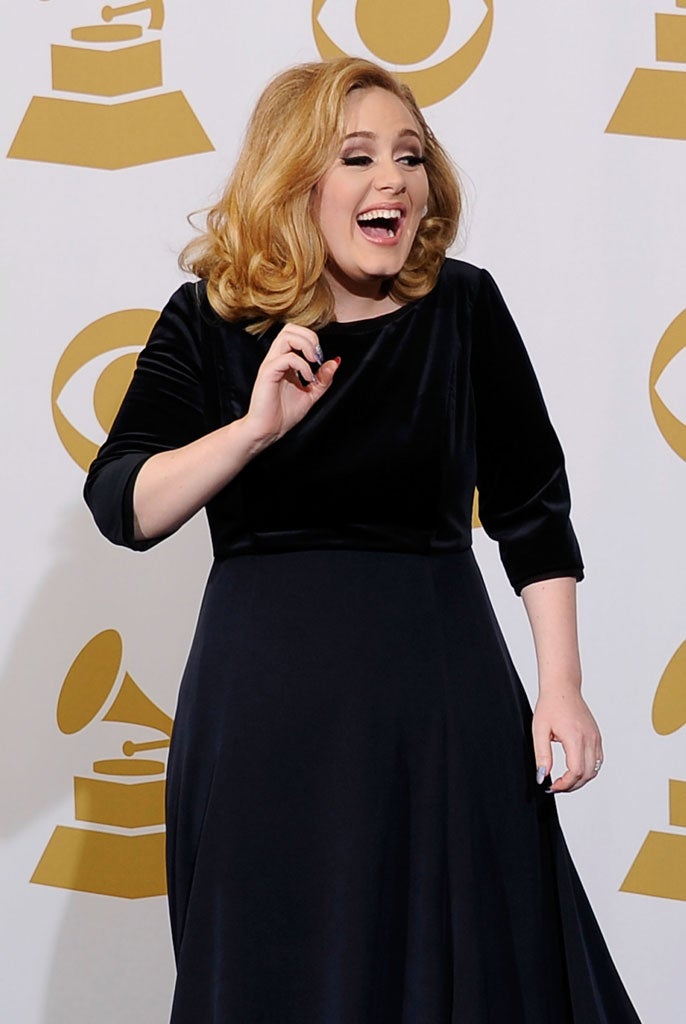
What do Adele and William Shakespeare have in common? Well, if the adorably mouthy diva ever fancied a career side-step, one could easily see her as one of Will's back-chatting wenches and fruity matrons, from Maria in Twelfth Night to Mistress Quickly in the Henry IV plays. More concretely, both pop star and playwright emerged from buzzing creative hives or hubs: the BRIT School in Croydon for one, along with Katie Melua, Amy Winehouse, Jessie J et al; for the other, the sweaty, close-packed, rivalrous ferment of the 1590s theatres - Elizabethan London's own fame academy.
Analysts of breakthoughs in art, science and industry have long trained their gaze on "pockets of brilliance": those places, from the Athens of Pericles to the Apple of Steve Jobs, where "collisions of creative people" exert a multiplier effect that results in "excess genius". Given that Western societies and economies now grasp that they will survive on brain rather than brawn, it comes as no surprise to see the study of creative innovation become such a hot topic.
That makes the quality of these books and arguments a matter of some urgency. Jonah Lehrer's Imagine: how creativity works (Canongate, £18.99) moves engagingly between cutting-edge neuroscience and cultural sociology. It offers a double-sided portrait of invention and discovery. Lehrer's fascinating lab-based reports on research into brain activity are allied with field trips to "creative" companies and entities, and some excursions into the history of genius – as in Shakespeare's playhouses, where "the densest places in the densest city" hothoused such a blossoming of dramatic talent. Imagine is a briskly enjoyable book that will not only open readers' eyes, but show in cortical close-up how neuroscience has begun to justify a lot of fairly ancient wisdom about the origins of breakthrough ideas and paradigm-shifting mental leaps.
So those sudden "eureka" moments can require a lifetime's dedication: "Chance favours the prepared mind," as Pasteur said. Distraction, even despair, can drive new roads to discovery: "Like a Rolling Stone" came to Bob Dylan only when he decided to chuck in his singing career. Day-dreaming may open a direct line to that long-sought "epiphany": it was 3M, not Google, which first encouraged staff to spend 15 per cent of their time just doing their own thing. Yet long-haul creativity also demands that proverbial 99 per cent perspiration: WH Auden, say, remorselessly drilling into his "working memory" as he edited his verse – with a little help from a morning Benzedrine – into the pared-down lucidity of the torrent of great poems after 1938. Lehrer has no quick fix to impart. Several complementary modes of attention will maximise your chances of a breakthrough: "There is time for every kind of thinking".
Imagine also has limits that belong not so much to its approach as to the genre of slickly packaged Big Ideas books. It shares what I'm tempted to call the Wikipedia Focus. So people and phenomena from modern US science, business, technology and pop culture appear in sparkling, HD clarity and depth – such as Pixar Studios' incubation of chance meetings and free debate. But the further we move from the American here-and-now, the fuzzier and shallower the image looks.
Lehrer doesn't seem to know that Shakespeare collaborated on the early Henry VI trilogy, even though the massive evidence for Will as teamworker would back his case. He thinks that trouble-making Elizabethan writers "were rarely punished for overstepping the line". Quite wrong. He doesn't discuss some classic studies of the artistic process: such as John Livingston Lowes's The Road to Xanadu, which shows how Coleridge fashioned the material of "Kubla Khan" not out of a vague opium cloud but from the collation of his eclectic reading.
Imagine also sticks within that blithe American space of value-free innovation, innocent of politics and history. It looks at how the Barbie Doll was invented - a bright idea from a trip abroad - not at what the Barbie Doll did. The network of personal bonds forged by military service in Israel occupies Lehrer, not the context of conscription there. And, from Richard Sennett to Steven Johnson, he fails to mention some leading authors in this field.
We should relish accessibly erudite books that allow – like the creative mind itself – insights from various disciplines to converge. But such a polymathic task calls for authors without blind spots or weak links. That balanced versatility might be even scarcer than outright genius. Maybe we need an academy for the transmission of Big Ideas.
Win our border-crossing prize shortlist
Speak in any event at the London Book Fair, and you'll never know who might be listening. During a panel discussion on Monday afternoon, I mentioned the "AmazonCrossing" programme of fiction in translation and compared the ambitions of the online monolith to – er - Satan. Inevitably, a charming editor from that corner of the Amazon empire was standing at the back. The heavenly jury might still be out on its initiative in publishing an original list of translations – for me, the verdict will depend on editing standards and respect for both authors' and translators' rights. But AmazonCrossing, whether bright rebel angel or upstart prince of darkness, certainly merits attention.
Perhaps it should consider submitting books for the Independent Foreign Fiction Prize – whose shortlist for this year I debated in a later session along with my fellow-judges Xiaolu Guo and Nick Barley. Yes, we hailed the terrific depth and breadth of the six titles: Yan Lianke's Dream of Ding Village; Sjón's From the Mouth of the Whale; Diego Marani's New Finnish Grammar; Judith Hermann's Alice; Umberto Eco's The Prague Cemetery, and Aharon Appelfeld's Blooms of Darkness. But we also talked about the fiction that tends to be under-represented in the field of submitted books: not nearly enough in most years, for instance, from East Asia, the Arab world, or India, with its vast wealth of literature in languages other than English. Might AmazonCrossing help to fill those under-occupied spaces? In the meantime, we have a complete set of this year's prize shortlist to give away: a mind-expanding treat. To enter the competition, go to www.independent.co.uk/foreignfiction
b.tonkin@independent.co.uk
Subscribe to Independent Premium to bookmark this article
Want to bookmark your favourite articles and stories to read or reference later? Start your Independent Premium subscription today.
Join our commenting forum
Join thought-provoking conversations, follow other Independent readers and see their replies