Lynn Shepherd: Digging up Frankenstein's monster
In Lynn Shepherd's new detective novel, Mary Shelley is accused of something scandalous. Suzi Feay listens to the evidence
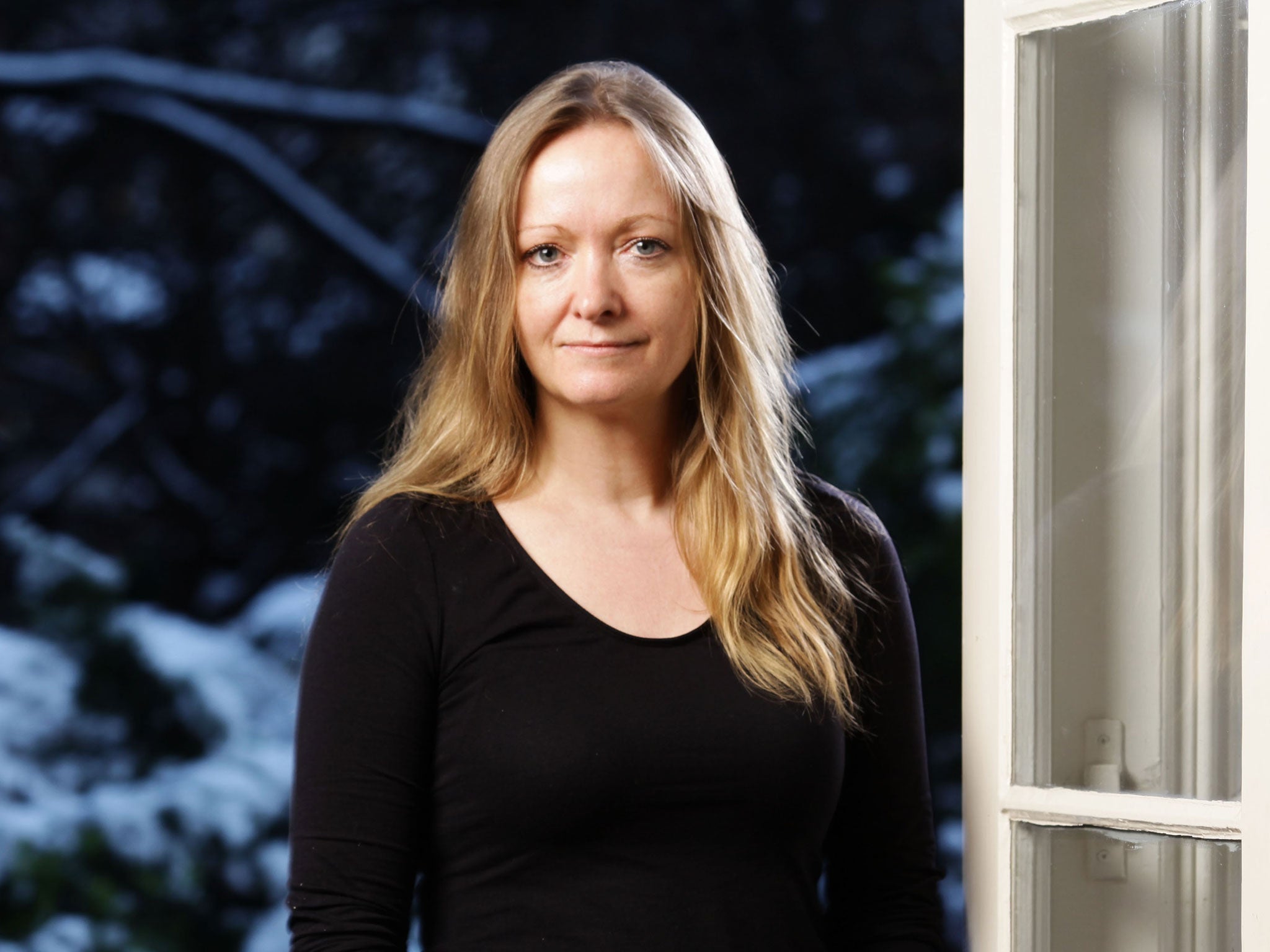
Lynn Shepherd's previous novel, Tom-All-Alone's, was an ingenious reworking of Bleak House, weaving in Dickens characters such as Inspector Bucket and Jo the crossing-sweeper with her own creations. The follow-up has her assiduous Victorian private detective, Charles Maddox, fishing into the scandalous early life of Mary Shelley, the creator of Frankenstein.
Readers of Tom-All-Alone's will remember that it ended with Mary Shelley's note to the elder Maddox, Charles's uncle, resulting in his seizure. It is 1850, and Percy Bysshe Shelley the rebel poet is long dead. What terrible secrets has the Shelley family been hiding, even as they seek to sanctify his image to make him palatable for the staid Victorian era? The scene is set for a literary thriller that weaves back and forth in time and gives some plausible answers to certain genuine biographical mysteries.
"I've always been fascinated by the Shelleys, particularly since I read Richard Holmes's marvellous biography. The more you read into Shelley's life, the more you realise how dark it is, and how inexplicable some of the events are," says Shepherd over tea and cake at her publishers' offices in snowy Bloomsbury.
"Records have been destroyed, quite possibly by them, or by [family members] later – somebody's gone through and done a job on those journals," she goes on. "It cried out to be explored. I had this idea in my head a long time, but I couldn't work out how to make it fit a novel. The events span a large amount of time, so it doesn't sit nicely into a crime novel which takes about three weeks [to unfold]."
The answer came on a flight to New Zealand when, having watched the films and read her books, she had nothing to do but sit and ponder the problem for hours. "Suddenly I worked out how to do it, which is the double time scheme. That meant I could stay in 1850 and also I could select from the past only those bits that I wanted to explore."
She must have been desperate to check the date of Mary Shelley's death, then? Shepherd bursts out laughing. "I was on this damn plane and thought, 'When does she die?' I couldn't get on the phone and check, so it felt like I was sitting on that plane forever." The crucial date turned out to be February 1851. "I thought, 'There is a God!' Tom-All-Alone's finishes at the end of November 1850. So, I had about six weeks to play with. That was just marvellous, because it meant that I still had her alive, but I also had these wonderful characters of Percy and Jane who, again, are just crying out to be written."
Percy is Sir Percy Florence Shelley, their only surviving child, and Jane is his wife, who enthusiastically, and literally, tended the flame: she built a shrine to her father-in-law at their house in Chester Square, with an ever-burning lamp in front of it.
"The whole Jane Shelley 'programme' is absolutely fascinating," agrees Shepherd. "I was talking to a Wordsworth expert recently, and the difference is that Wordsworth turned himself into a Victorian, because he was still alive, whereas all the young Romantics were dead and so they had to be Victorianised. The fascinating thing about Shelley is that someone – Jane – does that deliberately."
The novel makes tough reading for admirers of the Shelleys, although much of the negativity is put in the mouths of characters rather than being Shepherd's own view. Also, as readers of Tom-All-Alone's know, she specialises in the twisty denouement that throws all that has gone before into doubt, and A Treacherous Likeness does not disappoint in that respect.
We discuss the recent Bodleian Library exhibition Shelley's Ghost, where copies of Shelley manuscripts were on display, showing his habit of drawing phantasmagorical creatures and landscapes in the margins. "That was marvellous, because the journals and the drawings … those disembodied eyes! Really very, very spooky. And the more you read about him, the more you realise that if he was alive now he would be diagnosed for various personality disorders."
I ask whether she liked him, and she hesitates. "I find him very difficult to like and I pity him at the same time," she finally says. "Charles is like a proxy for my emotions about these people. You feel that there's this incredibly bright person who just rushes at life and doesn't know quite how to deal with it, and dies so young, which is pitiful. But then you look at the wreckage he leaves in his wake; it's hard to like someone who behaved the way he did."
My personal feeling is that Shepherd does fall into the trap of presenting him as the "ineffectual angel" of Victorian myth, rather than the tougher, more capable figure glimpsed in Holmes. In A Treacherous Likeness, he is a bit too screechy and effete for my tastes, but there's no doubt she has done her research.
The big surprise in the novel is the treatment of Mary Shelley. "Mary is the interesting one, in that I became more negative about her the more I wrote. I didn't start out thinking, 'I'm going to do a job on Mary Shelley.' That wasn't my intention but I liked her less the more I wrote her."
Of the three other children born to the couple (and one mystery child, mother unknown), none survived more than a few years. This leads Shepherd to a shocking conclusion. "This is the annoying thing about fiction," she says. "If this was non-fiction you could say: 'This is a new theory about Mary Shelley.' But I do feel very strongly that I'm on to something. It's both satisfying as fiction and provocative as a theory, which I love!"
Her conclusion has haunted me ever since I finished the book. But if you want to know what it is, you'll have to read it yourself.
A Treacherous Likeness, by Lynn Shepherd
Corsair £17.99
"There is indeed something ludicrous about this boy – ludicrous but beautiful too, even if it's impossible to light on a single feature that merits the word. Aside, apart from his eyes, which stare back at them now with a violet blue intensity.
'Mr Shelley,' says Maddox with a slight bow. 'I do not believe we have been introduced' ..."
Join our commenting forum
Join thought-provoking conversations, follow other Independent readers and see their replies
Comments