Marian Keyes: The chick-lit author discusses depression, alcoholism and rape
As a depressive alcoholic who once tried to commit suicide, chick-lit maven Marian Keyes has never shied away from the darkest subject matter – and in her latest novel, she tackles rape. But, she says, pain is inevitable – suffering is optional
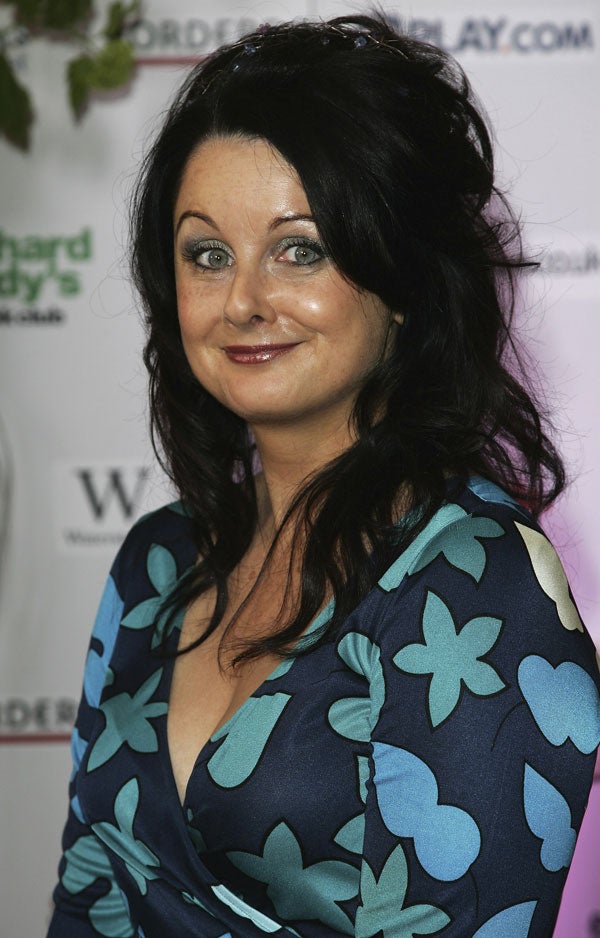
When Marian Keyes announces part way through our interview that she has had it up to here "with this cupcake malarkey", it's hard not to be a little taken aback. A chick-lit queen who doesn't like cupcakes? The covers of her books are regularly decorated in all things sweet and girlie. Even her London flat, where we're talking now, is perched above an actual patisserie.
"Arts and crafts is all very well," she continues, "but since 9/11 we've kept our heads down. We don't want to engage in any kind of political agitation." The penny drops. It's not frosting and sprinkles she objects to, but a return to basics and women piping icing in the kitchen.
Marian Keyes the feminist, of course, shouldn't come as any surprise. With 10 hugely successful novels under her belt, she has more readers than Germaine Greer and Naomi Wolf combined – and multiplied by something very large. Her romantic comedies may be full of girls getting sloshed on pomegranate cocktails and muddling their way into the arms of Mr Right, but they also deal head-on with depression, the glass ceiling, domestic violence, and now, in her latest novel, rape.
The problem with interviewing Keyes is that she's every bit as engaging as a heroine from one of her books, and it's easy to get off the subject in hand. Indeed, it's far more tempting to linger on the politics of Strictly Come Dancing or the news of Stephen Gately's death – "I just think it's the saddest, saddest, saddest thing" – than to get down to a more pertinent discussion of the gender politics of her latest love story. Fortunately for both of us, Keyes didn't get to where she is today – the best-paid woman writer in Ireland, with the possible exception of Maeve Binchy – without being a trooper about publicity and promoting her work.
Published this week, The Brightest Star in the Sky is, like all Keyes' books, as frighteningly large as its author is disarmingly small. "I had a lot to say!" explains Keyes. "It's a really optimistic book. For the first time I'm really excited about its reception, rather than terrified. How can I put it? It was 'easeful' to write – for once, the universe gave me a break. I think men will like it too. Originally I wanted to have Venus in the title, but I knew there'd be screams of 'Romantic tosh!'"
Following in the footsteps of Candice Bushnell's One Fifth Avenue and Alexander McCall Smith's 44 Scotland Street series, Keyes has built the structure of her novel around a building in central Dublin. Number 66 Star Street is home to a likeably flawed cast of spiky singletons, clueless men and loved-up couples all struggling to make it through the day. Though Keyes' stories of romantic entanglements share more in common with Armistead Maupin's gentle satires than Bushnell's steelier tales of the city, there's a Celtic spring and warmth to her narratives that makes her fiction more readable than either.
Written as a companion piece to her previous novel, This Charming Man, which had at its heart the consequences of domestic violence, here the elephant in the room is rape. "I'm very exercised about the topic," says Keyes, dragging a set of emerald-green nails through her hair. "Did you know the conviction rate for rape in Ireland is six per cent? Ninety-four per cent of men who go to court accused of rape go free. I feel it's an abandoned cause. In this book I want to dispel the myth that women are raped by strangers late at night in the park by someone wearing a mask and wrestled to the ground." The central drama of the new novel revolves around the assault of a newly married woman by a vindictive ex, and the ensuing emotional mayhem it causes.
Mention of rape, however, gives a misleading impression of the timbre of Keyes' more recent work. Indeed, it's part of her great talent as a storyteller that she is able to handle such distressing subjects with such a light and empathetic touch, yet keep her books as "page-turning" as they are. "For feel-good fiction to work," she says, "there has to be an element of darkness. Pain is inevitable, but suffering is optional. That's what I want people to take from this book. Optimism can be relearnt."
Happiness and happy endings are a particularly precious commodity to Keyes. Like many of her more troubled heroines, she understands from personal experience what it is like to have been in a "very bad place". One of her best-known early novels, Rebecca's Holiday, the story of a young woman's drug overdose and stint in rehab, was based on her own battle with alcohol and a suicide attempt. Even now, though Keyes is 46, that era still casts its shadows.
"I'll be an alcoholic until the day I die," she says emphatically. "I will never be cured. It has to be managed on a daily basis. When I drank, I drank to kill pain. If I'm upset I still want something to numb me out. I've got to watch that. I still get awful depression. It's who I am." A steady routine, seeing her friends and exercise all help. Keyes and her partner attend a Pilates class once a week. "We've been doing it for three years now," laughs Keyes. "We think we're great."
Keyes may be firmly in her forties, but she says that it hasn't stopped her from being fascinated by, and writing about, the dilemmas facing women in their twenties and thirties. "I've always written about people younger than myself. I went grey at 12, my eyesight went at 17. I've been a crock from very early on. My ideal age will be 53. I love getting older. I've finally stopped needing everyone to love and like me."
While Keyes agrees that "chick-lit" now has a dated ring to it, she insists that it's still important for commercial fiction to continue to address the concerns of younger women. "When I started writing in 1994, there wasn't any popular fiction that acknowledged Irish women had sex. It was all pretty cosy." Although a big fan of the work of Maeve Binchy – " I love her warmth" – she says Edna O'Brien has been her greatest inspiration. "She took such enormous risks writing about Irish women and their sexuality. I was once in the same room as her, but I was too intimidated to speak to her. I wouldn't have dared touch the hem of her garment."
For many years Keyes has lived with Tony, her tall and attentive partner, in Dun Laoghaire, a suburb of Dublin not far from where the ferry comes in. Her parents are five minutes away, and her brother and his wife are just up the road. When she first started writing, partly as a riposte to years of office work, she liked to compose on her laptop in bed. But due to a bad neck, Keyes has migrated to a desk upstairs. "My latest book is the first I'd ever written upright. I was worried the tension might pass into the book. But I like my new routine."
Like all good popular novelists, Keyes has her finger ever on the zeitgeist. Currently working on a novel about the recession, she says it's proving tougher to write than her latest book. "It's about troubled times, about people who lose everything. It sounds bleak. But don't worry. It will still be fun." In Keyes' hands, how could it be otherwise? n
The extract
The Brightest Star in the Sky, y Marian Keyes (Michael Joseph £18.99)
'...The duvet, which felt stuffed with the softest marshmallows, wrapped itself around her with profound love. All is well, it whispered, all is well... The lofty ceiling gazed benignly down, telling her It is my honour to act as your ceiling. The heavy fall of silk curtains rustled and swished, asking if she was ready to have shiny daylight admitted. This bedroom was divine. When she and Conall came to an end – as everyone confidently predicted they would – it was one of the things she would miss most.
That and the "pleasuring"...'
Join our commenting forum
Join thought-provoking conversations, follow other Independent readers and see their replies
Comments