Democracy Kills, By Humphrey Hawksley
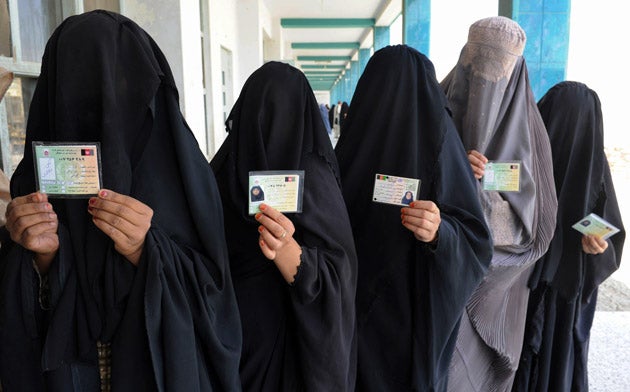
Twenty years ago, the case for democracy, as in one-person, one-vote, seemed to have been conclusively made, as the communist regimes in East and Central Europe fell one by one. The euphoric crowds in the streets of Warsaw, Prague and Berlin seemed to say it all. Now, after eight years of Western military intervention in Afghanistan and the questionable results of the war in Iraq, not to mention outbreaks of conflict following elections in several African countries, the case for democracy, at least as it is practised in the developed West, seems less convincing.
Are democratic elections the answer in countries split along ethnic lines? What value does a vote have to someone with no access to clean water, education or a job? Could it be that competent economic management, along with the capacity to uphold law and order, serves some people's interests better than representative democracy, at least at certain stages of development? And if democracy is a precondition for development, how has communist-run China been able to raise its people's standard of living more effectively than democratic India?
These are questions asked ever more frequently and with ever greater urgency. Something like an intellectual debate is being joined in which democracy is required to defend itself against authoritarianism. The latest contribution comes from Humphrey Hawksley, a BBC correspondent of long standing, who mines his years of intelligent and curious globe-trotting to ask, in the subtitle of this book, "What's so good about having the vote?"
That quotation comes from a throwaway remark he caught on his travels. But the scepticism it expresses is the leitmotif of his book, which ranges from Africa to East Asia, via the Middle East, Latin America, and almost everywhere in between. He sums up the dilemma with a question: if the world was on the brink of destruction and you had a chance to save your family by escaping to Cuba or Haiti, which one would you choose? At the end of these readable pages, few will be in any doubt where he would have sought refuge.
Hawksley brings to his argument all the passion reflected in his eye-catching title. What is more, the breadth of his experience, and the access that foreign correspondents routinely enjoy, gives him a unique vantage-point from which to compare different systems: both as seen by the rulers, and – more important perhaps - by the ruled.
Hawksley starts with the injustice and corruption of the cocoa industry in Ivory Coast, speaking to child workers and impoverished farmers who have never tasted the delicacy that is the end product of their labours. Among his freshest and most compelling sections relate to Iraq, and how he watched, from visit to visit, as the country descended into sectarian violence. He is merciless about the diabolical misjudgements made, chief among them the dissolution of the Iraqi army in the name of de-Baathification, and the invaders' delusion that they would be hailed by grateful Iraqis as saviours. The contrasts he draws with the wealthy hothouse of economic development in nearby Dubai are telling.
Through Latin America, India, China, Malaysia and Singapore, on to former Yugoslavia, and back to Taiwan, Hawksley marshals his arguments for development vs democracy, pointing out that the occupying powers administered Japan for seven years and Germany for ten before risking elections. There is a time, he suggests for one-person one-vote, and in some countries – perhaps many – that time has not come.
Hawksley's book is elegantly structured, one chapter cogently leading to the next. Yet its virtues – its breadth and necessary selectivity - also give rise to its faults. The theme, democracy vs non-democracy in its many forms, has a tendency to vanish below the surface of the author's lively reportage.
And it is a long way from the cocoa plantations of Ivory Coast to the killing fields of Srebrenica, not just geographically, but conceptually. Are economic exploitation and ethnic conflict really different aspects of the same thing? Where precisely is the argument about democracy here?
Some readers may feel that Hawksley sets too much store by the material necessities of life, and too little to freedom of the spirit. I am not one of them. But it is something he might consider if a second edition is in prospect. If this is a question, he offers a comment after a meeting in Havana that goes some way to being an answer. "The issue at stake here," he writes, "is what comes first: saving a child's life or holding elections. Because... in some societies you can't do both."
Join our commenting forum
Join thought-provoking conversations, follow other Independent readers and see their replies
Comments