The Spirit of the Game: How Sport Made the Modern World, By Mihir Bose
One day, during the 1971 World Table Tennis Championships in Japan, the American player Glenn Cowan missed his team bus back to the hotel. A Chinese player invited him to theirs. They gave him as a gift a silk-screen print of the Huangshan mountains; the next day he gave them a T-shirt with the words to "Let It Be". Within months Henry Kissinger was in Beijing, and inside a year Richard Nixon was meeting Mao Zedong.
As Vladimir Putin could tell you, sport has many functions beyond personal fulfilment. The Russian leader's camera-friendly embrace of such rugged pursuits as judo, skiing, canoeing and ice hockey helps cement him in the minds of the people as the hard man to guide them through tough times. His sporting zeal might have found approval with Thomas Hughes, whose Tom Brown's Schooldays Mihir Bose credits as organised sport's big bang.
His thesis is that the Corinthian, character-building model of sport, outlined by Hughes and founded on the muscular Christianity preached by the real-life Rugby headmaster, Thomas Arnold, was then exported round the world – haphazardly, by dint of the Empire, and in a more organised fashion through the work of Baron Pierre de Coubertin, who was inspired by the English way of sport to revive the Olympic Games.
But just as religious messages become twisted over time, so the ethos of fair play and amateurism was swamped by the demands of money, politics and power. Hughes's vision was essentially personal; for de Coubertin it was a way of nation speaking unto nation. And his vision was realised – but soured by Mammon.
It's perhaps a truism, but sport is a microcosm of society. Greed? Check. Corruption, megalomania, violence and drugs? All present and correct. Bose tells a story in which most of the basest elements of human nature are in constant attendance. He takes things from de Coubertin on to the rapid globalisation of sport through its evolution into cash cow and state puppet.
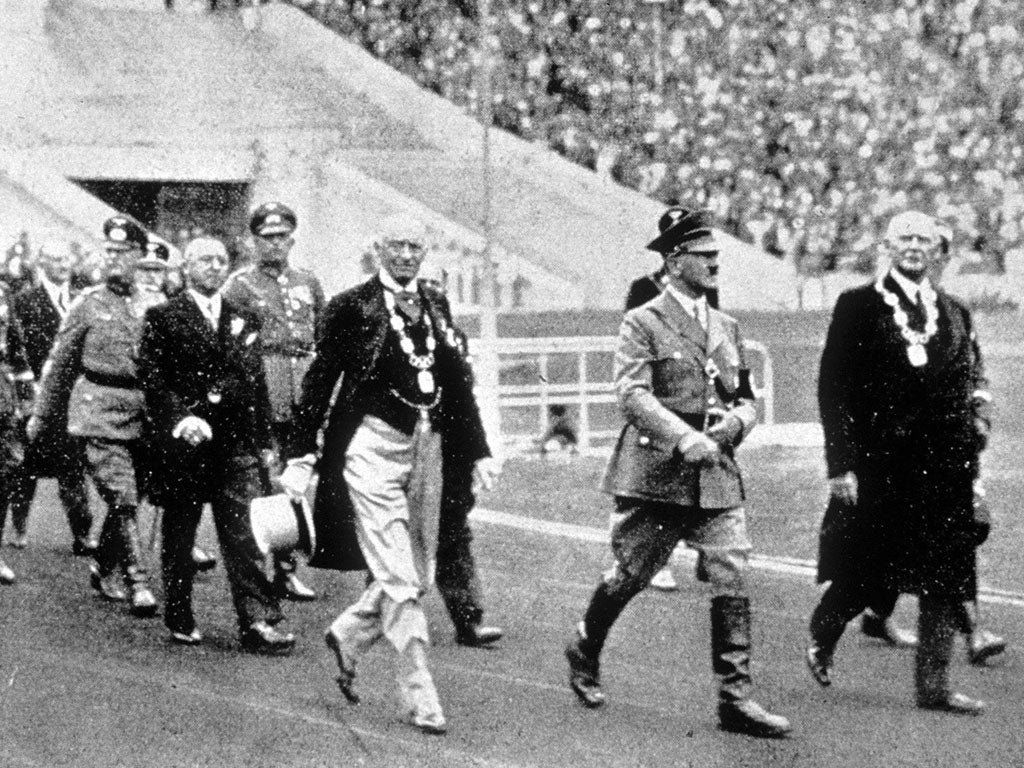
The totalitarian leaders, unsurprisingly, were the first to put sport explicitly at the service of the state. When you're out watching the forthcoming Olympic torch relay, you'll be participating in a tradition initiated by Goebbels for the 1936 Games. But though Germany scored a huge propaganda victory with the Berlin Olympics, it never had the chance properly to co-opt sport to the Nazi cause.
It was the communist sporting machine that truly made an art and science of using sport for ulterior motives; of transmitting values across borders. Bose writes well about the vast East German set-up, which spotted talent young. There was a system of rewards and punishments: one of the incentives was the right to have a teddy bear. In the free world there were more momentous rewards for sporting success: West Germany's unexpected victory in the 1954 football World Cup final, and South Africa's 1995 win in the rugby union version, set the seal on both as nations fit to take their place on the world stage.
I was surprised Bose didn't spend more time on the formation of the FA Premier League, surely one of the most egregious collisions of sport and naked capitalism. But there are plenty of other examples of sport selling its soul: the empire-building of Horst Dassler, head of Adidas; the Indian conquest of modern cricket; the grotesque shenanigans of IOC and Fifa mandarins (which contrast sharply with good old socialist America, which administers its sports with impeccable egalitarianism).
There's lots of nice detail, such as the reaction to listening to football on the radio of Winifred Holtby, feminist intellectual and novelist: "I was excited. I had not, I have not to this day, the remotest notion of what they were all doing. But I know I was excited." If anything there's too much detail, but the message is clear: the Corinthian ideal is pretty much dead. On the jacket, Bose is described as India's CLR James. That's pushing it. But he has written a readable account of sport's tortuous journey from simple hobby to global behemoth.
Join our commenting forum
Join thought-provoking conversations, follow other Independent readers and see their replies
Comments