Foals: Why it's creativity, not fame, that interests them
Oxford's art-house math rockers Foals are tipped for the top
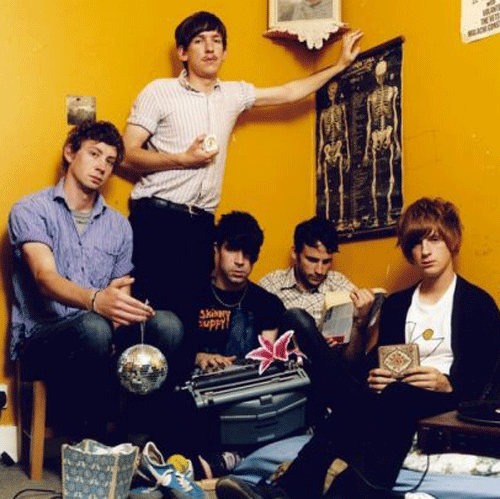
London's skyline is filled with melancholic dread as the clouds prepare to deluge all those below. It's a gloomy January evening in Camden, and, outside the Crown and Goose pub, Yannis Philippakis, the pallid lead singer of art-house punks Foals, is smoking a cigarette as the rest of his bandmates drink coffee and read the papers inside. This is a small break for a band that critics have labelled the great hope for 2008, and for the next year they'll be pushed on by a media machine that is expecting a massive success story.
Back to the summer of 2006, when five friends from Oxford decided to form a band, the story seemed simple; a group of kids who wanted to make exhilarating, diverse and innovative music. By the end of the year this had got more complicated as Philippakis, Edwin Congreave, Jack Bevan, Jimmy Smith and Walter Gervers had become university dropouts, forsaking parentally approved careers to become one of the most talked-about bands in the country.
Early demos led to the hipster indie label Transgressive signing them in the UK and later they signed to Sub Pop in the US. What followed was a trail of destructive house parties, visceral live performances at Reading and Leeds, two hit singles that penetrated radio playlists and a group of relatively geeky twentysomethings being thrown into the rabid decadence of the music industry. Foals took abstract lyrics, vocal barks, funky bass lines and disco drumbreaks and layered them into math-rock guitar lines.
Click the arrow to listen to a clip of Foals track 'Cassius', from their forthcoming album 'Antidotes'.
The concoction ticked all the right boxes in the industry, an achievement that leaves Philippakis unenthused. "It's weird being part of the music industry now," he says. "I think our biggest shock was going to the Brits launch party. We arrived stoned, looking like shit and smelling, and there was this red carpet with wax model babes and paparazzi on it. I just wanted to be back in Oxford with our friends.
"Some people want to write songs so they can go to these ceremonies or hang out with new cool people, but for us anything that isn't about writing music is extraneous to what we are doing this for. We have never come out and said that we are the band for 2008 –that we are going to save culture or kill the president – but all we did was go to New York, got stoned and made a weird record."
During their recording time in New York, the band soaked up the city's vibrant music scene, which over the past year has seen bands such as Vampire Weekend, Yeasayer and The Dirty Projectors emerging, all with strong artistic identities. The band soaked it all up when they decamped to TV on the Radio guitarist and producer du jour David Andrew Sitek's Stay Gold studios in Brooklyn. "There is a musical and visual side to the band. They are part of the same thing, as if there is a Foals aesthetic that ties with the lyrics and strengthens the music," says Philippakis. "We are a collective and Dave works in a very community-orientated way. People would drop by the studio all the time. Katrina Ford from Celebration lived in the neighbourhood, so she dropped by and sang on a song, and Antibalas came by and added some brass to four tracks."
That Foals aesthetic is one of discovery and invention, driven by a need to create something relevant within today's cultural landscape. In an industry obsessed with rehashing past styles, Foals looked to unexploited resources of musical inspiration to incorporate into their sound.
"We are like vultures," agrees Philippakis. "If you take Western pop music and other more culturally diverse forms and turn them into carcasses, we are the vultures that pick at them and take what we like and create something new and weird that still has elements of what existed before. Everything we do is about taking culturally diverse influences. I think there is an arrogance in making music like a British band, or like you are supposed to. I find it really insulting when people define their music by their class or nationality – like if you're working class you have to play a certain type of music. I don't think you can define culture in that sort of way."

Enjoy unlimited access to 100 million ad-free songs and podcasts with Amazon Music
Sign up now for a 30-day free trial. Terms apply.
ADVERTISEMENT. If you sign up to this service we will earn commission. This revenue helps to fund journalism across The Independent.
Enjoy unlimited access to 100 million ad-free songs and podcasts with Amazon Music
Sign up now for a 30-day free trial. Terms apply.
ADVERTISEMENT. If you sign up to this service we will earn commission. This revenue helps to fund journalism across The Independent.
The band's debut album, Antidotes, is an explosion of colour and one of the most astonishingly original records of the past decade. It is a patchwork of influences, from Afrobeat and math rock to German techno and Steve Reich's minimalist loops, all woven together with a pop sensibility and a desire to defy the restraining influence of the mainstream.
Foals' video for their fourth single 'Balloons'
"The past few years have seen so many bands in the mainstream that look like they have gone to some rock school in the way they pull moves with their guitar or have a weird image," says Philippakis. "We are not in this to sell records, but that's what a lot of other bands want. Look at this 2008 top tips thing we have been lumped in with. All the bands talked about are commercial, want to sell lots of records and have a tennis court in their back garden. If that never happens then we don't care. All we want is to make more albums, keep progressing and make music for its own sake.
"That's why you buy a guitar when you're 12, that's why you don't go to the pub drinking and leering at girls. You play music because it means something to you without any conception that you may be on the cover of a magazine. The minute you start thinking about that you are already corrupted and you are part of a machine that is far bigger than you and will eat you."
Foals seek to be inclusive and embody a vision of modern, multicultural Britain through their music. "I want kids who like hip-hop or techno to like our band because we like lots of music," enthuses Philippakis. "You get bands that take influence from one period or type of music – like The Clash, The Kinks or The Jam. They get successful because their parents like it and that crushes the generational gap. We listen to African music, folk, hip-hop because that is what 21st-century multicultural UK society is like and it should be revelled in. These retrograde bands are living in a fantasy; it's a fallacy. People don't walk around with bob cuts, wearing duffel jackets like it's the Swinging Sixties.
"People need to get a grip," continues Philippakis. "To me, what is exciting about pop music is youth culture and the generation divide. Like, when the previous generation to those who got into punk just thought, 'what is this intolerable noise?' – that expresses something deep within youth culture. Too many bands these days have been getting on with their parents far too well. I don't want my parents to like my music. I thought being in a band was about pissing your parents off, dropping out of school and listening to Skinny Puppy, then forming a band to create your vision, something filled with angst."
They may hate me for saying this, but Foals are the band of the moment – for the right reasons. Here are a group with a vision and the conviction to stand by what they believe in. "We are dropouts, but I was never going to become a doctor. My parents don't understand. They say, 'But what are you going to do after?' They don't get it. I'm never going to get a job."
'Antidotes' is released on 24 March on Transgressive; Foals tour the UK from 8 to 17 March ( www.wearefoals.com)
Join our commenting forum
Join thought-provoking conversations, follow other Independent readers and see their replies
Comments
Bookmark popover
Removed from bookmarks