After almost four decades, the elm stages a comeback
Schools are being sent thousands of saplings grown from cuttings of trees that weren't wiped out
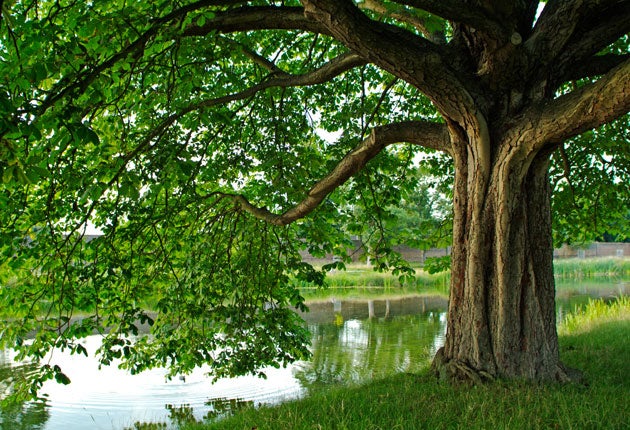
Hundreds of schools across Britain are about to start a project that could, one day, lead to the restoration of what was once a defining tree of our open, lowland landscapes: the elm.
Some 250 schools have received saplings grown from cuttings taken from some of the few mature trees that survived the outbreak of Dutch elm disease that killed 25 million elms from the late 1960s onwards. The scheme, run by the Conservation Foundation and known as the Great British Elm Experiment, will monitor the growth of the young trees, and establish if any have a high resistance, or even immunity, to the fungus that causes the disease.
In the next few years, thousands more saplings will be propagated and sent out to more schools, local authorities, golf clubs, and other large landowners. It is a process that will take decades, and is the latest stage in a saga that began nearly 50 years ago with the arrival in Britain of a new virulent fungus. It came in on a consignment of logs from the US, where it had been killing elms since the 1930s. There had been outbreaks in Britain before, but this one was far worse, an evil little pathogen known as Ophiostoma novo-ulmi. Yellowing leaves in mid-summer soon began to appear and, in the next 15 years, the tree that had inspired the paintings of John Constable and some of the more evocative lines of John Betjeman was seemingly wiped out.
But not quite. There were odd pockets of survivors: in Brighton, local geography and swift action by the council saved the colonies of elms, and it was noticed elsewhere that shoots were appearing from the remnants of dead trees. But in most cases, as soon as these had grown to between 12ft-20ft, along would come elm bark beetles, the creatures that deliver the spores of the fungus.
Yet mature elms survived in scattered locations. In 2003, the Natural History Museum began to map them, using reports from ramblers and other observers. In the first two years, 207 were found. But how had they survived? Was it something in their bark that made them unattractive to the beetles? Or did they have some genetic resistance to the fungus? These questions will be answered by the Great British Elm Experiment.
The parent trees from which the saplings have been taken are at least 60 years old – found in Hampshire, Norfolk and Cambridgeshire. They are a mixture of several species and sub-species – a tribute to the elm's ability to hybridise and give Britain about 40 varieties. The English elm itself was brought in by the Romans. Essentially clones of a single tree, they are vulnerable: an infection that kills one will likely kill many. That is why mature survivors are so special.
Wych, the elm of the north and Scotland, can set seed, and perhaps because of this the disease has spread more slowly there. But spread it has, reaching Inverness in 2006.
Join our commenting forum
Join thought-provoking conversations, follow other Independent readers and see their replies
Comments
Bookmark popover
Removed from bookmarks