The great cheddar swindle: How to spot a quality cheese from a mass-produced one
Sign up to IndyEat's free newsletter for weekly recipes, foodie features and cookbook releases
Get our food and drink newsletter for free
Last year, we Brit's spent more than £344m on cheese, of which more than half went on our default favourite cheddar, gorging our way through more than 66,000 tons of the stuff – the equivalent weight of around 825 Boeing 747 planes, 6,947 London buses or 16,500 adult elephants, should you enjoy fun stats.
But what to do when confronted with the massive array on offer, all called cheddar, some with a fancy pre-fix, cute name or artisanal-looking labelling, some branded, others not, some dirt cheap and others rather pricy? Are we wise to opt for the cheesy equivalent of the £4 chicken, and what benefits are we gaining should we opt for its traditionally made counterpart, which can cost north of £30/kilo?
As with most things in life, it seems the general rule is you gets what you pays for, but thankfully there are a few helpful pointers.
For some strange reason, possibly because it ranges from the god-awful to the simply sublime, cheddar has never been granted its own product denomination origin (PDO), unlike many of its continental counterparts. However, the name "West Country Farmhouse Cheddar" has an EU PDO and may only be produced in Somerset, Devon, Dorset and Cornwall, using milk sourced from those counties. Nine dairies enjoy this PDO, with an additional breakaway group of three – Montgomery, Westcombe and Keen's – also included. Only one producer of the cheese is now based in Cheddar itself, Somerset's Cheddar Gorge Cheese Co.
"The truth is consumers do struggle to know what to do and I truly feel there is work to be done in making cheddar a more accessible product," says Mark Pitts-Tucker, cheese-quality manager for Davidstow, based in Boscastle, on Cornwall's north coast. "One of the great shames with cheddar is it has been somewhat dumbed down and there is a fair degree of mediocrity out there. It is an homogenisation, but not the good kind."
Many of us, after years of indifferent vacuum-wrapped specimens, have forgotten what a good cheddar should taste like. "A great cheddar should have a firm body and a slightly flinty texture, Pitts-Tucker says. "When you eat it, it should be creamy with savoury and sweet notes and a general tanginess. A greater acidity will wake your palate, but the lesser ones leave you wondering: 'What was that I just ate?' There should be a taste memory after you have swallowed it."
"If you went back to the Nineties, more than 90 per cent of cheese would have been unbranded," says Nigel White, chairman of the British Cheese Board. "Over the past 15 years, the big brands have been growing very steadily and have all tried to pick out a different position, but not every piece of packaging tells you anything about what's inside.
"This plethora of cheddar choices started when we joined the EEC and the Dutch said to supermarkets: 'Do you want a cheap cheese?' Most consumers are probably happy to buy any of four branded cheddars, but the only way you're going to find one particular to your taste is by experimenting."
"Bog-standard cheddar is completely price-led, but then you have something like Montgomery, which has been made by a traditional cheesemaker who has been doing it for 30 years in the West Country," says Shirley Aubrey, fresh and deli buyer for Fortnum and Mason. "It's earthy and nutty and perfect for baking cheese scones. Barber's, from Somerset, is perfect for soufflés because of its tart tang. The trend today is to look for a sweeter cheddar, such as Wookey Hole.
"With traditional cheesemakers, you have people who are almost guardians of the land, who turn their cheeses regularly and mature them for at least 12 months – and there is a cost associated with that amount of care."
Christopher Millns, director of the Weald Smokery, on the Kent-East Sussex border and a judge at November's World Cheese Awards, sells a blinding Isle of Mull cheddar and reckons we need to be much more careful about what we call cheddar.
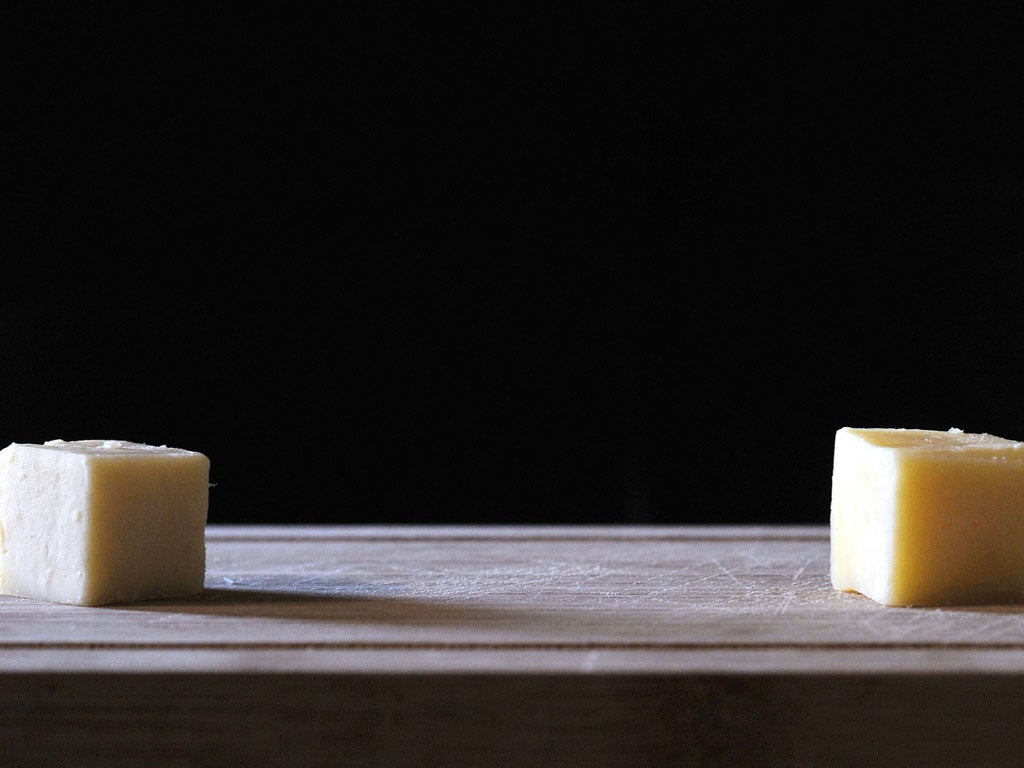
"There are so many mass-produced cheddars made in factories and there is a vast difference between these and proper farmhouse cheddar," he says. "A traditional cheddar is pressed under muslin and needs to crumble if matured properly. If made from unpasteurised milk, it will have a fuller flavour. The problem today is any bog-standard block cheese is automatically labelled cheddar, made with milk which comes from all over the place. Have supplements been added to enhance milk production, or are the cattle fed a poor diet? With traditional farmhouse producers, chances are the milk will come from their own dairy herds, which have grazed on their own pastures, resulting in a seasonal change in flavours according to what they're eating. All this really matters.
"Why can't we be more protective of our traditional cheddars? Get rid of the supermarket image and call all the mediocre stuff 'cheddar-style'?"
A couple of miles away, at Stonegate's Traditional Cheese Dairy, Cliff and Julie Dyball, makers of the sublime unpasteurised Broad Oak cheddar, are perfect examples of the care that must be taken to ensure a tantalising truckle. "Our milk comes from one Fresian herd a few miles away," says Cliff. "The flavours change with the seasons, so it's important we know which herbs and heathers the cattle are feeding on. A really good cheddar shouldn't blow the back of your head off, but have a flavour which develops on your palate without being too acidic. It shouldn't be too dry, but should crumble a bit.
"There are a lot of cheddars out there that are purely the result of people making money and they twist and turn with styles and flavours as and when the market sees fit. A lot will end up on supermarket shelves and the ones to be really careful of are cheddars with things in them – such as cranberries, apricots or beer – these are the poor cheese-maker's last resort."
"Most people don't understand what has happened with cheddar," says George Streatfeild, who is chairman of West Country Farmhouse Cheesemakers, formerly MD and now director of Denhay. "You have this modern style of cheddar which is extremely popular and the traditionally made cheddars – two totally different styles and flavours. Even experienced judges are saying you can't judge them both as cheddar.
"Of course we don't need that many cheddars on the shelves. It is a ubiquitous cheese and once something is made all over the world, more and more people will want to put their brand on it. Not everyone is as good at it as they should be, often resulting in a dirty or overly strong flavour."
Ros Windsor, managing director of Mayfair's legendary homage to fromage Paxton and Whitfield, isn't too happy with the way the mass cheddar market is heading.
"Today's taste is moving towards a sweeter cheddar, which is what the bigger dairies are making, but they're rather wet and too sweet. Big dairies buy loads of milk from all over the place and produce a consistent product which they believe is what their customers want, but at the bottom end, some of those cheddars will only have been aged for three months, if you're lucky.
"So cheddar is a lot like coffee – you can buy an instant coffee which will just about fill your needs, or you can buy one from an experienced barista which is roasted, brewed and served to the highest standards. Good farmhouse cheddars are like different vintages of wine, except with cheese the flavour and quality varies day to day rather than year by year."
Photographs: Richard Mildenhall
Subscribe to Independent Premium to bookmark this article
Want to bookmark your favourite articles and stories to read or reference later? Start your Independent Premium subscription today.
Join our commenting forum
Join thought-provoking conversations, follow other Independent readers and see their replies