The PC is dead, says the man who invented it
Back in the late 1950s, the then head of IBM, Thomas J Watson, was rumoured to have predicted a potential world market for "maybe five computers", an estimate that illustrates how radically the role of the computer has changed.
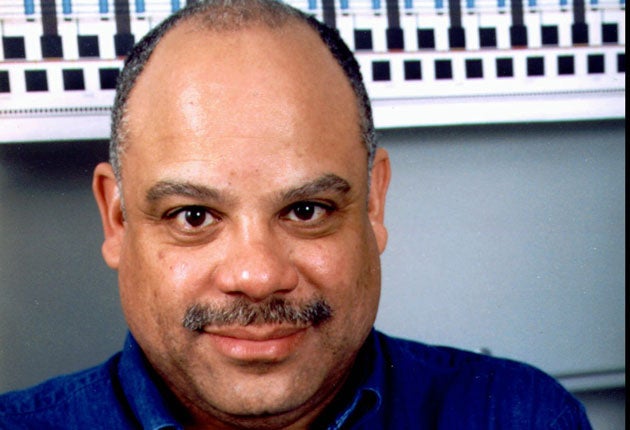
Now, on the 30th anniversary of the first IBM PC, one of its 12 designers has taken to the internet to herald the PC's imminent passing.
"They're going the way of the vacuum tube, typewriter, vinyl records, CRT and incandescent light bulbs," wrote Dr Mark Dean, admitting that back on 12 August 1981, when his IBM 5150 was unveiled at the Waldorf Astoria Ballroom in New York, he didn't think he'd live long enough to witness its decline.
PC, of course, stands for personal computer – and there is no let up in our fascination with them, in all their increasingly diverse forms: smartphones, tablets, televisions and games consoles, often controlled by the swipe of a finger on a screen, or even a gesture in the air.
The gadget that Dr Dean is waving an emotional but nevertheless enthusiastic goodbye to is the kind of machine he had a hand in designing; the one operated by a clunking keyboard and errant mouse.
The IBM 5150, with its 16k of RAM (barely enough for one Word document), no hard disk and price tag of just over $1,500 (then about £830), was one of the first indications of a worldwide computing revolution, along with the Commodore PET, Apple II and Atari 800. But Dr Dean believes that its direct descendants are now outmoded.
"I, personally, have moved beyond the PC," he wrote. "My primary computer now is a tablet."
Sales of tablets and smartphones have grown rapidly in the past year, as has an increasing dependence on "the cloud", with our information stored on the internet rather than on a weighty box sitting on a desk.
For the majority of people using new online services to consume entertainment and interact via the web, tablets and smartphones are all that they need – they may have migrated from a PC, but it is possible they were reluctant PC users in any case.
But while Dr Dean notes that most current innovation is happening in "social spaces... where people and ideas meet and interact", a wealth of creativity still happens using the standard PC unit, and those creators have taken to the internet to argue vehemently with his assertion.
Making music, video and games is still tricky via small, touch-screen interfaces and, for all their strong links to the past, the traditional keyboard and mouse still have a role to play. Also distancing itself from Dr Dean's statement is Microsoft, a company still heavily invested in the PC market and which prefers to call the new era "PC plus". IBM, perhaps tellingly, sold its PC division to Lenovo in 2005.
The debate essentially surrounds form and function. Dr Dean may well be right, but your beloved PC won't disappear without something just as flexible and powerful taking its place. The PC was always just a stepping stone to smaller and better things. Even if it is going to bite the dust, there's no more need to mourn its passing than to mourn the passing of the typewriter.
A History of the PC
1981 IBM introduces its first PC in August 1981. Everything about it is small, except the price: it has 16k of memory, a 160k floppy-disk drive, an 11.5-inch black-and-white monitor – and costs $1,565.
1983 Microsoft releases Windows and launches MS Word version 1.0
1986 The first PC virus appears, when "Brain", which originated in Pakistan, spreads via floppy discs.
1992 The first CD-ROMs go on sale, the memory-packed CDs that launched the Encarta encyclopedia on a generation of grateful school pupils.
2001 The PC turns 20 after 835 million have been sold.
2006 Intel, the computer chip maker, estimates that there are close to one billion Internet-connected PCs worldwide.
Join our commenting forum
Join thought-provoking conversations, follow other Independent readers and see their replies
Comments
Bookmark popover
Removed from bookmarks