Huge rise in number of home births
More women want to have babies at home, despite a chronic shortage of midwives

Sign up to our free Living Well email for advice on living a happier, healthier and longer life
Live your life healthier and happier with our free weekly Living Well newsletter
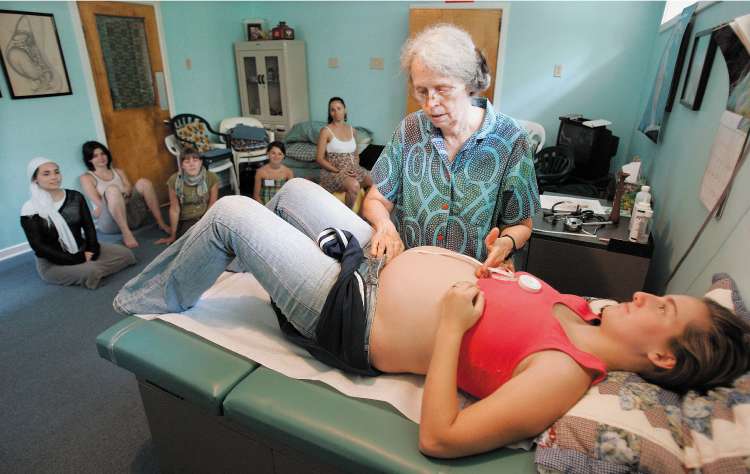
A revolution is under way in how women give birth, and it is surgery, drug and even hospital-free. Inspired by celebrities such as Charlotte Church, Davina McCall, Thandie Newton and Maggie Gyllenhaal, record numbers of mums-to-be are having their babies at home.
More pregnant women are braving the pain and forgoing elective Caesarean sections in certain parts of the country because local midwives are teaching them that birth is a natural, not a medical, procedure in the vast majority of cases. Many women are also increasingly worried about hospital infection rates.
One home-birth hotspot is Bridgend, South Wales, where one in four babies were born at home last year. Although home births in England shot up by 10 per cent in 2006 against 2005, at 16,923 they were still just 2.5 per cent of all births. Mums-to-be in the South-west lead the way: West Somerset has the highest proportion of home births in the UK at 14.2 per cent, due to strong local midwife teams.
But midwives elsewhere are preparing for a rush of interest in births outside hospital once a new film hits UK screens next month. The Business of Being Born, produced by the former US chat-show host Ricki Lake, gives the low-down on having a baby at home – in the bath.
The Government has promised that by the end of next year all women will be able to choose where and how they give birth despite a midwifery staffing crisis that means many believe it will fail to keep its pledge. "We just can't see it happening," said Mervi Jokinen of the Royal College of Midwives.
Although hospital trusts all maintain that they offer women the option of a home birth, reality suggests otherwise. Newham, in east London, last week became the latest hospital to suspend its home-birth service because of staff shortages. Midwife vacancy rates in the capital are around 30 per cent.
Despite scant evidence, proponents believe giving birth at home is no more dangerous than in a hospital. Gaps in existing research will be filled by Oxford University's National Perinatal Epidemiology Unit, which is conducting a study, to be published in 2009, using data collected by midwives across the country.
A central reason why the home-birth rate is higher in most of Wales than elsewhere in the UK is that six years ago the Welsh Assembly set a 10 per cent target, something the RCM is pressing the Government also to adopt. "We want to stop the medicalisation of maternity care. For the vast majority of women, having a baby is not a medical procedure. Sometimes there is an attitude that Caesarean sections are no big deal, which is disingenuous because it is major abdominal surgery," the RCM's Welsh spokesperson said.
The Royal College of Obstetricians and Gynaecologists supports home births for women who are low-risk. But it urges women to consider what will happen if something goes wrong: around one in three women attempting to give birth at home end up in hospital.
A mother's story
Davina McCall had all three of her children at home after hearing a friend espouse the practice as "empowering, beautiful and spiritual".
"I wasn't like, 'I have to have a home birth at all costs'. It was all down to the safety of my baby, but late scans with all three showed there wasn't anything wrong so it seemed like a lovely place to have a child.... And, if I'd been in hospital, I'm pretty sure I would have had an epidural and I'm really glad I didn't.
"One thing that not having any painkillers and doing it at home gave me was a great pride in myself. Of course it's going to hurt: you've got to get a massive baby out of your vagina – all your bones have got to move and everything – but it's a real case of training your mind to deal with the pain. My biggest thing was trying to say to myself, 'It's safe pain'."
Subscribe to Independent Premium to bookmark this article
Want to bookmark your favourite articles and stories to read or reference later? Start your Independent Premium subscription today.
Join our commenting forum
Join thought-provoking conversations, follow other Independent readers and see their replies