Health & Families

Mostly Cloudy with Showers 13° London Hi 14°C / Lo 8°C

Press twisted my words, says academic in breast-milk row

Mothers who do not breastfeed thought they had a new ally. But he was misinterpreted, he says
By Susie Mesure

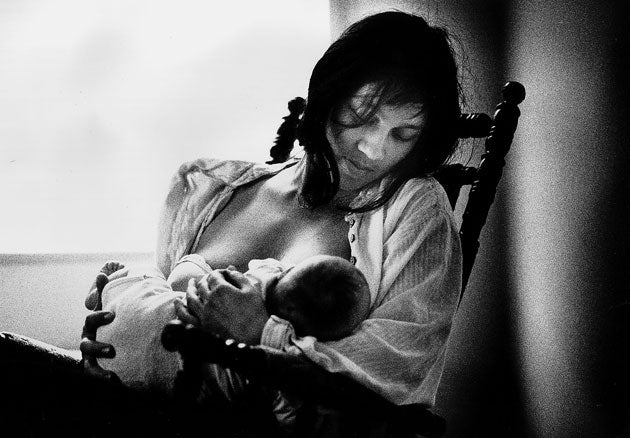
In World Breastfeeding Week, mothers are urged to persevere, for the sake of their baby's health

david rose

In World Breastfeeding Week, mothers are urged to persevere, for the sake of their baby's health

Few topics are more emotive than breastfeeding, that rite of passage into motherhood. Witness the furore that erupted over a story purporting to rubbish claims that breast milk provided newborns with a protective shield against an array of illnesses or allergies.

Mums everywhere entrenched their positions on either side of the breast-milk divide when they leapt on the alleged assertion made by a leading professor of paediatrics and breastfeeding adviser to the World Health Organisation and Unicef. Michael Kramer was reported as saying that much of the evidence used to persuade mothers to breastfeed was either wrong or out of date.

Those in the anti camp were particularly ecstatic. "It was all I could do not to dance around the room whooping with joy.... Thanks for vindicating all the mums who dared to challenge the sanctimonious breastfeeding orthodoxy in 'discussion' forums," wrote TheJasMonster on Mumsnet after reading the article in The Times. Conversely, those pro-breastfeeding, from new mums trying to do the right thing to anti-formula campaigners such as Baby Milk Action, were left devastated that someone as respected as Kramer, who has studied evidence on breastfeeding since 1978, could perform such a massive U-turn. Especially on the eve of World Breastfeeding Week, which kicked off yesterday.

Or did he? Not a bit of it, says the professor, who is renowned for a groundbreaking study that found an IQ advantage to breastfeeding even after you'd stripped out the natural advantages that being the sort of mum who breastfeeds would give her child. Rather, he is spitting tacks at how his comments had been so "grossly misrepresented" for the second time in almost as many months. (The first was in the respected American magazine, The Atlantic, in an article entitled "The case against breastfeeding", which ignited the original media storm on the subject.)

"Journalists certainly have the right to express their own opinions, but not to misquote experts they choose to interview in order to support those opinions. That sort of sensationalist journalist would not surprise me from the tabloids, but I had expected better from The Atlantic and The Times," Kramer said last night.

The Times quoted Kramer, who is based at McGill University, Montreal, as saying there was "very little evidence" breastfeeding reduces the risk of a range of diseases from leukaemia to heart disease. Yet, what he actually said was: "The existing evidence suggests that breastfeeding may protect against the risk of leukaemia, lymphoma, inflammatory bowel disease, type 1 diabetes, heart disease and blood pressure." All he did concede was that we need "more and better studies to pursue these links", a common cry from academics lacking in funding.

As for the article merely casting him "in the camp that believes that breastfeeding will turn out to have a slight effect on brain development", well, that hardly squared with his life's work, he said yesterday. "There is an IQ advantage to breastfeeding by as much as three or four points. It's not the difference between Einstein and a mental retard at an individual level, but it means having a smarter population on average, fewer children with school difficulties, and more gifted children."

He added: "There really isn't any controversy about which mode of feeding is more beneficial for the baby and the mother, but when you read the article in The Times it sounds like there is." Furthermore, he points out: "I'm not aware of any studies that have observed any health benefits of formula feeding. That's important, and any mother weighing the benefits of breastfeeding vs formula feeding needs to know that."

His only note of caution, which was flipped on its head by both publications, was that breastfeeding advocates don't need "to overstate their case for issues that are more controversial", such as the link between breastfeeding and protection against obesity, allergies and asthma. "Public health bodies don't have to exaggerate the benefits in order to be very comfortable about supporting breastfeeding," he added.

Some solace for campaigners such as the WHO, keen to use World Breastfeeding Week to increase global breastfeeding rates and save up to 1.3 million children's lives a year. Worldwide, fewer than 40 per cent of mums breastfeed exclusively for the first six months of their baby's life, as recommended: in the UK only 3 per cent are still breastfeeding exclusively at five months.

Post a Comment

View all comments that have been posted about this article.

Offensive or abusive comments will be removed and your IP logged and may be used to prevent further submission. In submitting a comment to the site, you agree to be bound by the Independent Minds Terms of Service.

Comments

Who says The JasMonster is in the anti BF Camp Susie?
[info]chrisclarkgold wrote:
Sunday, 2 August 2009 at 08:51 am (UTC)
It is not clear that your quoted person 'TheJasMonster' is in any sort of anti breastfeeding camp. Here's what she said later that same day on the MumsNet blog.

No one wants women who do not breastfeed for whatever reason to feel 'inadequate' - but the health effects of infant feeding remain, and the message should be clear and honest, while at the same time enabling women to breastfeed happily and confidently.
Baby Milk Action is not anti-formula
[info]mikebradyuk wrote:
Sunday, 2 August 2009 at 01:50 pm (UTC)
Great to have the record set straight - it is also curious that the 'breastfeeding controversy' articles came out just before the UK Advertising Standards Authority upheld complaints from Baby Milk Action about a Danone/Milupa advertisement for Aptamil, falsely claiming it was the 'best follow-on formula' and builds a child's immune system. Some coverage of the ASA ruling suggested the benefits of breastfeeding had been called into question by Profesor Kramer.

But let me also set that record straight about Baby Milk Action. We are not 'anti-formula campaigners' - we are 'infant health campaigners' and work to both protect breastfeeding and to protect babies fed on formula. As it explains on our home page:

"Breastmilk substitutes are legitimate products for when a child is not breastfed and does not have access to expressed or donor breastmilk. Companies should comply with composition and labelling requirements and other Code requirements to reduce risks - independently of government measures. Parents have a right to accurate, independent information. Baby Milk Action is not anti-baby milk. Our work protects all mothers and infants from irresponsible marketing."
breast is not best is normal
[info]hesebs wrote:
Sunday, 2 August 2009 at 08:19 pm (UTC)
I feel that much time and money (although ovbiously not enough) has been spent on researching to prove why breastmilk is the best choice. However, I feel that the money would be better put to use on support for these women who have chosen to breastfeed but struggle to do so. I accept that people should always be able to choose how they want to feed their babies and they should be given unbiased information in order to do so. However, why do we make milk when we have a baby if it is not meant for them? and if so, why would nature makes us produce an inferior product to that of a man-made one? To me trying to prove that breastmilk is the best a baby should have is like proving that our kidneys are better than a dialysis machine or that our lungs are better than us using a ventilator for our oxygen exchange.

More people should be employed and trained to help women who want to breastfeed and if this was the case I'm sure the breastfeeding rate would be higher.
Re: breast is not best is normal
[info]postcards57 wrote:
Sunday, 2 August 2009 at 09:08 pm (UTC)
hesebs wrote: "I feel that much time and money (although ovbiously not enough) has been spent on researching to prove why breastmilk is the best choice. However, I feel that the money would be better put to use on support for these women who have chosen to breastfeed but struggle to do so."

I agree. I think we spend a lot of time and money doing research on breastmilk instead of helping community groups and health care professionals learn how to support mothers. If so many mothers start breastfeeding and stop within a few days, weeks, or months, it must be because they don't have whatever support it is they need to continue breastfeeding. We know it's important, we tell moms it's important, but we don't always walk the walk to give mothers what they need (or at least help them find it).
Hypocritical to say the least.
[info]merrilymine wrote:
Monday, 3 August 2009 at 10:06 am (UTC)
Given The Independent is currently waging a one sided, fact twisted, statistically unfounded war against home educated children and their parents, i am frankly staggered it has the nerve to make a meal out of another paper doing exactly the same to another story.

Pot? Kettle? Black?
Prof. Kramer and the breast feeding debate
[info]peggy2 wrote:
Monday, 3 August 2009 at 10:13 am (UTC)
As a children's nurse, I have seen babies suffering terribly from diseases such as gastro-enteritis, and ear infections, etc. which could largely be prevented by breast feeding. Also there was the terrible case in the U.S.A. recently of babies who suffered irreversible brain damage, due to contaminated formula powder.
I passionately BABIES have rights when it comes to feeding. Mothers' health needs do not clash in this case, as breast feeding is healthier for her also.
ALL mothers should TRY to breast feed, for their babies' sake.
Formula should be reserved for those case where a mother HAS to give up breast feeding due to genuine difficulties.


Free gym pass

Get fit for summer with Fitness First gyms in London

Download a free gym pass from Fitness First today

Article Archive

Day In a Page

Sun | Mon | Tue | Wed | Thu | Fri | Sat

Select date