Confessions of an angry insomniac
Gayle Green hasn't had a good night's sleep in 50 years. And yes, of course she's tried hot baths and warm milk...
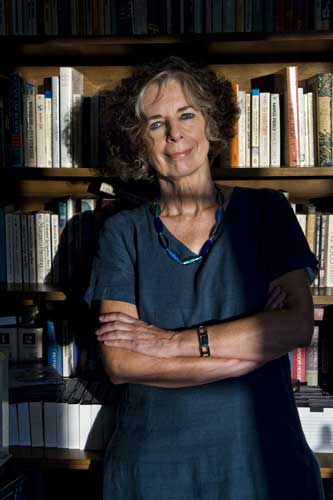
The first thing to go is your sense of humour. Then it's the desire to do the things you used to do, and then the desire to do anything at all. Parts of your body ache that you don't even know the names of, and your eyes forget how to focus. Words you once knew aren't there any more, and there's less and less to say. People you once cared about fall by the wayside and you let them go, too.
I can't remember when it began for me. What I do remember is the following scene, played out at various times throughout my youth: "But I can't sleep!" I'd protest as my parents tried to wrestle me into bed at what they called a decent hour, meaning any time before 1am. "Nonsense," my father would say, "everyone knows how to sleep. Even animals know how to sleep. Just close your eyes and relax – you'll get sleepy. It's the most natural thing in the world."
It was "natural" for him, that sleepiness he'd describe as a curtain that swept down, but it was never natural for me – not then and not now, five decades later. At 65, I sleep two, three or four hours and then my body thinks it's time to start a new day. There are people – such as Margaret Thatcher and John Major – who can do well on so few hours' sleep. But not me.
On such small amounts of sleep, I can't work, think or string words together to make a sentence and my mood hits the wall. I'm not alone with this problem: a third of people in industrialised nations complain of poor sleep – and according to some reports, Britain's rates are the highest. I'm one of the lucky ones, since I can structure my work hours: I'm a professor, which means I can schedule classes late and do my writing on my own time. When you have to be up early and on-task, chronic insomnia can be a career killer. Studies show that insomniacs have trouble getting jobs, keeping jobs and getting promotions. "There's a built-in glass ceiling for people with severe sleep disorders," a psychiatrist friend told me.
The writer and comedian David Baddiel, in one of his stand-up routines, asks why, when he tells people of his insomnia, they say, "'Really, cos I fall asleep the second my head hits the pillow': when I see someone in a wheelchair, I don't say, 'Really, cos I can do this...'" and he hops around the stage on one leg. Sleep is as essential to our survival as eating, drinking or reproducing. But it's not taken seriously, even by the doctors we turn to for help, or our closest friends and family. "Nothing wrong with you except you can't sleep," a doctor once told me. I didn't know whether to laugh or cry. I tried to imagine his saying, "Nothing wrong with you except you can't breathe."
Sleep in a dark, quiet room, make sure you have a comfortable mattress, keep a regular sleep schedule, cut down on caffeine and alcohol: these are the things we're told. All very well, but what kind of an idiot would I have to be, to have lived with this problem all my life and not known these things? I have tried these things, and many others besides. I've lathered myself in sesame oil, brewed a Chinese herbal tea so foul that my dog fled the kitchen as it steeped. I've driven miles to a "sleep guru". I've tried valerian, kava kava, chamomile, skullcap, L-tryptophan, Lustral, trazodone, most of the benzodiazepines, and pills whose names I never knew. I saw a psychologist (she was terrific on my love life but hadn't a clue why I slept so badly or what I should do about it). I've tried acupuncture, biofeedback, meditation, hypnosis, melatonin, Ayurvedic treatments, adrenal support supplements, bananas by the bunch, St John's wort, yoga and swimming three to four miles a day. I've worn a magnet necklace. Not one of them has "cured" me.
So, around seven years ago, I set out to find some explanation why, being of sound mind and reasonably untroubled life, I still can't sleep. I wanted to know what the scientists know. I travelled to conferences where researchers, doctors and sleep professionals gather to exchange the latest information – I learnt that insomnia is, of all the things that can and do commonly go wrong with people, one of the least well understood.
In the US, which pioneered sleep research and leads the world in funding for the disorder, the National Institutes of Health spent $20m on researching insomnia in 2005. Sounds a lot, but that same year, the pharmaceutical company Sanofi-Aventis spent $123m advertising its sleeping pill, Ambien. I found, even in the world of sleep research, that same neglect and trivialisation of the problem I've encountered all my life.
I learnt that insomnia receives so little funding because it is not seen as life-threatening: "Nobody ever died of insomnia" is one of those things we often hear. Well, we may not drop dead of it the next day, but sleep loss compromises the immune system and puts us at risk of diabetes, obesity and heart attack. It makes us old before our time. But it's easier to blame the patient, to tell us that we're anxious, depressed or doing something to bring it on ourselves, than to do the hard research that would lead to an understanding of the cause.
I also wanted to find out what insomniacs themselves know – and none of the many books I'd read on the subject had bothered to ask. So I tracked down everyone I've ever heard of or know who has insomnia – friends, friends of friends, relatives of friends, acquaintances, colleagues, students. I talked to taxi drivers, bartenders, strangers on planes and in queues. I placed adverts in local and national newspapers and on websites. I spent many late- night hours surfing blogs and newsgroups.
I can't say that I sleep any better now than when I began writing my book, but I have found many consolations along the way. I've discovered that the research is moving my way, turning up evidence that insomnia is in our neurobiological and genetic predisposition rather than something we're doing wrong.
And it's felt good to break the silence on this issue, to come out of the closet and say, look, this is a serious problem that is making millions of people miserable and is putting us at risk. It's not something that goes away with a hot bath or warm milk. It needs to be taken seriously, by doctors, researchers, friends, family and employers.
Adapted from Gayle Green's book, 'Insomniac' (£12.99, Piatkus)
Join our commenting forum
Join thought-provoking conversations, follow other Independent readers and see their replies
Comments