In mint condition: Can you cure halitosis in the sweet shop?
If you neglected to brush your teeth this morning, you're not alone. More and more of us are instead relying on an ever-increasing variety of breath-freshening products. But are the sugar-free confections on our shelves really an alternative to old-fashioned oral hygiene and the dreaded visit to the dentist? Nick Duerden investigates
What is the most important item in your pocket or handbag? Your wallet, a purse, maybe a set of keys? A condom? Or is it a packet of mints? Who, after all, hasn't reached for a Polo or Smint before a job interview, romantic tryst or board meeting, in the hope that a blast of extra-strong peppermint or waft of spearmint will banish bad breath and pep up your self-confidence?
Quite apart from a fresh scent, some manufacturers even claim that their products can improve the state of your mouth. The result? Mints have become big business: we spend about £190m on them annually.
Of course, there is an alternative: we could remember to brush and floss our teeth more often and more diligently, and try to visit our dentist and dental hygienists more frequently. But, frankly, who wants to visit their dentist any more than they have to? '
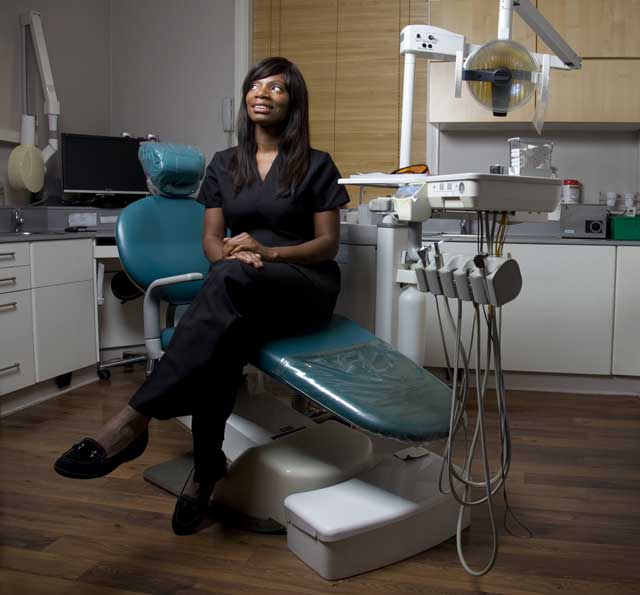
"I'm afraid to say it is a huge problem," confirms Dr Uchenna Okoye, the clinical director of the private dental practice London Smiling. "I've had people visit me who have been isolated at work because their breath is so bad. I've had people call me on behalf of family members to make appointments under the pretence of, say, teeth whitening, when what they really want is to sort out their breath. It's the great unspoken a very sensitive problem. To tackle it successfully, you need an awful lot of tact."
But often the dentist doesn't even get the chance to tackle the problem. As a nation, our dental attendance is terrible two-thirds of us don't visit as regularly as we should. The cost and accessibility of services are often cited as reasons, as well as the usual fears about dental surgery; but a recent report suggests we all care deeply about our teeth, and crave cleaner, brighter smiles. And indeed cleaner mouths: a recent advert for a tongue scrape with the aim, apparently, of removing bacteria from the mouth received more than 12 million hits on YouTube.
Yet many of us can barely be bothered to wield a toothbrush in earnest. A recent study undertaken by Clinonym, the smokers' toothpaste, makes for unsettling reading. Brits aged between 16 and 24, it found, are three times less likely to consistently brush their teeth than those aged 55 and over; many of us barely manage to brush five times a week (reasons cited included fatigue and, on occasion, inebriation). Only 17 per cent brush for the required three minutes a time, while a third of us never floss an imperative in the maintenance of healthy gums.
Although the independent British Dental Association points out that the country's dental health has improved enormously since the advent of the National Health Service, when young patients routinely requested a complete extraction in exchange for a set of dentures, Dr Okoye maintains that, "Nobody likes us.
"Why do you think the dental profession has such a high suicide rate?" she laughs. "But then I can sympathise, because I have much the same phobia myself. What I always tell my patients when I finally get them in the chair is that they should be proud of themselves, because they represent the top echelons of British society. Sixty per cent don't even bother coming in the first place." She pauses. "Those 60 per cent will come to regret it."
Bad breath, or halitosis, is caused by the build-up of bacteria in the mouth, which gathers around the tongue and teeth and broken fillings, and releases odorous toxins. It can be caused by poor general hygiene, but also by gum disease, lacklustre tongue manicure, diet, and even low water intake. The more we forget to brush, the worse it becomes.
Yet, there is hope; as long as you're prepared to go private and pay handsomely, that is, halitosis is an entirely reversible problem, according to Dr Phil Stemmer. A dentist for more than three decades, he has spent the past 15 years running the Fresh Breath Centre in central London. But you could walk past his clinic without noticing it and for good reason. "We could never have a big sign over the door saying Fresh Breath Centre, could we?" he says. "How embarrassing to be seen entering a place that suggests you might be suffering from bad breath." He shakes his head wearily. "Everybody can, and frequently does, suffer from it, yet nobody wants to admit it, much less seek a solution. And bad breath makes a very lasting first impression. If you meet someone with bad breath, you tend not to forget it in a hurry."
Bad breath is hardly a modern problem. Four thousand years ago, people chewed on whole cloves to rid their mouths of the stench of recently speared wildebeest, while in the Talmud, the collection of ancient rabbinic writings that forms the basis of religious authority in Orthodox Judaism, it is written that persistent bad breath was grounds for divorce. In the Middle Ages, aniseed became the freshener of choice, but recently the breath mint has come into its own. The reason, posits Dr Stemmer, is that we are all becoming increasingly vain. We preen more, pluck more, and so of course we want to smell nice in every nook, in every cranny, including our mouths. More discreet than chewing gum which is actually more effective at breaking down bacteria the breath mint is smartly packaged and cleverly advertised. They play upon our insecurities and promise us dividends: "No Smint, no kiss" as the tagline for one popular brand has it. And Smint's marketing claims to improve oral hygiene have been supported clinically: the small, triangular mint contains xylitol, a natural sugar substitute that has been proven to combat plaque formation.
"If people have to rely on mints and I have to say I'd rather they didn't, as they don't work, certainly not long-term," says Dr Stemmer, "then they'd better be sugar-free. If they're not, you'll have temporarily fresher breath, but you will also be creating more cavities, and more problems in the long-term."
It's something the great British mint-munching public may be realising. According to market researchers Mintel (no pun intended), we're buying fewer mints than we once did in all sectors but two: strong and sugar-free. And while the sugar-free Smint is a relatively small player in the market, the company claims that its sales are growing annually by 18 per cent.
So you might well be seeing plenty more sugar-free confectionery at your local newsagent as manufacturers chase demand. Indeed, there are sufficient numbers of these products already that the British Dental Health Foundation maintains a list of approved products. "We're looking to move people off sugary products," says the association's chief executive Nigel Carter. "Compared with other countries [the UK has] been slower at adopting sugar-free confectionery we've got a sweet tooth. By contrast, 70 per cent of the Spanish confectionery market is sugar-free; ours is probably a tenth of that." While Carter agrees with the dental benefits of xylitol, he says that you'd have to eat an awful lot of Smints to see a significant positive effect.
There are, perhaps curiously given the breadth of the problem, few fresh-breath specialists in this country. Though they effectively do much the same work as NHS hygienists, they claim that their sessions are more tailor-made, more thorough and more aggressive. More successful, too, according to their own measures: most boast a success rate of 95 per cent.
At the Fresh Breath Centre, the patient is first required to blow into a halimeter, which checks to see whether halitosis is present. Upon positive diagnosis, tissues are readily on hand. "It's never easy confirming that the patient really does have it," Dr Stemmer says. He then performs a microscope evaluation, encouraging the patient to observe just how much bacteria is swarming around their mouths. "The most common reaction I get here," he says, "is 'Get that stuff out of my mouth!'"
There is, of course, a catch. An initial consultation at the Fresh Breath Centre costs £195, while a course of treatment at London Smiling which includes hygiene therapy, treatment of gum disease, tongue manicure and intensive, bespoke oral hygiene instruction is priced between £495 and £850, a figure high enough to make many of us reach for the sugar-free Polos instead. For such fees, however, the service is admittedly plush. When you walk into London Smiling, you could be forgiven for thinking you had walked into an upmarket spa, from the comfy leather sofas to the calming music and the burning of aromatherapy oils. Patients can even have hand massages while the hygienist goes about their work.
And these specialists insist the high expense is worth it. "I have come across examples of people committing suicide because they suffered from [bad breath]," Dr Stemmer says, "while other patients' entire waking hours are dominated by it." His biggest challenge remains encouraging people to face up to the possibility that they have the problem in the first place, and then to do something about it. "The general public has a very dim view of oral hygiene," he laments. "Some of us in the profession are trying hard to change that."
Mints with wonder chemicals and lavishly appointed private dental clinics are all very well. But let's conclude with the most basic advice that the British Dental Authority can offer: "The best way to ensure healthy teeth and gums is to brush twice a day with a fluoride toothpaste, visit the dentist regularly and restrict sugary snacks to mealtimes," says the authority's scientific adviser, Professor Damien Walmsley. What a breath of fresh air.
Additional reporting by Rebecca Gonsalves
Join our commenting forum
Join thought-provoking conversations, follow other Independent readers and see their replies
Comments