The politics of positivity: Why is the Government measuring our happiness levels?
Statistics that measure how content we all are might not be as silly as they sound, argues sociologist William Davies
As every science fiction fan knows, the answer to the question of the meaning of life is '42'. This is the conclusion of the supercomputer, Deep Thought, in Douglas Adams's The Hitchhiker's Guide to the Galaxy. Deep Thought took 7.5 million years to arrive at this answer, which later transpires to be a mistake.
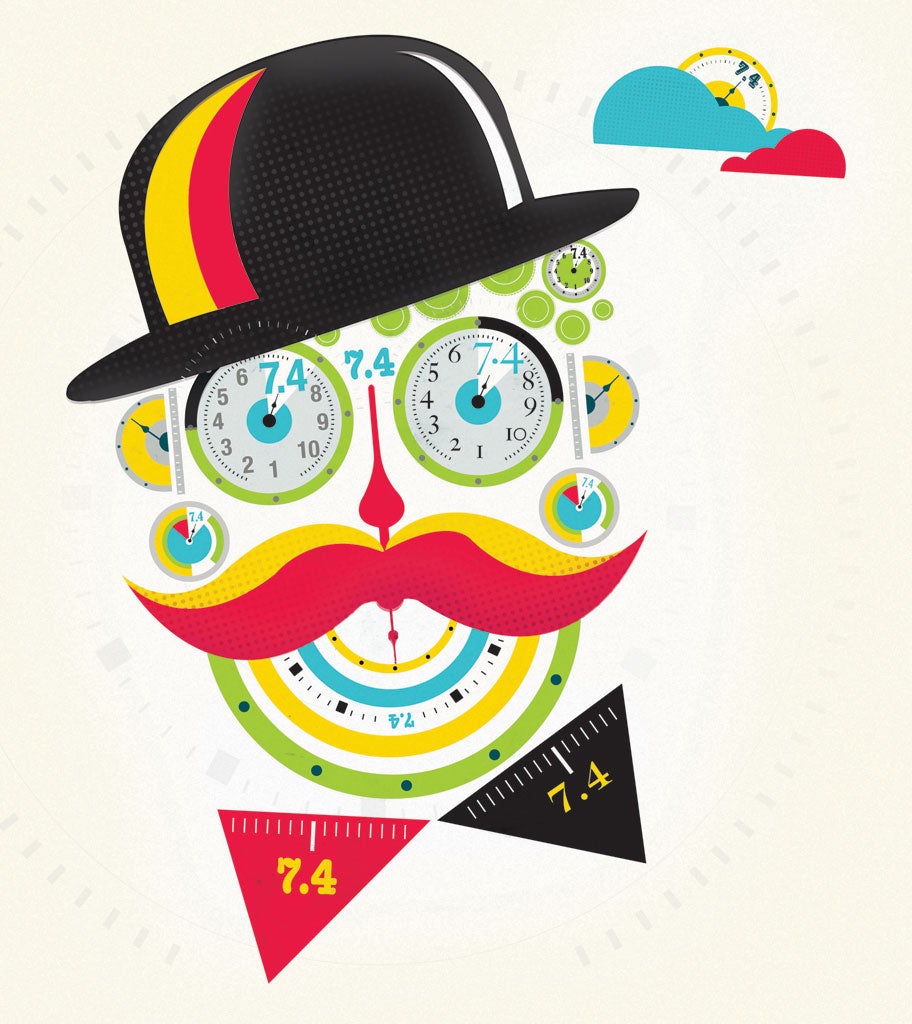
Britain's Office for National Statistics (ONS) has been working more rapidly and – one hopes – more accurately, on a similar question. The job at hand was a commitment made by David Cameron to measure the nation's happiness. The ONS duly reported in December that the average happiness level of the British public was 7.4, a number which the media took as evidence that we're feeling surprisingly chirpy.
But what is the Government expected to do, now that it knows that our happiness is at 7.4? And why should it care? In many ways, out of context, nobody really knows the meaning of '7.4'. That will only become clear in a year's time, when we discover whether it has risen or fallen. Paul Allin, Director of the ONS's Measuring National Well-being Programme, is cautious about attaching too much weight to any particular number: "The concentration so far has been on the average. But you also need to look at how many people rated much lower than that, and ask what are the characteristics of these people," he says. Like our obsession with the size of the economy, much of the statistical interest in happiness only really matters when we see how it changes over time.
And don't think that national happiness and the economy grow together – they don't, as the 'Easterlin Paradox' (after the economist Richard Easterlin) shows. And really that's not so surprising when you think that measuring national 'progress' via Gross Domestic Product (GDP) has widely recognised shortcomings. Being constructed entirely out of market data, GDP places a positive value on many harmful activities (polluting industries and stressful work), while placing none on many highly beneficial activities, such as unpaid childcare.
As governments become more interested in how happy we are, surveys on happiness are a sign of the times. They were infrequent until the 1990s, and yet today the polling company Gallup surveys 1,000 Americans daily on their well-being, tracking how they respond to economic and political events in real time. Medical insights into the physical benefits of happiness are accumulating rapidly, while neuroscientists – and 'neuro-economists' – acquire their own insights into how pleasure and well-being occur as events within our brains.
In this technical age, it doesn't stop there, of course: iPhone apps such as 'Track Your Happiness' aim to collate our momentary experiences of the emotion. It's now possible for us to quantify happiness at various moments of the day, and work out just exactly what makes us feel best. (It transpires that we're happiest while having 'intimate relations', though perhaps not after we've been interrupted by an inquisitive phone). The engagement of national statistical agencies in all these fields will only add to the volume and authority of the knowledge on our states of mind over the coming years.
Of course, it's not unrelated that governments are becoming increasingly concerned by the economic burden of mental illness and depression. Stressful work and unemployment have a devastating impact on mental health, which rebounds on families, the NHS and employers. Unemployment and depression combine in an especially vicious circle: it's estimated that absence from work due to stress and mental illness costs the UK economy over £30bn a year. Suddenly it seems less surprising that the government is interested in keeping us cheerful.
As a result, movements such as Action for Happiness, established by Britain's leading happiness economist, Lord Layard, and former advisor to Tony Blair, Geoff Mulgan, seek to educate people on how they can look after their mental well-being. While this has intrinsic value for individuals, it also means that they are potentially less likely to fall back on the NHS and other public services.
At the launch of Action for Happiness last April, the project's Director, Mark Williamson, noted "the contagious nature of happiness means that we affect not only our friends, but our friends' friends".
So much technocratic interest in our minds, brains and selves may sound frightful. In 1816, Samuel Coleridge accused utilitarian philosophers of recognising "no duties which it could not reduce into debtor and creditor accounts on the ledgers of self-love". But the science of happiness may have a more culturally transformative role: as we now know all too well, British living standards are going into reverse, at least for the next five years – and who knows what will happen after that? If GDP growth represents national 'progress', then this nation has stopped moving.
This poses crucial questions about how best to exploit a shrinking supply of income, jobs and public spending – which research on happiness can help answer. The same pound can have very different psychological pay-offs. As Mulgan explains: "The less money there is to go around the more important it is that each pound achieves the greatest possible effect, and some of the policies that would have the biggest impact on happiness won't actually cost much...".
But economic stagnation also poses serious philosophical questions about how else we can imagine our society's direction of travel, once the assumption of economic growth no longer holds. Modern societies need a sense that the future will be better than the past. If capitalism can no longer make such a promise, then forms of non-economic growth might have to. The ONS's figure of '7.4' could be the start of a whole new approach to social and economic change.
The writer is Academic Director of the Centre for Mutual and Employee-owned Business at the University of Oxford
Join our commenting forum
Join thought-provoking conversations, follow other Independent readers and see their replies
Comments