How our vegan diet made us ill
Holly Paige thought her family's food regime would boost their health – but stick-thin legs and rotten teeth made her think again
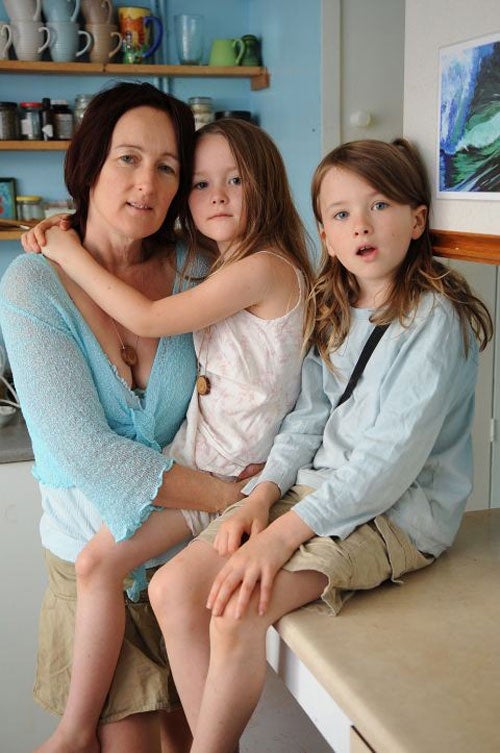
One morning over breakfast, Holly Paige looked at her daughter and realised things weren't right. Lizzie should have been flourishing. Instead, her cheeks were pinched, she was small for her age, and although she had skinny arms and legs, her belly was big and swollen. When Lizzie smiled, Paige suddenly noticed her upper front teeth were pitted with holes.
"I was absolutely horrified," recalls Paige.
At the time, Paige was feeding them what she thought was the most nutritious diet possible. They had been raw vegans for three years, and ate plenty of fruit, vegetables, nuts, seeds, grains, soya and pulses, but no meat, fish or dairy. According to the raw-food doctrine, Lizzie and Bertie, then three and four-and-a-half, should have been brimming with good health. But Paige's mothering instinct was on the alert.
"I knew something was wrong, but I couldn't put a finger on it," says Paige, 45. "They were two sizes behind in clothes. Of course, children come in all different shapes and sizes, but their growth seemed to be slowing further. I have two older children so I had their development to measure Lizzie and Bertie's against."
There were other oddities: "I remember going to the supermarket and buying butter for my older children. Lizzie, who had never had butter in her life, would grab the packet and gnaw into it," says Paige. "It was really disconcerting. I would be thinking, 'What is going on? Here is this purely fed child – why would she need to do this?' I was so brainwashed into thinking dairy products are bad for you."
When she took Lizzie and Bertie to her health visitor, she didn't seem too concerned. "She said they were in the low percentile, but thought they were OK," says Paige. "Yet I knew the children weren't growing. I could sense that there was something wrong. It felt wrong."
Finally, Paige stumbled across the answer in an old vitamin book. Although she has no medical confirmation, she believes the family had symptoms of vitamin D- and protein-deficiency. "I felt like such an idiot. I got the information from a book I'd had sitting around on my shelf for 20 years."
The discovery brought a swift end to her experience of veganism. In Totnes, where she lives, Paige knows many other raw vegans who have a nature-loving lifestyle. But despite taking a daily supplement that included vitamin D and B12, she and the children were suffering. Today, the family still mainly has a raw diet, but Paigeincludes butter, cheese, eggs and occasionally fish. "I had let malnutrition in through the back door in the name of health," says Paige. "It was ridiculous."
There is a significant difference between being vegan (and eating cooked foods) and raw vegan. Vegans benefit from fortified cereals, baked goods and a wider variety of grains and pulses; what's more, cooking aids the absorption of some micronutrients. But Lisa Miles, from the British Nutrition Foundation, says: "The most dramatic change to the diet is being vegan rather than the raw element, because you are cutting out two huge food groups. This affects vitamin D and protein."
Last week, strict diets for children were questioned after a 12-year-old vegan girl was admitted to a Scottish hospital with rickets. Her spine was said to resemble that of an 80-year-old woman.
Rickets is a degenerative bone condition that can lead to curvature of the spine and bone fractures. It is caused by a lack of vitamin D, usually found in oily fish, eggs, butter and made by our bodies from sunshine – although in the UK the sun is only strong enough to do this between April and September. It's a disease you might more commonly associate with the Dickensian character, Tiny Tim.
Many dieticians believe it is possible to bring up a healthy vegan child. "You can do it, but you do have to make sure you know what you are doing, especially in regards to weight," says Jackie Lowdon from the British Dietician Association. "As with any self-restricting diet, you need to get proper professional advice."
The Vegan Society, unsurprisingly, claim that the diet is suitable for all stages of life, and have an army of strapping, healthy adults brought up as vegans from birth who are happy to talk to the media. They also publish a book with dietary advice on feeding vegan children, written by dietician Sandra Hood. A spokeswoman, however, says they would not recommend a raw vegan diet for children.
Nigel Denby, a dietician and author of Nutrition for Dummies, says: "It can be hard enough bringing a child up to eat healthily, but with a vegan diet you are really making a difficult job for yourself. It is absolutely not something that should be tried without support from a dietician."
Several factors, says Denby, make a vegan diet for small children more difficult. With a restricted range of foods, if children turn their nose up at one particular food, you could be stuck for choice. "With smaller appetites and portion sizes, children under five have higher nutrient requirements than adults. Therefore, every mealtime has to be an opportunity to feed them high-nutrient-based foods."
Care must be taken with certain nutrients. "Haem iron, found in meat, is easier for the body to absorb," explains Denby. "Non-haem iron, which is just as good, is found in leafy vegetables and fortified cereals, but you have to eat a greater amount to get the same amount of iron."
Paige now believes that her children were craving dairy products. "It was confusing because for the first year I felt good, calm and content, and had plenty of energy. The children didn't have childhood sicknesses. But something seemed to be missing. We were always picking between meals, always obsessed by food."
Paige believes long-term breastfeeding helped sustain Lizzie and Bertie, but the toll of veganism on her own health was dramatic: "It was the third year when my body started disintegrating, frighteningly fast. I was getting thin, losing muscle and I was going to bed at half nine." She would also have "mad" binges, and eat nothing but rice cakes and butter.
The last straw came when Paige's eldest son Bruce came to stay. He asked her to buy chicken, and Paige ended up eating half of it. After that, she couldn't stop. "I just went wild. Typically, in a day I would eat half a chicken, two litres of milk, half a pound of cheese and three eggs. I just had to do it. It went on for weeks. The children were having lots of boiled eggs and cheese."
Paige, who now runs an online magazine and raw food shop, says her biggest lesson is never to be too restrictive again. "For a lot of people, there is something about these various nutrients in the animal form that we can assimilate. I don't know why, but experience shows a lot of us can't get enough protein on a vegan diet."
Now when Paige looks at her two youngest, now seven and eight she is certain they are thriving. "There was a moment when I was worried damage had been done for life," she says. "Now, I'm confident they are doing well. Even though they eat as much fruit and dried fruit as before, their teeth haven't had one bit more decay."
And nowadays, it's their growth that's the big talking point. "The first thing anyone says when they visit is: 'My, haven't they grown?'"
Nutrients that everyone needs
B12
Because this vitamin is mainly found in meat, dairy products and eggs, vegans must get it from other sources such as supplements, fortified breakfast cereals and Marmite. Deficiency can lead to irreversible nervous system damage.
Vitamin D
Our skins make vitamin D when exposed to the sun's ultraviolet rays. But with desk-bound jobs, long winters and unpredictable weather, it is not always possible to get enough. Vitamin D is crucial for bone growth in children, and deficiency can result in rickets. Oily fish is one of the best dietary sources, but vegans can obtain it from fortified breakfast cereals and margarine. People living in Scotland may need to take greater care over vitamin D, as may people from cultures that require them to cover up.
Calcium
Found in dairy products, this is essential for strong bones. It is often lacking in a vegan diet unless taken as supplement.
Iron
Without sufficient iron, vegans and vegetarians can become anaemic. Deficiency can also delay growth in toddlers. Iron is commonly found in meat, but vegetarians can source iron from pulses and leafy green vegetables.
Calories
Although childhood obesity is an issue today, not enough calories can mean children don't grow properly. This can be a problem in high-fibre diets.
Protein
High-biological-value protein is found in meat, fish, eggs and dairy products. Low-biological-value protein is found in nuts, pulses and wholegrains. Separately, the latter don't contain all the essential amino acids, but do when combined correctly. Knowledge of which foods to mix together is therefore crucial.
Join our commenting forum
Join thought-provoking conversations, follow other Independent readers and see their replies
Comments