Ten people who changed the world: Hans-Werner Sinn, German economist who made sense of the financial crisis
Whether in the cut-throat field of politics or the fashion industry's corridors of power, this year they left our planet a better place. Celebrate 10 of the best, nominated by Independent writers
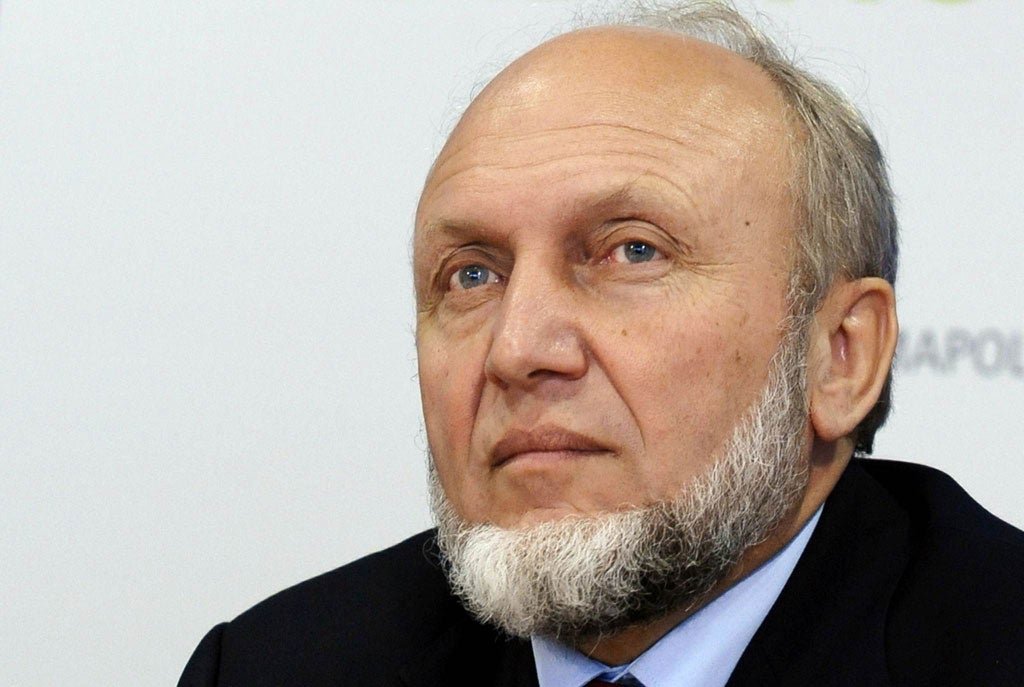
When the history of the euro is written, 2011 will be seen as the year when the authorities started to lose control of events. The three weakest members, Greece, Portugal and Ireland, had been bailed out in 2010, but at the beginning of 2011 there was still time to contain the crisis. By the ill-fated EU summit in December, that time was clearly running out, though the next stage remains quite unclear.
The key to the future of the eurozone is Germany, but government policy has been inconsistent and confused. Through the year the clearest and most consistent voice in the country, explaining the weakness of the eurozone and the potential burdens it places, has been that of Hans-Werner Sinn, president of the Ifo Institute in Munich. You could say he did not change things in 2011. But his comment and analysis during 2011 seems likely, more than that of anyone else in Europe, to change them in 2012 and beyond.
The Ifo Institute is the best-known private economic research organisation in Germany. Its reputation for hands-on economic analysis has been built up over many years, but it is only recently that it has come to stand out as an effective critic of the eurozone, applying its forensic skills to dissect what is actually happening.
In 2010, Professor Sinn was certainly critical of the initial bail-out of Greece, but felt that the financial markets – by charging weaker countries higher interest rates – would supply the discipline that the politicians had failed to do. But this year, as the crisis deepened, he lifted the tone of his challenge. The key point he made is that all the comment has been on whether the fringe governments can finance themselves and how the EU and IMF step in if they can't. But a greater issue is the hidden flow of funds from Germany to the fringe via the European Central Bank.
Through the year he wrote a series of papers attacking the way in which the ECB has been doing what he has dubbed "The ECB's secret bail-out strategy". Thus, in April, he described how it worked: one eurozone country runs a current account deficit, with the result that cash flows out of the country to pay for the surplus imports. That creates a shortage of euros in that country. So the local central bank prints the extra money. But in the surplus countries, the net exporters, there is an excess of euros, so the central bank there reduce the flow of money they create. There is no overall change in amount of euros in circulation and hence no inflationary impact. The transfers do not show up on the accounts of the ECB. But the balances do show up as liabilities and credits on the accounts of the national central banks. In effect, Germany was financing consumption in the fringe European nations.
In June, he noted that the only way to make adjustments would be for the fringe European countries to become poorer: "Europe's peripheral countries have to shrink their nominal GDP to regain competitiveness".
In August, he argued against issuing "Eurobonds" – that is, bonds with a pan-European guarantee, the idea pushed by the Commission, on the grounds that they would merely "numb the distressed countries' current pain, but, by failing to treat the underlying disease, they – and the eurozone as a whole – would end up far sicker than before".
In October, he was warning about the capital flight from Italy, and earlier this month he made his most trenchant comment yet, writing about the way in which the Germans were unwittingly paying to hold up living standards in the whole of the fringe of Europe.
"It is not only Spaniards, Irish and Greeks who are on a shopping spree in Germany," he wrote. "They have been joined by many Italian wealth owners who, with the money freshly printed by their national central banks, are buying anything that is not nailed to the floor. The money the Germans get for this bargain sale ends up in the money shredders at the Bundesbank."
He noted that in the previous three months Italy alone had borrowed more than €110bn from the ECB, and asked: "When will politicians wake up to this fact?".
The answer is not yet, but when they do it will be Hans-Werner Sinn who has changed the whole argument.
Join our commenting forum
Join thought-provoking conversations, follow other Independent readers and see their replies
Comments