Ian Burrell: Facebook may not be sexy any more, but still leads the pack
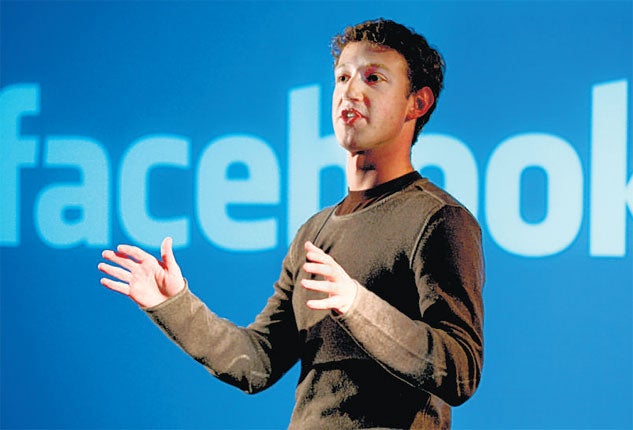
This month in San Francisco, Mark Zuckerberg will address for the fifth year his annual F8 conference on the future direction of his gift to the world: Facebook.
It's a phenomenon that has left few households in Britain untouched while building a global network of 750 million users. But of late some of the shine has come off the Facebook brand. This time the negative publicity doesn't concern tabloid scare stories, legal actions from those who claim Zuckerberg stole their ideas, or an Oscar-winning film that portrays the founder in a bad light. The current difficulties concern the notion that Facebook itself is losing the appeal it once had.
Zuckerberg is hardly under pressure – he is starting to seriously monetise his network. Reuters reports that Facebook revenues doubled in the first half of 2011 to $1.6bn, significant news in a week when Yahoo! axed its chief executive Carol Bartz.
But Facebook is struggling to retain the buzz that it generated only a few years ago. Recent figures show that the site lost 4 per cent of its share of visits to social sites in the UK in June, while YouTube and Twitter grew. Although Facebook remains the most popular social site in this country by some distance, it is at its lowest level since 2009 and is threatened by the new Google+, the fastest-growing player in the sector.
Ben Ayers, head of social media at media agency Carat, says Facebook will look to increase its usability on mobile phones, which he identifies as the major area of opportunity for the company. "Mobile is white hot at the moment and Facebook is developing to take advantage. If I were them I probably wouldn't be too worried."
F8 is an opportunity for developers to put forward entrepreneurial ideas for how Facebook can grow. Last year's event saw the successful emergence of the Like button. Many commercial brands use Facebook in preference to their own sites, says Martin Loat, CEO of Propeller, a consultancy specialising in media and digital. "Why bother building your own campaign sites when you can do it easily and cheaply on Facebook – a platform that most of your audience are already using already? With Facebook now the default setting for so many people and more and more brands following the herd and stampeding in, it's little wonder that the unit cost of advertising on Facebook is rocketing upwards."
The jailing of two young men for their use of Facebook to incite riots was a reminder that the social site is not so much a lawless corner of a rebellious underground as part of the modern mainstream. It is the utility business that Zuckerberg always wanted. When some of the world's most dynamic young people gathered in Zurich last month for the annual One Young World conference, they identified Facebook as being essential but no longer fashionable, says the event organiser Kate Robertson, chairman of advertising group Euro RSCG. In a two-way vote, 61 per cent of the One Young World high flyers chose Facebook over Twitter (34 per cent) as their social platform of choice. But worryingly for Zuckerberg, 68 per cent of them named Google as the online brand that will dominate the future, ahead of Facebook (21 per cent) and Twitter (11 per cent). "Facebook isn't sexy or de jour," says Robertson, "but in the same way as an older generation would regard the electric grid, young people would be horrified if Facebook went wrong. It has become a utility but wasn't [seen by respondents as] cool as a brand." The same young people, she says, look to Google for new developments. "There seemed to be a sharp awareness of new product advances coming from Google. They were watching Google and expecting it to bring the whole enchilada forward."
The power of Twitter was recognised in a recent research by the media agency Starcom MediaVest, which examined how 6,000 social media users engaged with commercial brands and found that those who took trouble to tweet a brand were 89 per cent more likely to consider purchasing it. But Jim Kite, Starcom's strategic development director, says Facebook has a deeper relationship with its users than its micro-blogging rival. "The opportunity to do more things is far greater," he says, highlighting the time Facebook users spend playing games, sharing stories and posting comments. "Overall, Facebook is the most powerful because of its scale and flexibility."
Facebook may not have the momentum it once had, says the digital media writer Andrew Keen, but, unlike MySpace and Bebo, it is here to stay. "The website does seem stale now, especially compared with Google +, which has amassed a significant audience very quickly. But you can't argue with over 700 million users and Facebook remains the obvious leader in the social field. They certainly won't just disappear. It's hard to see them as Apple, as an engine of reinvention, but it's still Facebook's game to lose."
Join our commenting forum
Join thought-provoking conversations, follow other Independent readers and see their replies
Comments