Tim Luckhurst: Demise of news barons is just a Marxist fantasy
Among people who claim to know the future of journalism a consensus is forming. Western democracies stand on the brink of the decade in which professional reporting will die.
There will be no further need for newspapers or broadcasters to host debates and represent public opinion. The internet will let every citizen speak for themselves. The masses will seize the means of media production. We will witness an era of revolutionary change.
New media prophets pore over the evidence, and find it thrillingly compelling. Circulations of UK daily national newspapers are down by a fifth since 2000. Sunday and local titles have fared worse. They wonder who will have the honour of sacking the last newspaper journalist and whether, with even the BBC cutting jobs, their siblings in broadcasting will be culled first.
Granted, the economics of the news industry is appalling, and the law is making things worse. Celebrity scandal, long a source of income for Britain's least lovable press, is threatened by the courts' increasingly restrictive interpretation of the balance between privacy and public interest. Super-injunctions abound. Libel tourism gives Britain a deplorable reputation among people who appreciate the symbiotic relationship between democracy and freedom of expression.
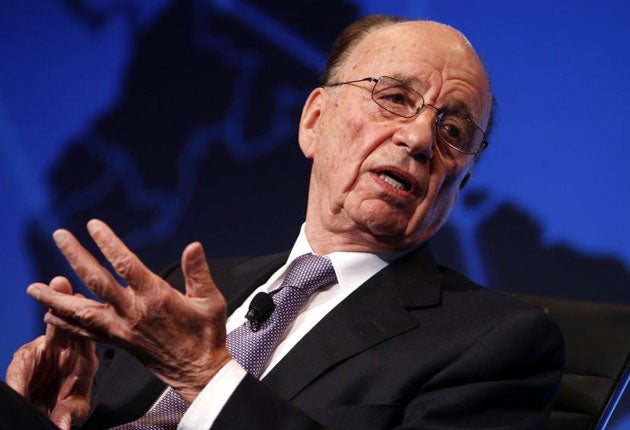
And so media futurologists predict the end of independent capitalist media barons such as Rupert Murdoch, Lord Rothermere and the Barclay brothers. They will go the way of the dodo: they have no defence against the technology that has come to kill them
But there is an elementary delusion behind the idea that amateurs can report accurately and a colossal fallacy at the heart of the prophets' vision. The delusion was illustrated during Barack Obama's presidential campaign. Obama felt secure at a meeting with supporters. No reporters were present, so he admitted that he was not surprised that small-town voters "get bitter, they cling to guns or religion or antipathy to people who aren't like them".
Days later, Mayhill Fowler, a blogger who attended the event as a contributor to the Obama campaign, reported his comments to a citizen journalism website. To people who forecast a glorious future without professional reporting this was an example of new-media democracy in action. No longer could politicians say what they believe in private and dissemble in public. A blogger would always expose the truth.
Wiser counsel acknowledges that a political reporter who did not tell his editor about such a story for so long would be sacked. Nor can the public right to know depend on the dictates of an individual's conflicted conscience. Such decisions should be guided by professional priorities and ethics. The fallacy rests on the delusion that private ownership by capitalists has damaged journalism. The facts suggest the opposite. Since the first American newspaper baron, James Gordon Bennett I, created the New York Herald, and his British disciple Alfred Harmsworth followed with Britain's Daily Mail, profit-driven ownership has liberated reporters.
Before the barons, journalism readily succumbed to direct sponsorship by political parties. Impoverished publications were bullied by powerful litigants. They could not afford professional reporters and printed opinions not facts. Afterwards, while journalism has often exercised power without responsibility, it has done so in the name of a version of the public interest that is gloriously independent of the state.
So, what will the second decade of the 21st century mean for this tradition of cussed, unlovable freedom-enhancing journalism? Clearly the technical ease with which words and images can be circulated around the globe has changed everything. Information is available from a plethora of sources. They range from government websites to company portals and activist blogs.
Therein lies part of the problem. Democracy cannot thrive if state or commercial power is left free to scrutinise itself. It needs honest, authoritative reporting of the kind Britons have become accustomed to receiving from newspapers and broadcasters. And the internet makes surveillance and intrusion as easy as it makes information sharing. That creates a greater need for the scrutiny only professional journalism can guarantee.
It can, of course, be delivered online in glorious multimedia detail and at unprecedented speed. The internet is a superb storytelling tool. Multimedia journalists use it to deploy audio, video and text in previously impossible combinations. In the right hands it makes reporting, investigation and analysis clearer, faster and more inviting than ever. It may also make it cheaper. It certainly makes reporting interactive. Discussion with and accountability to the community they serve is now one of a journalist's core duties.
Online consumers are blissfully accustomed to recommending stories and columns and sharing them via links. The internet makes real the relationship of trust between reporter and consumer that was previously asserted but only occasionally tested. This is good for honest journalism.
The relationship will deepen as more news consumers become comfortable with online technology. But, in common with all machinery, the internet is morally neutral. As it matures in an era of nigh-universal broadband and wireless access, it will not automatically make journalism better. That will happen only if professional journalism's values, and the economic models necessary to support them, adapt to thrive online. Intense thought and experimentation dedicated to devising these models is under way in news corporations, good universities and hyper-local news collectives.
There is not yet a single one-size-fits-all model for profitable, professional journalism in the 21st century, but a powerful alliance of commerce, conscience and intellect is converging around the certainty that such journalism is essential if representative democracy is to endure.
Citizen journalism's most devout evangelists are wrong. Their wisdom is purely ideological. In fact, the people who now predict the end of professional journalism's reign of sovereignty have attacked edited, fact-based reporting for decades. They think it is as an ideological invention created to sell myths to the masses.
Students of media studies have been force-fed this anti-democratic bunkum for decades. Now the internet is exploited as an opportunity to invite the population at large to swallow it too. Forget it. Professional journalism will survive because it is necessary and the market will find a way to supply it. People who claim otherwise only pretend that their mission is prediction. In fact, they are working to mould the future to match a postmodern Marxist fantasy.
Tim Luckhurst is Professor of Journalism at the University of Kent.
Join our commenting forum
Join thought-provoking conversations, follow other Independent readers and see their replies
Comments