Charles Camilleri: Composer who progressed from light music to austere, abstract, modernist works
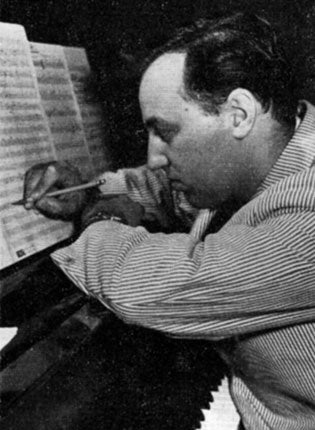
Charles Camilleri was one of the few native Maltese composers to have succeeded in making a significant impression in international musical circles. He was largely self-taught, and his ability to draw on diverse cultural traditions and marry them in an eclectic yet highly individual style proved particularly persuasive.
Camilleri was born in Hamrun, Malta in 1931. Despite early musical promise while at the Lyceum High School, he was initially destined for a career in law. However, in 1950, when the family emigrated to Australia, his somewhat unconventional career began in earnest with a brief period as a school teacher. Later on, a stint as a piano player in an ensemble that performed in Hong Kong, Japan, Korea and San Francisco nurtured the inherent nomadic instincts that were to stay with him for the rest of his life.
For five years, from 1954 to 1959, based for the first time in London, he earned his living as a successful light-music arranger, composer andconductor. Here, in addition to his many distinctive film scores, he also created the incidental music for the Strand Theatre's award-winning show Sailor Beware. His next move wasto Toronto, where after working for the Canadian Broadcasting Corporation, he enrolled at the local university to study music.
In 1965, returning once againto England, Camilleri now felt confident enough to focus exclusively on composition. Growing critical acclaim then allowed him the freedom to undertake many fruitful artistic collaborations with the leading performers of the day.
Particularly pivotal in this regard was the organist Gillian Weir, who during the course of 1970 helped to create Missa Mundi, his first major workfor the organ. Cogently argued, highly articulate and inspired bythe writings of the Jesuit theologian, Pierre Teilhard de Chardin, thisdifficult and demanding five-movement technical tour de force remains an important contribution to the repertoire. Later essays for organ included Invocation to the Creator (1973), Wine of Peace (1976), Morphogenesis (1978), Toccata Britannica (1978) and a Concerto for Organ, Strings and Percussion, first performed by John Scott at the 1983 Three Choirs Festival.
Camilleri's huge corpus of works comfortably exceeds some 300compositions. Although stylistically diverse, they break down into three main creative periods, each of which produced a piano concerto. Thefirst, dating from 1948, is titled "Mediterranean" and reflects an early and highly productive interest in the indigenous folk music of the Maltese archipelago; the second, premiered as part of Expo in Japan in 1970, is headed "Maqam", an Arabic form of extemporisation; the third, "Leningrad", cyclical, austere and somewhat abstract, was first performed in Russia in 1987.
Four years earlier, in 1983, Camilleri had returned home permanently to his creative roots at Naxxar. Here, alongside his still considerable musical output, in 1988, under the aegis of Unesco, he published a book of writings, suitably entitled Mediterranean Music. In 1992, having been at the forefront of the island's cultural life for over half a century, he proved a most appropriate choice as the first Professor of Music at the University of Malta.
Kenneth Shenton
Charles Mario Camilleri, composer,conductor and writer: born Hamrun, Malta 7 September 1931; Professorof Composition, Toronto Conservatoryof Music 1977-78; Head of Music, Unesco Foundation of International Studies, Malta 1987-88; Professor ofMusic, Malta University 1992-96; married 1959 Doris Vella (one son, one daughter); died Naxxar, Malta 3 January 2009.
Join our commenting forum
Join thought-provoking conversations, follow other Independent readers and see their replies
Comments