Grand Ayatollah Mohammed Hussein Fadlallah: Prominent Shiite cleric who survived several assassination attempts
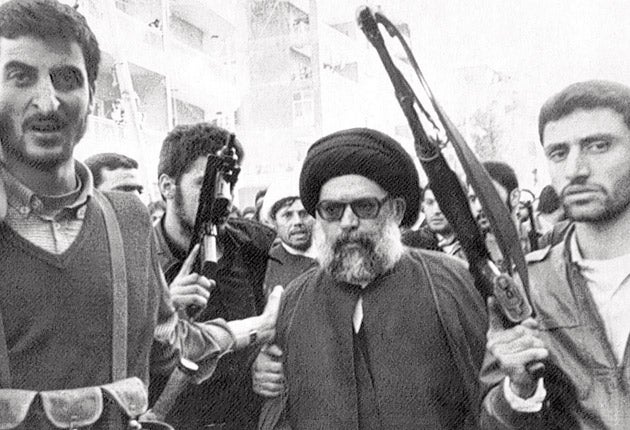
As Lebanon's leading Shia cleric, Grand Ayatollah Mohammed Hussein Fadlallah was revered in Shia communities in the Gulf and Central Asia and helped to spark increased political awareness among Lebanon's Shia Muslim population. He was also the target of a number of assassination attempts. He had advocated armed resistance by Hezbollah, the Lebanese Shiite party and militia, to Israel's 18-year occupation of southern Lebanon, which ended with the Israeli withdrawal in 2000. Fadlallah supported the creation of a Palestinian state in what is now Israel, the West Bank and Gaza.
Fadlallah was an early supporter of the Iranian revolution and of Ayatollah Ruhollah Khomeini, Iran's first supreme leader. However, he eventually became a critic of the concept of wilayat al-faqih, the Iranian system of government in which the main Shia religious leader exercises absolute authority. In 1989, Fadlallah distanced himself from Hezbollah's ideological ties to Iran, when it named Ayatollah Ali Khamenei as its new marja – the successor to Ayatollah Khomeini – but remained an advocate of resistance against Israel and suicide attacks as a means of fighting the occupation.
Fadlallah had routinely denounced Israel and the United States, endorsed suicide bombings against Israeli civilians and issued a ruling in 2009 that forbade normalised relations with the Jewish state. At the same time, he condemned other suicide attacks that targeted civilians, like the Moscow subway bombings earlier this year. He also condemned the 11 September 2001 attacks on the US, saying they were "not compatible with Sharia law".
Fadlallah famously justified, however, suicide bombings and other tactics of asymmetrical warfare by arguing that if Israel and its allies used advanced weaponry, Islam permitted the use of any weapons in retaliation. In response to Israel's deployment of F16 aircraft against civilians, Fadlallah explained in 2002, "There is no other way for the Palestinians to push back those mountains, apart from martyrdom operations."
Fadlallah's writings and preachings inspired the Dawa Party of Iraq and a generation of militants, including the founders of Hezbollah. Based among the Shia poor in Lebanon, Hezbollah gained popularity for holding out against Israel and for its welfare system. Western governments often mistakenly identified Fadlallah as the spiritual guide of Hezbollah, the militant Islamist organisation that was founded in 1982 with Iranian help following Israel's invasion. Over the years, Hezbollah spearheaded a violent campaign against Western and Israeli targets in Lebanon but Fadlallah never considered himself to have any authority over the group and denied any operational links to it. His refusal to admit leadership of the organisation may have been influenced by the fate of Mohammad Baqir al-Sadr, Iraq's most important Shia cleric, with whom Fadlallah had once worked closely, who was executed by Saddam Hussein in 1980.
Nevertheless, Western intelligence agencies held the Ayatollah responsible for attacks against Western targets, including the 1983 bombings of two barracks in Beirut, in which 241 United States Marines and 58 French paratroopers were killed, and the kidnapping of foreigners. It was rumoured that Lebanese forces had leaked Fadlallah's name to the West, making him a prime target for their agencies.
Not surprisingly, Fadlallah's position and outspoken political views made him a target. In 1985, CIA-trained operatives carried out an assassination attempt against him, in which a 440lb car bomb was placed along the short route between his apartment and mosque. Fadlallah narrowly escaped the explosion, but 80 or so others, including many women and children, were killed and 200 injured when a nearby apartment block was demolished. Bob Woodward, an American investigative journalist, linked the blast to the CIA, though US officials always denied any involvement. In 2006, Israel bombed Fadlallah's house in south Beirut, but he was not there.
In 1995, President Bill Clinton's administration froze Fadlallah's assets because of his suspected involvement in terrorism. He welcomed Barack Obama's election as US President in 2008, but last year expressed disappointment with his lack of progress on negotiating a Middle East peace, saying he appeared to have no plan to bring peace to the region. His criticism of the US and the West did not abate.
Mohammed Hussein Fadlallah was born 16 November 1935 in Najaf, Iraq, about 160km south of Baghdad, a holy Shia city and regarded as the centre of Shia learning. Fadlallah's parents had migrated from Aynata, Lebanon to Najaf in 1928 to study theology. He spent the next two decades studying Islam under the prominent teachers of the Najaf religious university before returning to his ancestral home in the Lebanon in 1966.
Fadlallah was one of the most learned and influential Shiite "spiritual references" or marjas. All Shiites must choose a marja, whose teachings they follow and to whom they give alms. He was a marja to Shiites across the Islamic world, in Pakistan, Afghanistan, Iran, as well as in the Arab nations.
Fadlallah lived in eastern Beirut, quickly established himself as a leading cleric and founded a religious school, The Islamic Sharia Institute, in which several students enrolled who later became prominent religious scholars – including Sheikh Ragib Harb, who became a tough resistance leader.
Paradoxically, while the West criticised him for his politics, conservative Islamic scholars often condemned Fadlallah for his moderate standpoints. He was widely known for his progressive views on women, describing men and women as equals, and issuing a fatwa (religious edict) in 2007 which encouraged women to defend themselves against domestic violence; another banned female circumcision and "honour killings".
In addition, Fadlallah's extensive charitable works added to his popularity. He established a public library, a women's cultural centre and medical clinics, as well as a network of schools and orphanages in Shia suburbs of Beirut and in southern Lebanon.
Following a short illness, Fadlallah suffered a liver haemorrhage at Bahman Hospital and died aged 74. In the suburb of Haret Hreik, where he preached at the al-Hassanayn mosque, black banners were hung in mourning and women wept openly in the street. Clerics and political figures from Iran, Iraq, the Persian Gulf states, Lebanon and from around the Middle East issued condolences.
Martin Childs
Mohammed Hussein Fadlallah, Grand Ayatollah: born Najaf, Iraq 16 November 1935; married Najat Noureddin (11 children); died Beirut, Lebanon 4 July 2010.
Join our commenting forum
Join thought-provoking conversations, follow other Independent readers and see their replies
Comments