Hubert Van Es: Photographer who took one of the best-known images of the Vietnam War
A handful of shocking black and white photographs seemed to capture the essence of the Vietnam War. Nick Ut's picture of Kim Phuc fleeing her napalmed village, and Eddie Adams's shot of General Nguyen Ngoc Loan summarily executing a Viet Cong prisoner defined the war's brutality. But nothing depicted its ultimate futility and failure better than a shot of a long line of evacuees waiting to climb a rooftop stair to squeeze into the last helicopter leaving Saigon, which was taken by Hubert Van Es.
The symbolic power of Ut's and Adams's photos overwhelmed the actual circumstances they depicted. Similarly, Van Es's photo was mistakenly labelled on the United Press International wire as showing the roof of the US Embassy. In reality, it showed the Pittman apartment building which housed the CIA station chief and many of his staff. Those trying to get on the CIA's Air America chopper were primarily local employees, most of whom were left behind as the Huey took off with almost double its eight-person capacity. Van Es was shooting from the UPI offices, blocks away, using a 300mm telephoto lens. In a piece written for the 30th anniversary of the fall of Saigon, he noted how, like so much else about the Vietnam War, nothing was exactly what it seemed to be. Indeed, Van Es was prouder of his close-up combat photography: his photos from the battle for Hamburger Hill in 1969 remain among the most powerful photo-journalism of Vietnam, or any war.
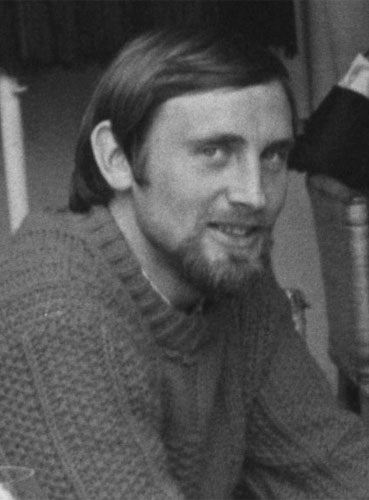
Van Es, who was known by the anglicised "Hugh", was born in Hilversum, the Netherlands in 1941. He decided to become a photographer aged 13, after seeing an exhibition of Robert Capa's work (Capa was killed in 1954, covering the French war against the Vietnamese). After university he went to work for a Dutch photo agency, but in 1967 headed as a freelance to Hong Kong, which became his adopted home, and where he met his wife of 39 years, Annie. He went to Vietnam in 1968 as a television soundman for America's NBC news before being hired as a photographer for Associated Press, for whom he shot the Hamburger Hill pictures. He moved to UPI in 1972, and stayed behind when Saigon fell. Wearing a hat into which he stuck a small Dutch flag with the words "Dutch journalist" printed in Vietnamese, he photographed the entry of the North Vietnamese troops into the South Vietnamese capital.
Returning to Hong Kong, he mixed freelance photo-journalism assignments, most notably brilliant coverage of the Moro rebellion in the Philippines, with work as a stills photographer on films being shot around Asia. When the Soviets invaded Afghanistan in 1980, he was one of a plane-load of journalists who arrived in Kabul. Only one, a CBS television cameraman, was allowed in, but as the rest were being herded back to the aeroplane, Van Es slipped through an open door and sprinted to a taxi. Although he was arrested, the plane had gone, and while he waited three days to be deported, he was able to document the Russian invasion.
Van Es received a bonus of $150 from UPI for his Saigon photos, but no further benefit, not even when they became the basis for the closing scene of the musical Miss Saigon. At one point, a local Vietnamese photographer who stayed behind in Saigon claimed authorship of the photos, but Van Es understood he was having a rough time in the new Saigon, and when he was finally allowed back to Vietnam in 1990, their friendship resumed. Although some reports indicated he was bitter at getting no royalties from Miss Saigon, his only desire was to be identified properly as the photographer, and he later met proudly with the show's producers.
For many years, he was a fixture of Hong Kong's Foreign Correspondents' Club. In legendary drinking sessions there he and others would recall the days before media-savvy governments closed off war zones to all but embedded reporters, before financial restraints closed down bureaux and limited foreign coverage. But Van Es succeeded as a freelance, and for wire services. "In an atmosphere sometimes rife with nostalgic discontent, Hugh was a glamorous, quietly flamboyant figure," recalls Kirsten Ellis of the South China Morning Post. "There was a touch of Douglas Fairbanks about him, huge enthusiasm, no bitterness or regret." He died after suffering a cerebral hemorrhage. According to Annie, who survives him, he wanted no funeral, but a wake held at the FCC, with his coffin on the bar. A memorial party is due to be held there today, but without the coffin.
Michael Carlson
Hubert Van Es, photographer: born Hilversum, Holland 6 July 1941; married 1969 Annie Cheng; died Hong Kong 15 May 2009.
Join our commenting forum
Join thought-provoking conversations, follow other Independent readers and see their replies
Comments