Ian Shepherd: Archaeologist who led the way in Scottish research

For free real time breaking news alerts sent straight to your inbox sign up to our breaking news emails
Sign up to our free breaking news emails
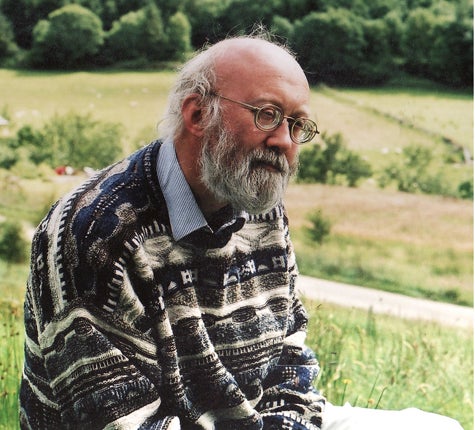
Ian Shepherd, doyen of Scottish Local Authority archaeologists, has died at the early age of 58. The first such post-holder in the country, appointed to the newly formed Grampian Region in 1975, he was eventually Principal Archaeologist, Aberdeenshire Council, overseeing cultural heritage matters also for Angus and Moray.
Although raised in Lanarkshire, and educated in Edinburgh, latterly as a student of Professor Stuart Piggott at Edinburgh University, Shepherd was born in the North-East of Scotland. He spent his entire professional life in the area, whose field archaeology, historic buildings, and landscapes he knew intimately and which he cherished.
Shepherd enthusiastically developed a professional archaeological service from scratch. His important work inside the planning system soon extended into research and teaching, for he was both a keen populariser and a serious researcher. Many new archaeological sites were discovered during his aerial survey programmes. He undertook fieldwork as well: his principal excavation, with his wife Alexandra, was at Covesea Cave in Moray, in use from Late Bronze Age to Pictish times; he also rescued numerous disturbed Bronze Age burials. Other archaeologists benefited from the support he brought to their projects in the region. He contributed significantly to a range of Trusts and other initiatives concerned with historic buildings, archaeology and heritage in the area.
He was a keen extramural lecturer, his talks often enhanced by the fine colour transparencies he took both at ground level and from the air. He produced a huge range of literature: from leaflets and guide-books to specialist studies (particularly on Bronze Age subjects), but also including regional archaeological overviews and monographs on architecture. Two general surveys have been republished: Aberdeen and North-East Scotland (1996); and Aberdeenshire: Donside and Strathbogie (2006). Both are quiet triumphs, like the unshowy buildings he admired as an architectural historian.
Co-written with Moira Greig, Grampian's Past (1996) showcases aerial photographs of historic buildings and archaeological sites. Despite worsening health, he was still actively writing this spring – including contributions to a new survey of Bronze Age burials and to the "Buildings of Scotland" volume on the North-East.
He believed passionately in Scotland's archaeology, playing a central role in leaving it much healthier than in the 1970s. He was the first chair of the Association of Regional and Islands Archaeologists. He wrote cogently on archaeology and planning, notably on the deleterious impacts of certain afforestation schemes. He could disagree profoundly with policies on heritage emanating from central government or elsewhere, while remaining good friends with the colleagues who enunciated them.
Shepherd was a selfless supporter of the Society of Antiquaries of Scotland. For almost a decade, he edited the Antiquaries' Proceedings; for another, he chaired its Research Committee. A Vice-President in the late 1990s, he later masterminded, with Gordon Barclay, a major review of Scotland's Neolithic and Earlier Bronze Age.
But his interests were far from purely local. He had an international reputation among Bronze Age specialists, and was founding Secretary of the Bronze Age Studies Group, where his duties extended to include shepherding its directionally-challenged president on site visits around Europe.
His knowledge of the prehistory, history and personalities of North-East Scotland was encyclopaedic, but lightly borne and freely shared. It was acquired, moreover, not in an ascetic way, but by a family man, proud of the achievements of his wife and daughters, and who relished much of life, from a decent malt to his last trip to France. He is survived by his mother, his wife, and their daughters Bryony and Sunniva.
Ian Alexander George Shepherd, archaeologist: born Forres 22 March 1951; married Alexandra (two daughters); died Aberdeen 15 May 2009.
Subscribe to Independent Premium to bookmark this article
Want to bookmark your favourite articles and stories to read or reference later? Start your Independent Premium subscription today.
Join our commenting forum
Join thought-provoking conversations, follow other Independent readers and see their replies