John Bailey: Policeman who won a George Medal for bravery
His later career included policing the women’s protest camp at RAF Greenham Common

For free real time breaking news alerts sent straight to your inbox sign up to our breaking news emails
Sign up to our free breaking news emails
Newspapers around the world carried the story of how the Metropolitan Police detective constable John Bailey ignored bullets whizzing past his ear to chase and arrest an Army deserter in Mitcham, Surrey, on 13 June 1954. DC Bailey's action won him the George Medal, but it was Rex, the black and white Alsatian police dog also fired on by the miscreant, who became a celebrity, with an illustrated feature article about him and his handler many years later in the children's magazine Look and Learn, and three medals, from the National Canine Defence League, the People's Dispensary for Sick Animals, and the citizens of Mitcham.
The deserter was reported to be lurking in a house in the London suburb, hoping to stay hidden. The dog, his handler, and DC Bailey gave chase as he tried to make a run for it after 20 minutes' stand-off. The pursuit went on through several streets, the man firing over his shoulder, and luckily proving to be a poor shot, though Look and Learn says a bullet grazed the dog's head, temporarily stunning him.
The trial which followed a month later at the Old Bailey in London was reported as far away as Canada. The judge's acknowledgement of the young detective's heroism is detailed in a newspaper article published there on 24 July 1954. Mr Justice William Gorman leaned over the bench and warmly lauded 29-year-old Bailey: "Your conduct was worthy of the highest praise. What you did is in accordance with the highest traditions of the police force."
A list of police gallantry awards describes DC Bailey as having shown "courage and determination in effecting the arrest of a dangerous criminal in Mitcham who had a firearm to resist arrest." The deserter, whose surname is recorded as Allen, was sentenced to 12 years' imprisonment for shooting with intent to murder and using a firearm with intent to prevent arrest.
DC Bailey had eight years' experience in the police and had pursued the man unarmed. He went home that eventful Sunday lunchtime to reassure his wife, Sylvia, who remembers him saying: "If the newspapers get on to you don't be concerned."
John Bailey was born in London, an only child, the son of a gas company employee. He attended Emanuel Grammar School in Wandsworth, and having been briefly evacuated, he returned home to continue his education under wartime emergency conditions at Henry Thornton School, Clapham.
The boy who had joined the Air Training Corps through his school set his heart on flying, and spent the last months of the Second World War training to be a pilot with the RAF. He qualified just too late to take to the skies to fight.
"He was a very intelligent man," his widow said. "He was flying-mad, and he had flown a Tiger Moth." The couple met while growing up in the same street in Battersea, and married in 1945 when he was 20 and she 18.
Under Minister of Labour Ernest Bevin's demobilisation plan Bailey obtained a swift "Class B" release, reserved for those intending to take up a "key" job in the post-war recovery. This allowed for three weeks' paid leave after release instead of the usual eight, with instant recall to the forces should the person quit the job they had been permitted to go to.
Bailey's only connection with the police had been an uncle, his mother's brother, who served in the City of London force. He spent 11 months in uniform based at Fulham before becoming an aide to the CID, and stayed on in the Metropolitan Police until he reached the rank of Detective Chief Inspector.
He served with Essex Police between July 1968 and August 1970, where he was Detective Chief Superintendent, before moving on and up to be an Assistant Chief Constable in Liverpool.
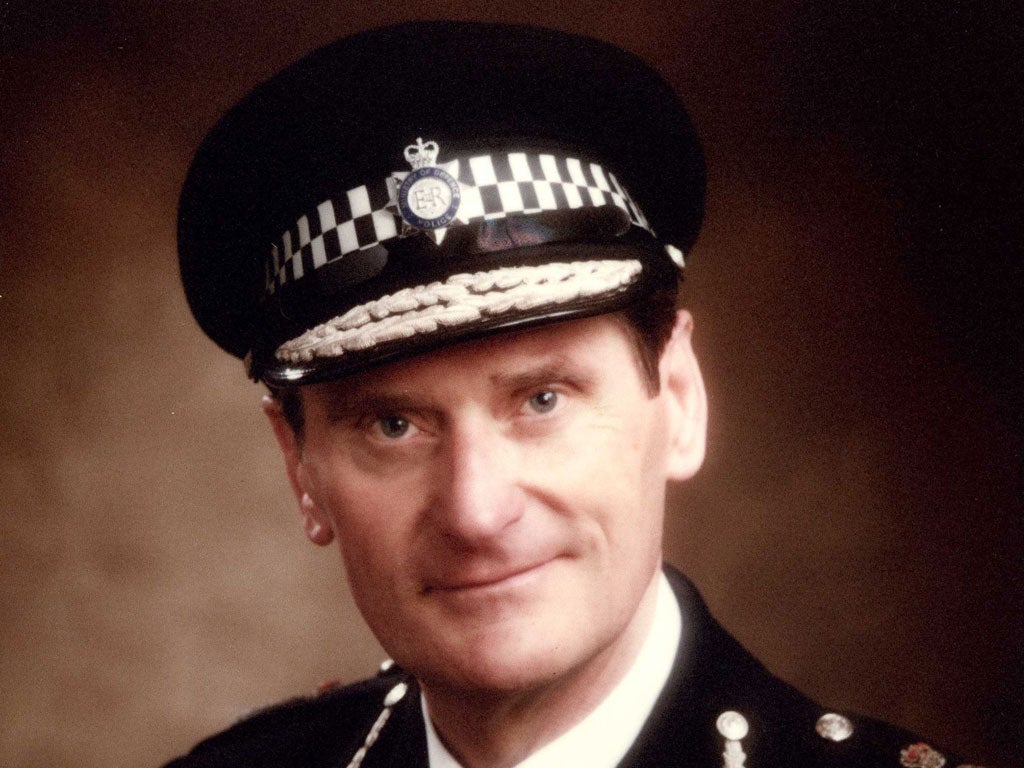
In 1977 Bailey was invited to contend with the developing pains of the then 5,000-strong Ministry of Defence Police. This force, responsible for armed security and counter-terrorism, had been formed in 1971 by merging the Army, Navy, and Air Force constabularies. Bailey took office as its Chief Constable on 4 July that year. Legislation governing the newly-merged force's activities remained complex until tidied up and incorporated into a new Act of Parliament in 1987.
During Bailey's time the MOD Police's most high-profile task was dealing with the much publicised and long-lived Greenham Common Peace Camp, at which thousands of women gathered outside RAF Greenham Common in Berkshire in 1982 to protest against Nato's siting of American cruise missiles there.
Demonstrators blockaded the base in May 1982 and there were 34 arrests. On 12 December 30,000 linked hands to "embrace the base" and hung objects they considered "life-enhancing" on the perimeter fence. The following year, on 1 April ,police officers inside the base caught nearly 200 women who had succeeded in scaling the fence and escorted them off the site.
Bailey was made CBE in the 1985 New Year's Honours and retired on 31 May that year. He and his wife had no children.
John Richard Thomas Bailey, senior police officer: born Battersea, London 9 April 1925; GM, CBE 1985; married 1945 Sylvia; died Farnham, Hampshire 24 June 2012.
Subscribe to Independent Premium to bookmark this article
Want to bookmark your favourite articles and stories to read or reference later? Start your Independent Premium subscription today.
Join our commenting forum
Join thought-provoking conversations, follow other Independent readers and see their replies