Koji Wakamatsu: Film-maker who was unafraid to explore the less palatable aspects of Japan
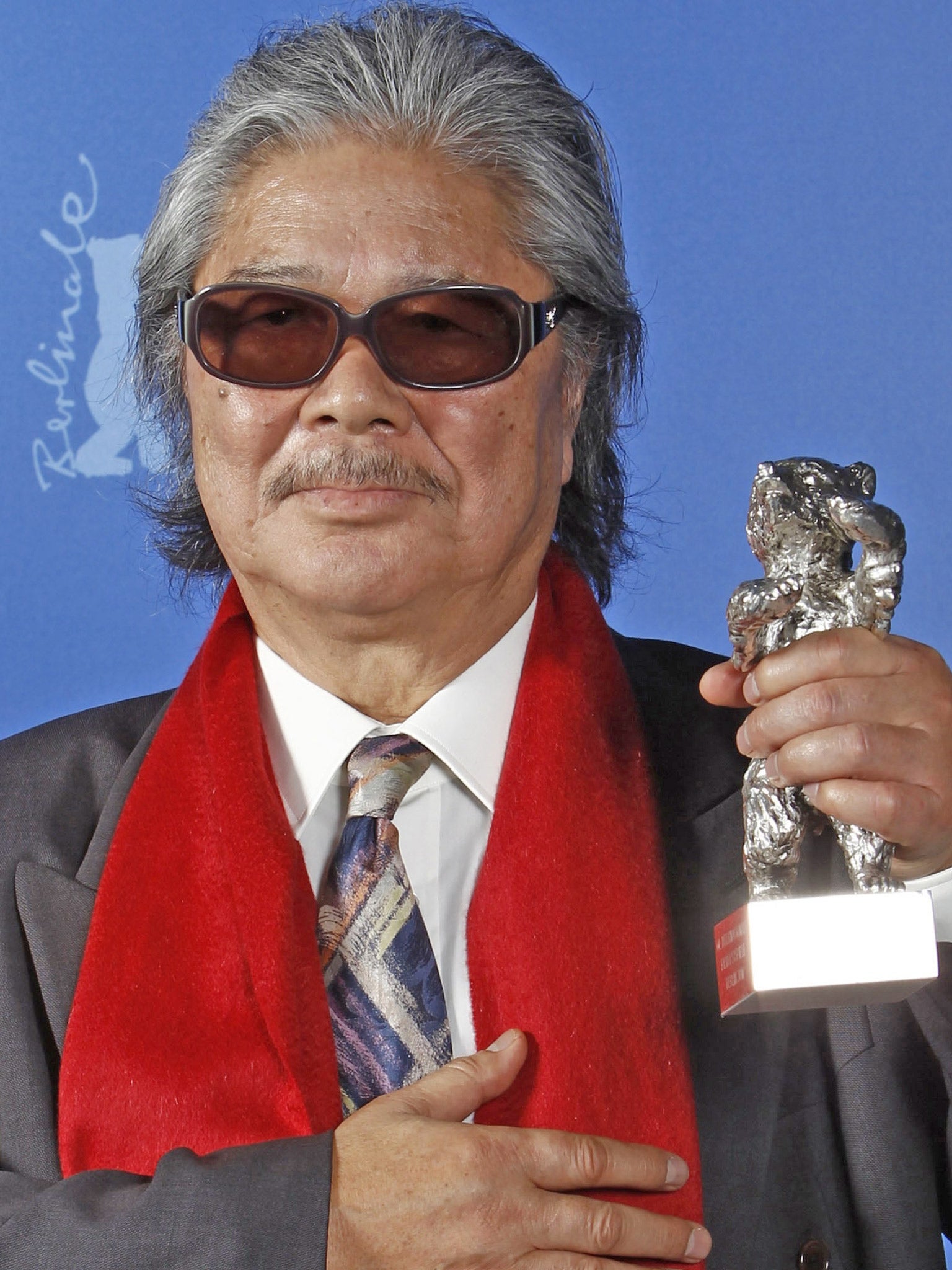
Koji Wakamatsu was in a permanent state of rebellion throughout more than 50 years of making films in Japan. In the last year of his life he completed three films with radically different settings to add to over 100 films of controversial reputation.
Financially successful as a film producer, backing films such as Oshima's In the Realm of the Senses, he produced films for many contemporaries. But he was known for most of his career as a leading maker of "pink films" – low-budget sexploitation. Wakamatsu was ready to embrace the genre for his own purposes, particularly the portrayal of violent oppression.
His career underwent an extraordinary late revival with a three-hour historical drama in 2007, United Red Army. He had long been an idol of the revolutionary left: although he was primarily driven by a visceral anti-establishment attitude, he had links with many hard-left figures, especially Masao Adachi, with whom he made Red Army-PFLP-Declaration of World War in 1971.
The following year a detachment of this group, took hostages at a ski-chalet called '"Asama-sanso". Several people died and the chalet, which gave its name to the incident was destroyed. Only afterwards did it emerge that far more lives had been wasted in the group's internal purges. More than 30 years later Wakamatsu returned to the event, using the testimony of insiders to make True Record: United Red Army – The Way to Asama Sanso. Because he had close friends among those who were purged he took unusual care in making the film, paying uncharacteristic attention to detail. The convincing depiction of group dynamics that transformed the film into something horrifying and memorable.
Wakamatsu said that much of his motivation for sinking all his capital into the film was to counter a heroic police-procedural of the same incident by Masato Harada. But in putting his own heroes centre-stage, Wakamatsu made the most devastating critique of revolutionary politics I have seen.
Wakamatsu resumed film-making with Caterpillar, set during the second Sino-Japanese War. A powerful indictiment of right-wing militarism and nationalism, it won the 2010 Berlin Silver Bear. At the recent film festival at Busan he was as boisterous as ever. Speaking of Caterpillar, he said: "The motif is war and the question is, who are mostly the victims? It's women and children. Film-makers in Japan have not portrayed this. They just make films about dogs and cats" (an illusion to Naoko Ogigami's film Rentaneko, or "Rent-a-cat"). Chutzpah was always Wakamatsu's strong point.
Of Wakamatsu's three-film comeback, the most remarkable was 11.25: The Day Mishima Chose His Own Fate. which was shot in 12 days – Wakamatsu was a one-take director. What surprised me was how favourably the film portrays the novelist's failed coup. "When the suicide happened, I truly hated Mishima," Wakamatsu said. "He was my enemy. I thought it was a really stupid thing to do – to make a 'toy army' to do such an absurd thing. However, as I was making United Red Army, I came to find out that, in both cases, youngsters acted in the same way without any selfish motivation. That's where I started to respect Mishima for leading those youngsters."
Several scenes seem to have been taken from Paul Schrader's earlier masterpiece on this much-lauded writer. But whereas Schrader had Mishima's speech realistically drowned out by helicopters, Wakamatsu conveys every word and homes in, melodramatically, on Mishima's sidekick, sobbing as the people fail to heed the true words of the prophet. The film was not well received at Busan. Was he getting old? Wakamatsu was asked. "I do not think the way I have made films has changed at all over time," he said. "While I have been making films for 50 years, I've always been consistent and not deviating, I believe." The actor who played Mishima, Arata Iura, supported Wakamatsu's claim to consistency in taking the side of the down-trodden.
Arguably the most shocking thing about Wakamatsu's film is the complete absence of sex – Mishima's sexuality is not even alluded to, an absence that looks cowardly.
Wakamatsu's sudden death after an accident crossing the road will not stop controversies about his significance but will at least spare the censors with a film he was still threatening to make at Busan., "I try to make films that give ammunition against the authorities. I feel like killing all the Members of the Diet, and since killing them in a film is not a crime, I am going to make a film in which I keep on killing them."
Roger Macy
Koji Wakamatsu, film-maker: born Takashi Ito, Miyagi prefecture, Japan 1 April 1936; married Keiko Ito; died Tokyo 17 October 2012.
Join our commenting forum
Join thought-provoking conversations, follow other Independent readers and see their replies
Comments